


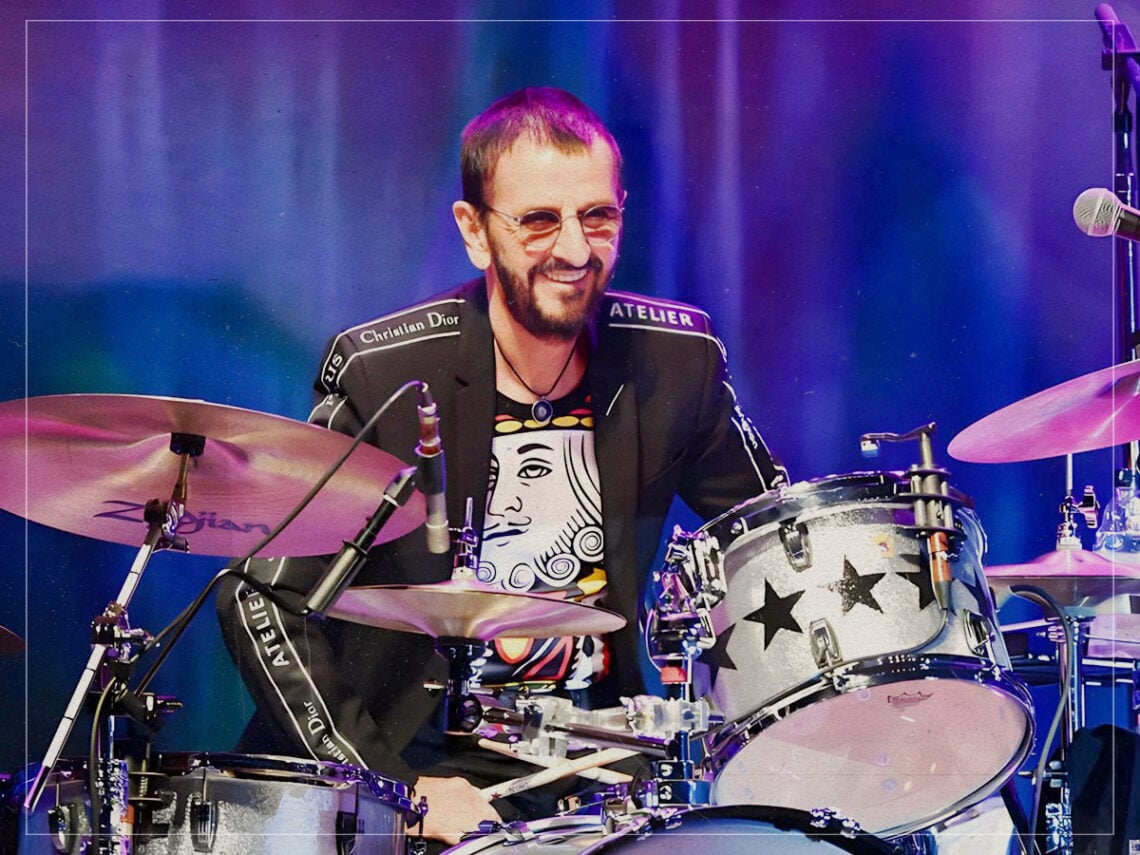
The five musicians who shaped Ringo Starr

The Beatles were, and still remain, such seismic forces in music that we’re all probably guilty of holding quite rigid views of them. Each of their respective lives seem such a biographical commodity that it’s possible to think you know as there is to know about the Liverpudlian legends, but in the case of Ringo Starr, his guiding musical lineage still holds some surprises in store.
Having come of age way back in the early part of the 1960s into a sonic world of skiffle and blues rock, as well as the prolific back catalogue he would go on to create, one could assume that the main basis for Starr’s most seminal musical inspirations would be based largely in the same genre. As a proponent of his future life, it was certainly plausible, but the rock roots weren’t the only place where Starr found his most important muses.
Indeed, one of the drummer’s most significant influences was the country music canon, from which he has drawn a huge amount of his own solo work, not least his most recent album, Look Up. Of all Starr’s myriad musical eras, country is where he finds his heart and soul, reflecting on life’s many tribulations with a classic twang learned from out west.
But given that Starr has dedicated this most recent chapter of his musical life all to the country charm, it’s only natural that some of his earliest sonic inspirations would hail from the same place. While his own penchant for skiffle and the blues may seem like a far cry away, there were five leading country stars who guided him more than the swing of the blues could ever do.
The five biggest musical inspirations to Ringo Starr:
Hank Williams
Long before the heights of world rapture and Beatlemania were even a concept in his mind, Starr’s musical education began with the country music pioneer Hank Williams. Williams’s career from the mid-1930s until his untimely death in 1953 was short-lived but nevertheless seismic in creating the foundations on which the rest of the genre was built.
With 55 top ten and 12 number one singles in the country and western chart, it’s impossible to overstate the behemoth legacy that Williams left behind, namely in his grandson Hank Williams III, whose music Starr is also a surprising top fan of, describing it as having an edge. After all, he should know a thing or two about a family lineage in music, so the trail of country inspiration lasting generations is nothing new.
Kitty Wells
If Starr has an affinity to artists who made history, it’s only natural that his next pick of a seminal inspiration would be Kitty Wells. In many ways, more than just the former Beatle, Wells was also responsible for laying the path for today’s biggest female country stars. ‘Imagine a world without Dolly Parton!,’ you cry in horror, but Wells is the one we have to thank for her and so many others.
Citing her as his all-time favourite female country singer, Starr told Forbes earlier this year, “Who can sing better than Kitty Wells?” His question was, of course, rhetorical, proven by the likes of the seismic success of her biggest single ‘It Wasn’t God Who Made Honky Tonk Angels’ in 1952, the first ever song by a woman to hit the top spot on the country chart.
Willie Nelson
Progressing into the 1960s, the paths of Starr and Willie Nelson were always destined to cross with them being two of the most seismic artists of the decade, even if in fairly different realms. But what likely struck a common chord in both hearts was the notion of rebellion – being a country outlaw in Nelson’s case, and a countercultural icon in Starr’s.
With the drummer enthusing that Nelson had “written some great songs,” it was only a matter of time before the two would converge and set about creating a stellar sonic collaboration. It eventually arrived on Starr’s album Ringo Rama from 2003, in which the pair put their dulcet tones to the tune ‘Write One For Me’. The two are prime examples of sheer musical tenacity – and with neither showing signs of stopping yet, long may it continue.
Johnny Cash
While it’s a pretty run-of-the-mill answer, no list of country music inspirations for anyone hitting the airwaves at any point over the past half a century – and even further back – would be complete without Johnny Cash. But in Starr’s case, the ‘Man in Black’ also held a certain symbolic significance to the trajectory of his life, perhaps when he needed the most direction.
Reliving a particularly seismic closing of a chapter for The Beatles, Starr recalled that: “We met Johnny Cash on the last gig the Beatles did, in San Francisco. That was the last time we did gigs, and Johnny was there to see us off.” As the fab Four began to face the reality of the end of their tenure starting to set in, it evidently put Starr’s mind racing on whatever could come next. The result was his sophomore solo album Beaucoups of Blues, marking his first foray into the country canon, from which he’d never look back.
Lightnin’ Hopkins
Starr’s final biggest inspiration is a bit of a departure from strictly the country canon, but one who proved to be no less vital to broadening his musical horizons was the blues maestro Lightnin’ Hopkins. Indeed, his reverence for the Texan guitarist went so far that Starr almost wanted to be him, in the days before realising that the Beatles’ dream could indeed become a reality.
He told You and I in 2021 that: “Everybody should know by now, when I was 19, I tried to emigrate to Houston, Texas, because I wanted to be where Lightnin’ Hopkins was, my all-time favourite blues player. John [Lennon] and I went down to the embassy and filled in all these forms, and you know, we were just teenagers then.” But then, prophetically as if lightning itself had struck, the whims of adolescence meant Starr and Lennon never made the leap. Not that they ended up regretting it, to be fair, but to use the Beatle’s own words, “That would have been an interesting move if I’d have done that.”
