


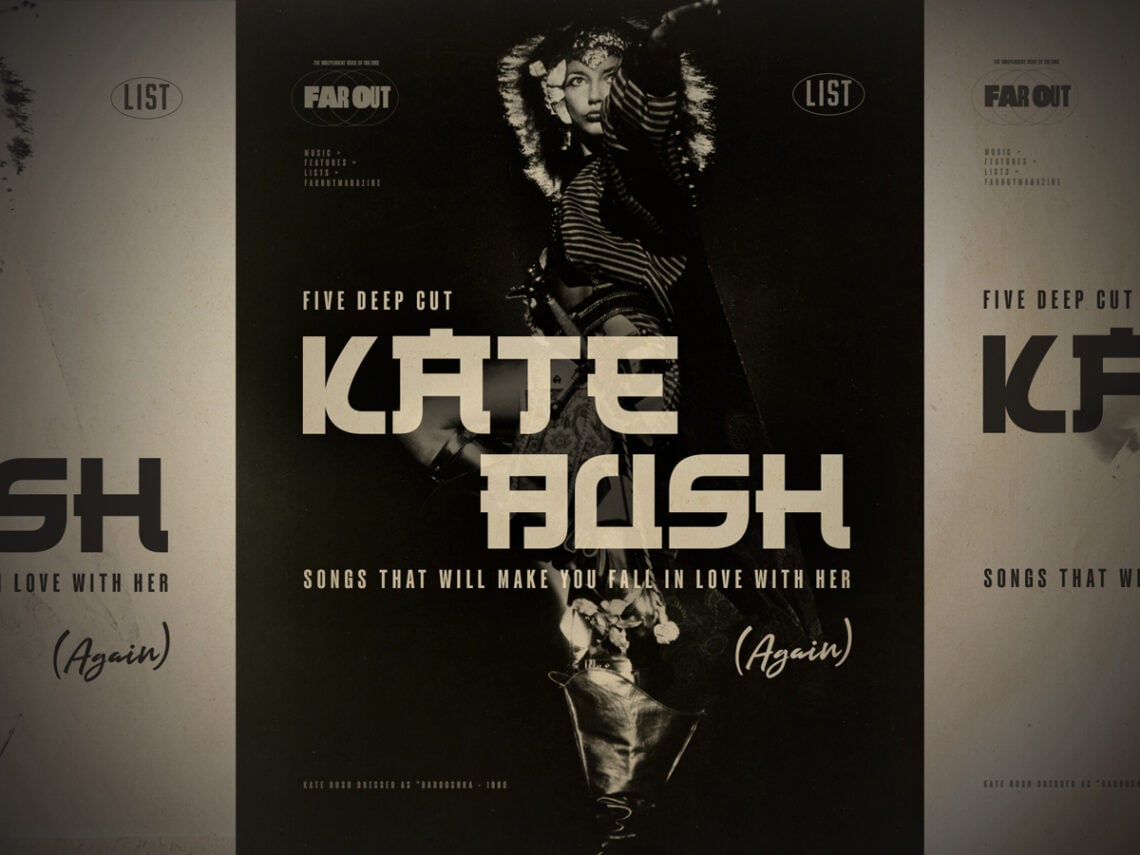
Five deep cut Kate Bush songs that will make you fall in love with her (again)

Above her novel compositions and utterly unique approach to songcraft, Kate Bush’s enduring appeal across her diverse work is one of inviting warmth.
There’s never a whiff of satisfied pretensions or intellectual gatekeeping. Pick any one of Bush’s ten studio albums or smattering of singles and rarities—to be partially compiled on the upcoming The Best Of Other Sides release—and you’ll find an inexorable tide washes over you and pulls you into her musical world, at times daftly eccentric, sensuously intimate, or shimmering with a deep human universality.
Whether it’s The Kick Inside’s baroque pop bluster, Hounds of Love’s ethereal trance, or Aerial’s sunny domesticity, Bush always manages to somehow offer a translation of our dreams, weaving a slice of art-pop to move and transport us over indulge in avant-garde self-marvels.
Every record takes you by the hand and unveils something half-true or partially remembered, glowing with the faint residue of idle reverie that can both ward off reality while also trying to make sense of it. It’s an uncanny gift Bush possesses, never straying into new age silliness and always anchored in something profound, even if she’s dressed like a vampire bat on Never for Ever’s back cover.
It’s likely anybody who knows Bush’s work will be innately familiar with her albums, not being the kind of artist that elicits cursory interest. But whether serving as a reminder of how many jewels lie in her voluminous oeuvre beyond the singles or indeed a highlight to the layperson yet to be pulled into her spell, we celebrate Bush’s pioneering body of work and pick five numbers off the beaten track that dazzle as much as any of her defining numbers.
Five fantastic Kate Bush deep cuts:
‘The Saxophone Song’

Striking a UK number one with her debut ‘Wuthering Heights’ single, 1978’s The Kick Inside takes elements of the era’s progressive rock and orchestral chamber-pop, yet pushes such lofty creative ambitions to a realm that serves her keen sense of theatre without ever lapsing into overblown pomp. Landing just in punk’s aftermath, Bush’s bold baroque art-rock made just as much sense in the new wave with her captivating originality.
One of the many tapes Bush had demoed with Pink Floyd’s David Gilmour as early as 1975, ‘The Saxophone Song’ is another glittering pearl that showcases just how confident Bush was as a songwriter still in her teens. A love letter to one of her favourite instruments, The Kick Inside’s alluring second track flashes an almost romantic longing for the sax’s curves and siren chants, Bush crooning, “There’s something very special indeed / In all the places where I’ve seen you shine, boy” as session jazz tenor Alan Skidmore toots and bleats sumptuously on one of Bush’s most beguiling cuts.
‘The Infant Kiss’
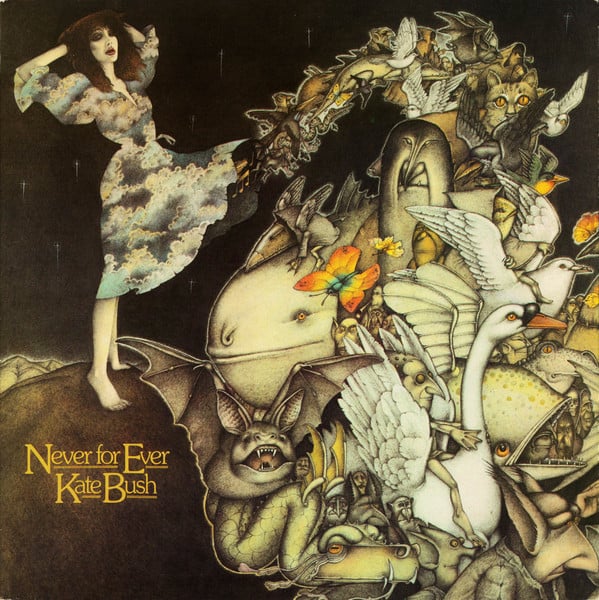
After the underwhelming Lionheart was released mere months after her debut, Bush would ensure that label pressures or industry expectations would not stand between her art.
Seeking further artistic control by sharing producer duties as well as embracing the emerging digital sampling technology made possible by the revolutionary Fairlight CMI synthesiser, 1980s Never for Ever would see Bush taking a giant stride into her penchant for sonic sculpt that would define the rest of her 1980s output. Helped by the stirring ‘Babooshka’ and ‘Army Dreamers’ military waltz, Bush’s third LP would score her first UK number one album.
One of the finest examples of her knack for crafting dramatic vignettes, ‘The Kiss Inside’ conjures a near immaculate peepshow into supernatural confusions inspired by the psychological horror film The Innocents. Concerning the strange tale of a governess’ dead lover’s ghost possessing the children in her care, Bush dreams up a tension-riddled, evocative mini-epic aided with her unearthly melody but coated in ectoplasmic frost, a remarkable gem that plumbs a vast terrain of drama in less than three minutes.
‘Pull Out the Pin’
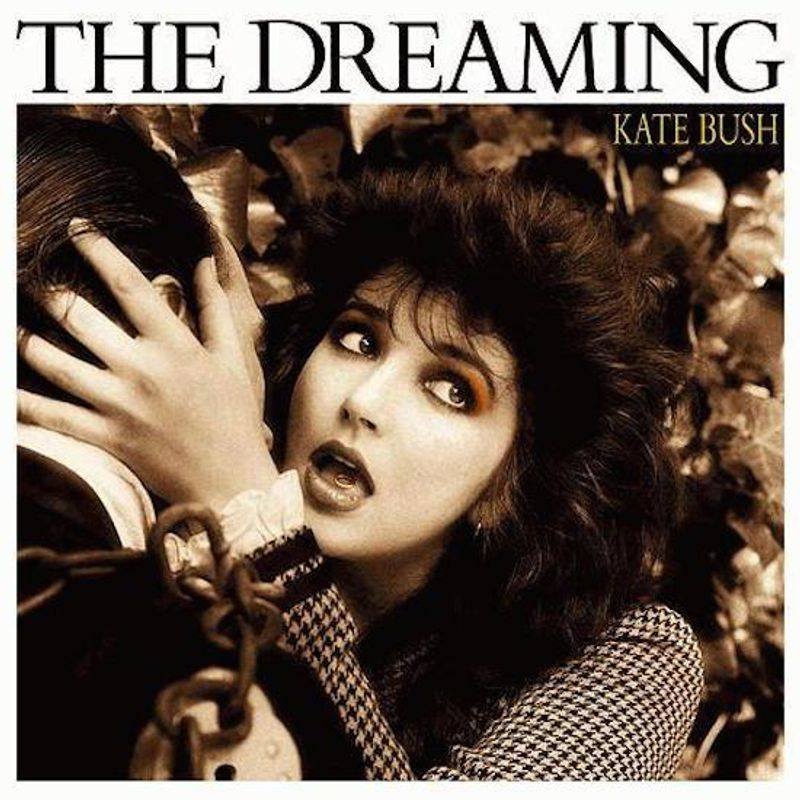
Two years later, Bush would master the Fairlight’s sampling possibilities even further, crafting deeper and richer layers of complex pop that sounded lightyears ahead of the synthpop around her.
Supposedly taking an uncommercial U-turn, 1982’s The Dreaming jumped into a plane of maximal pugilism, whipping up a pummelling sonic character wrought from solely stepping into the producer’s chair and letting loose her imagination.
Despite some writer’s block, Bush managed to eke out such frazzled and bizarre numbers as ‘Suspended in Gaffa’ and the title track’s cosmic collage. Inspired by an Australian Vietnam War documentary examining the conflict through the lens of the Viet Cong, ‘Pull Out the Pin’ was born from a detail alleging that the Vietnamese guerrillas were able to smell the US forces before actually seeing them.
Illustrating the “…stink of the west, stink of sweat / Stink of cologne and baccy, and all their Yankee hash”, Bush weaves a thumping, stirring overload of helicopter chopper throbs and alien background clangour for a cut that’s both moving and disquieting.
‘Mother Stands For Comfort’
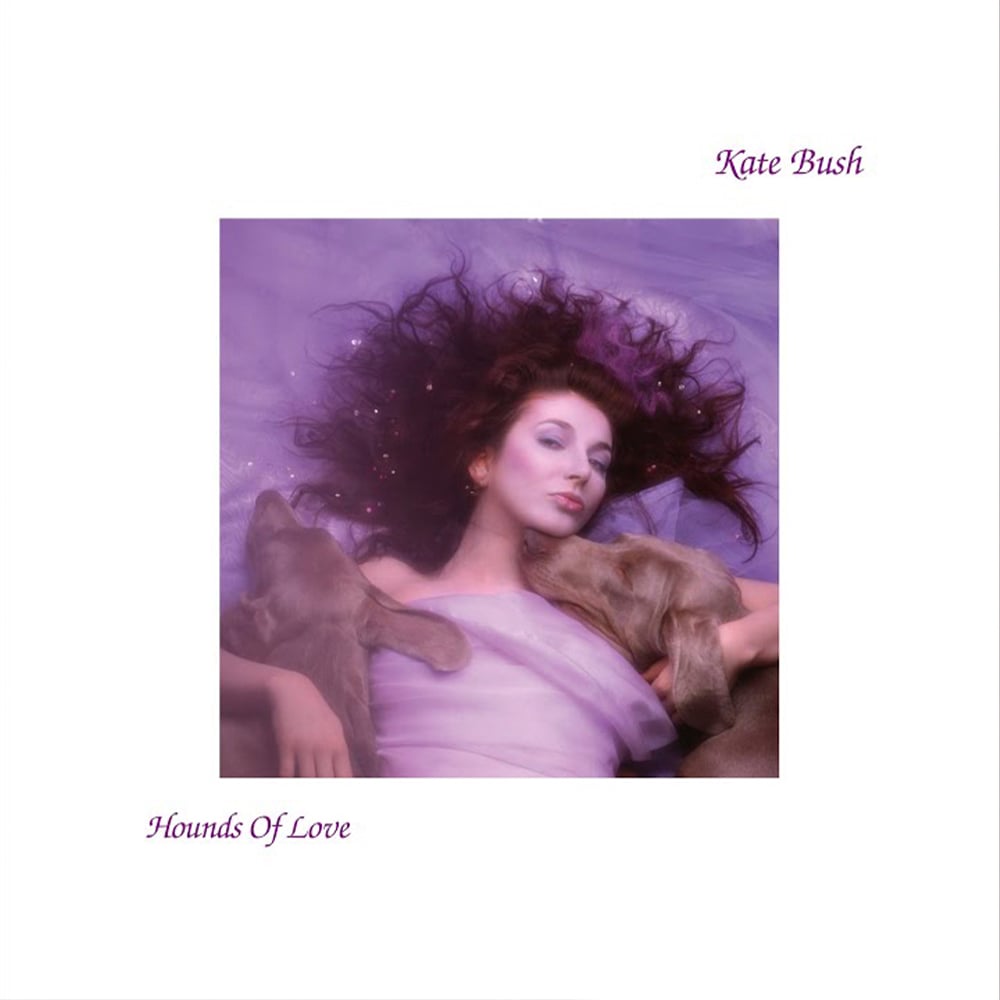
Where The Dreaming at times veered into crashing bludgeon with Bush’s unreined Fairlight cacophony, two years had brought a deeper finesse to her sampling sculpt.
While uncommercial tags were too liberally tossed around, The Dreaming reached number three in the UK album charts, 1985’s Hounds of Love marked an artist unleashing all that had been learned from her previous record, but anchored with a sharper pop hook. It was a triumph. Presenting the album as a conceptual twofer, side one is packed with canonical numbers from ‘Running Up That Hill (A Deal with God)’, ‘Cloudbusting’, and the title track, whereas side two’s The Ninth Wave takes the listener on a suite of Arthurian-style prog saga.
Glaring with icy menace, the chilling ‘Mother Stands For Comfort’ is the sting in Hounds of Love’s tail. A glacial cascade of mechanised drums and spectral whines, illustrating the toxic relationship between a doting mother and her murderer son.
It’s a stunningly phantasmagorical and claustrophobic cut in Bush’s songbook, which flashes her knack for peering into humanity’s darker corners.
‘An Architect’s Dream’

Anticipations were high when Bush finally teased her eighth LP.
Released after a 12-year wait, 2005’s double album Aerial again followed the Hounds of Love approach to the arc, presenting two halves with the first, A Sea of Honey, a looser collation of songs, followed by A Sky of Honey’s conceptual immersion in the golden bewitchment that drapes a summer’s day from dawn to dusk. With her son Bertie appearing as a semi-motif throughout, Aerial presents a novel impression of family life draped in Bush’s signature surrealist hues.
Ensconced in A Sky of Honey is the sublime ‘An Architect’s Dream’. Unfortunately, initially recorded featuring Rolf Harris as the titular painter, but rerecorded with Bertie in the 2018 touch-up, Bush similarly treats her song’s sonic canvas like a romantic artist’s easel, soothing and zen-like while also charged with a furrowed-browed intensity on tiny details that speck and mottle one’s masterstroke.
Awash with synth textures and percolating guitar drops, ‘An Architect’s Dream’ swirls together with stunningly transportive energy.
