


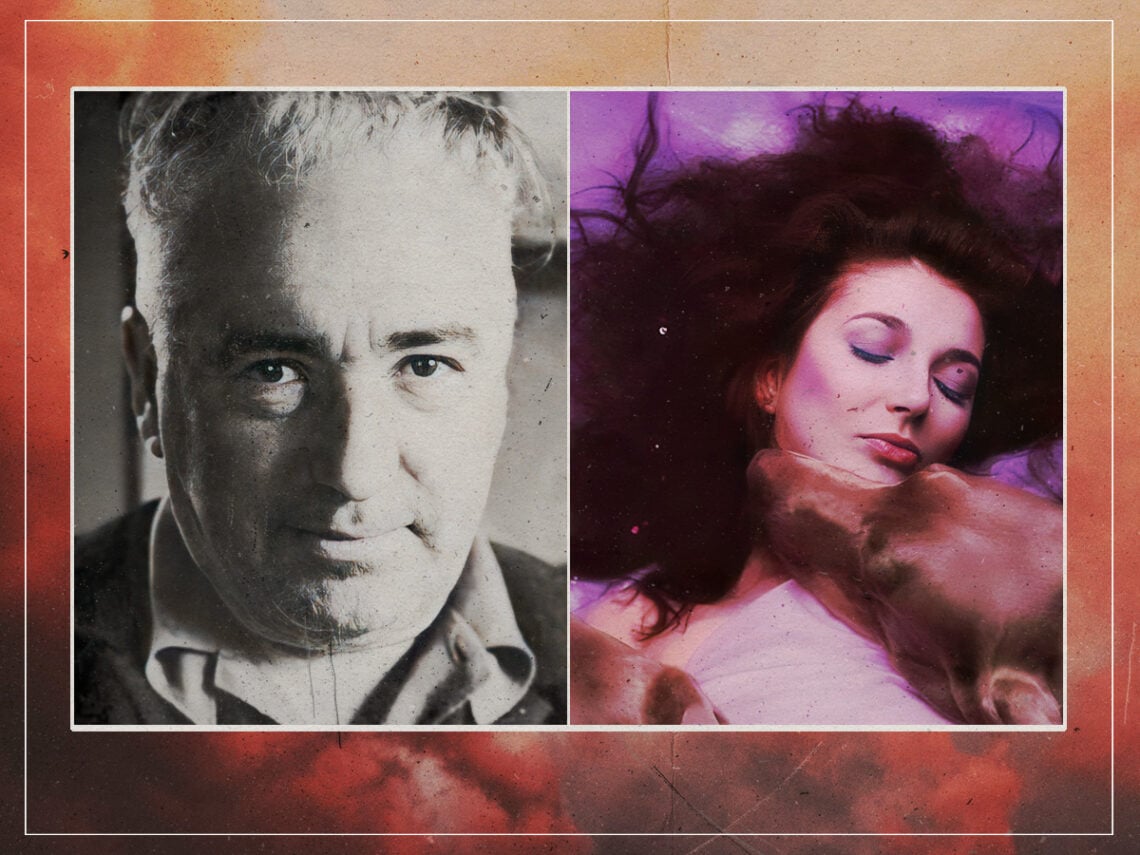
Wilhelm Reich: the man behind Kate Bush’s ‘Cloudbusting’

When Peter Reich set out to share his father’s tumultuous career from his own viewpoint in the early 1970s, he likely didn’t expect to become the focus of a Kate Bush hit a decade later. Wilhelm Reich, aside from being the inspiration behind Bush’s ‘Cloudbusting’, was a brilliant yet divisive figure. His unorthodox ideas and methods earned him a reputation as a challenger and even a threat to conventional thinking.
An Austrian psychoanalyst, psychiatrist, and controversial figure, Reich’s contributions to the field of psychology were at the time unmatched, his groundbreaking theories and unconventional approach to understanding the human psyche provoking debate and intrigue in both academic and alternative circles, even after his death.
Trained initially as a psychoanalyst under the tutelage of Sigmund Freud, Reich quickly distinguished himself with his innovative thinking and radical interpretations of Freudian concepts. He challenged traditional psychoanalytic theories, particularly regarding the role of sexuality in human development and mental health.
Perhaps one of Reich’s most famous works was his concept of “orgone energy”, which proposed that this mystical, life-force energy permeated the universe and played a crucial role in human emotions, behaviours, and physical health. He held the belief that the atmosphere and all living matter contained orgone energy, and in an attempt to harness it, he developed what he termed the “Cloudbuster”.
Measuring the male orgasm as his focal point, he also coined the term “orgastic potency”, adapting many aspects of Freud’s theory of sexual origins to prove that orgasm was a way of liberating sexual energy in humans. In Reich’s view, “orgastic potency” was “to be understood as the ability to achieve full resolution of existing sexual need-tension”.
Reich also wrote to Einstein about his work on orgone energy and its potential applications in various fields, including physics. Einstein initially displayed interest, claiming that they would land upon a major discovery if they were able to demonstrate raising an individual’s temperature without an external heating source. Einstein almost worked with the psychologist on the project but backed out after interpreting the phenomenon differently.
While many of Reich’s findings contributed significantly to psychological breakthroughs and developments of the 20th Century, his reputation and way of thinking became highly divisive among peers and those interested in the field. For starters, the Marxist views he held that filtered through his work resulted in many dismissing the legitimacy of his findings. Due to his vocal anti-fascist stance and support for communism, Reich faced continued significant backlash from both psychoanalysts and fellow leftists.
Then, in 1954, the American Food and Drug Administration ordered him to destroy all accumulators and burn any books referencing the devices. Unbeknownst to Reich, several machines found their way to New York, leading to his trial for contempt of court. He was subsequently sentenced to two years in prison but tragically died of a heart attack while incarcerated in 1957.
As a result of his various controversies, you don’t hear much about Reich compared to other psychoanalysts in mainstream psychology. Moreover, there haven’t been any solid scientific studies acknowledged by academia or the scientific community to prove or disprove Reich’s more controversial ideas. In 1973, Reich’s son, Peter, explored his findings and subsequent banishment from historical psychoanalysis in A Book of Dreams.
This would largely remain confined to the shadows available to those who know where to look. That is, of course, until Bush stumbled across a copy and became enchanted by the story. “It’s incredibly beautiful,” she said. “It’s very, very emotive and very innocent because it’s through a child’s eyes.”
