


The first prog band Phil Collins ever fell in love with: “Astounding”

Continuing on the expansive experimentation of the late 1960s psychedelic boom, progressive rock is among the most diverse, complex, and much-maligned genres ever to hit the airwaves. From its early days around the turn of the 1970s, prog divided audiences across the land, but very few people could deny the inventiveness of a band like Genesis.
Altering the rock landscape indefinitely, the Surrey outfit quickly rose to the top of the prog pyramid, launching the career of pop-master Phil Collins in the process. It’s a mystery, therefore, that the little fellow was largely raised on Motown. In fact, conventional showbiz was a mainstay throughout his youth.
Collins spent much of his upbringing immersed in the world of acting, starring in films like A Hard Day’s Night and Chitty Chitty Bang Bang as a child actor, before turning his attention to music towards the end of the 1960s. It did not take long for the drummer to experience his ‘big break’ either, landing a position in Genesis after answering an ad for a drummer placed in Melody Maker, following the departure of Anthony Phillips and John Mayhew after 1970’s Trespass album.
Once Collins was in the group, he didn’t waste much time in becoming one of their defining members. Contributing to the songwriting of the group and occasionally taking on vocal duties, the musician rapidly exceeded his responsibilities as a drummer, so it wasn’t much of a surprise when he eventually took on a leadership role within the prog progenitors. During this time, Genesis largely eclipsed the rest of the prog scene, but Collins always maintained an appreciation for one of the founders of that expansive style.
Around the same time that Genesis were in their infancy, back in the late 1960s, another British outfit were aiming to subvert expectations and redefine rock possibilities. That group was King Crimson, and band leader Robert Fripp was instrumental in the development of prog, along with countless other styles and subgenres. Fripp’s unmistakably original tones have inspired multiple generations of artists, and Collins is certainly no exception.
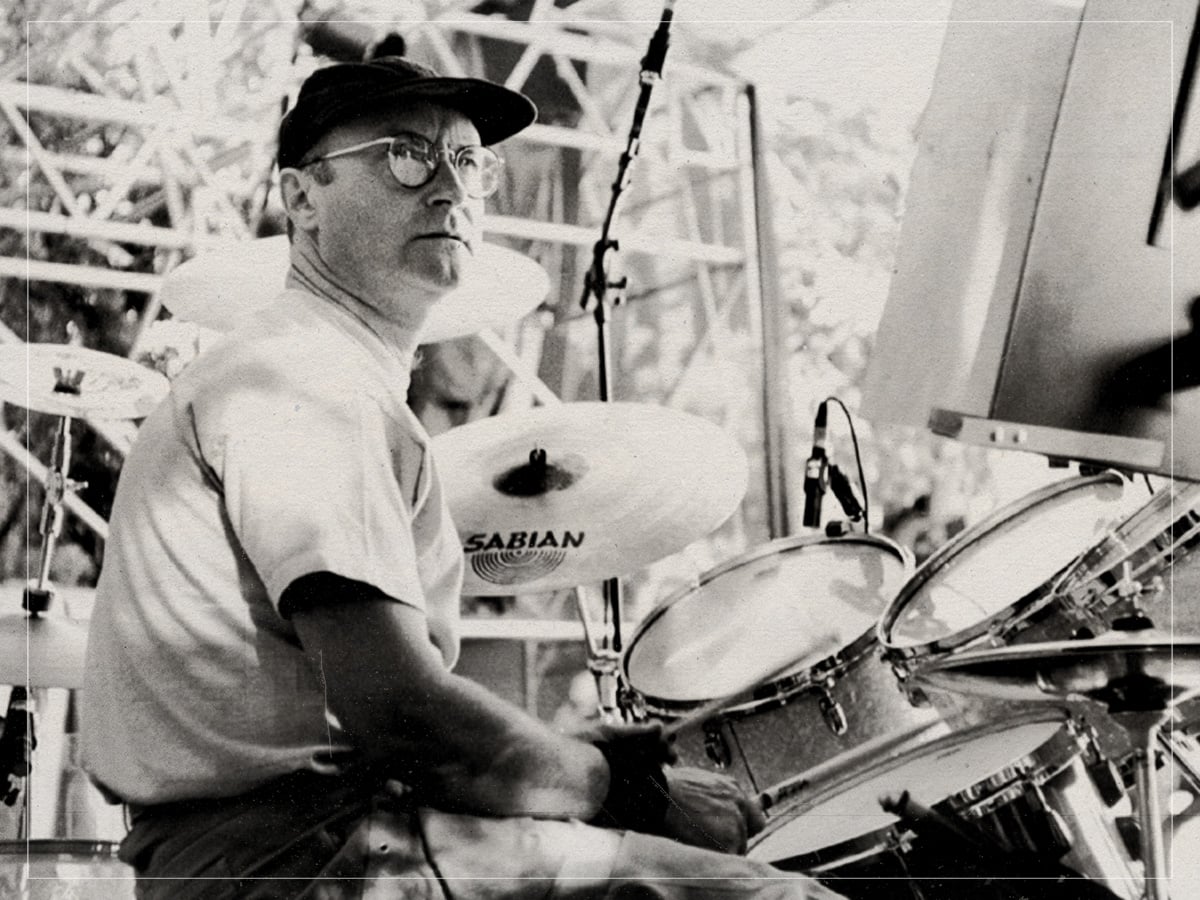
Although the drummer was only a young man when first exposed to the distinctive sound of King Crimson, he immediately recognised their revolutionary potential. “They were absolutely phenomenal,” he later told Prog Magazine. “Like nothing else I’d ever seen.”
That was almost to be expected given their interests and motivations. As Bill Burford said when he joined King Crimson and was given a reading list rather than a setlist, “This was going to be more than three chords and a pint of Guinness.” The result was a sound and outlook that deeply inspired Genesis.
Collins certainly wasn’t alone in that regard; King Crimson were almost operating on an entirely different plane of existence to the rest of the British music scene at that time, and groups like Genesis would later attempt to follow in their wake. After all, Jimi Hendrix didn’t call them the greatest band in the world for nothing.
“This was before progressive rock was even called ‘progressive rock,’” Collins recalled of that early period. “But it was clear they were doing something that was completely new and fairly astounding.” With polyrhythms and expansive arrangements, they were stretching the limits of pop in a way that Sgt Pepper merely hinted at.
Even when progressive rock did establish itself as a new genre, Fripp and King Crimson were never swayed by the self-indulgence that typified the scene. They stuck to the music and shunned the pantomime.
“While everyone else was wearing capes and flouncing about, there he was in his suit, sitting on a stool,” the Genesis drummer shared. He respected that no end. After all, his opinions on prog as a whole were actually rather ambivalent, eventually explaining when the punk movement came to topple prog, “The thing was, I didn’t like a lot of the bands that they didn’t like, too,” says Collins. “I always saw us as slightly separate from all of that.”
Although Collins eventually graduated from the prog scene to become one of the most successful pop artists in the UK during the 1980s, he always retained the pioneering influence of the prog movement at its best, ditching the “bollocks” as the Sex Pistols might put it, and clinging to the curious arrangements that connected to the masses… particularly the far-out sounds of King Crimson. After all, they were the band that started it all.
