


The first ever stadium concert changed the world

As consumers of music, collectively, we love a stadium concert. From the hottest pop acts such as Taylor Swift to iconic rock bands reforming like Led Zeppelin, the world is brimming with stadia whose stages have been graced by some of the best and biggest in the business.
Often nearing the 100,000 mark in capacity, to some artists, these crowds are inconceivable given their humble origins and the empty rooms they were once used to playing. Nevertheless, this enthralled, pulsating mass of faces is one of the soundest signifiers of how far they’ve come and the extent of their success.
The stadium show is also indicative of just how much of a commercial juggernaut the music industry is, with Coldplay’s recent six-show run at London’s Wembley Stadium showing the extent of the industry’s financial might and it is the most commercially viable bands wield. It’s also reflective of how the industry has developed over the years, with acts no longer solely consigned to bars, music halls, and band stands as they were a century ago, instead reaping the rewards of the interconnected age and the maximum exposure it brings.
Of course, some people may be dismissive of stadium shows. Due to the sub-par sound quality that the shows are often guilty of, and that the most affordable seats in the age of the cost of living crisis are sky high for a position so far away from that stage that you cannot see even the spectacle that the artist is putting on, this renders the whole experience pointless, making the hole in your wallet even harder to bear.
However, there are many reasons to love stadium shows, such as consistent sold-out capacities display. Also, given the supply and demand nature of the systems that underpin the world of commerce and the fact that when a prominent artist plays in an intimate venue it sells out in an instant, it is physically impossible to see acts such as Foo Fighters and Ed Sheeran perform anywhere else.
We shouldn’t take this for granted, either. As we mentioned before, it wasn’t always like this, and often the performers of old didn’t receive the plaudits they deserved because of the limited exposure the live setting offered.
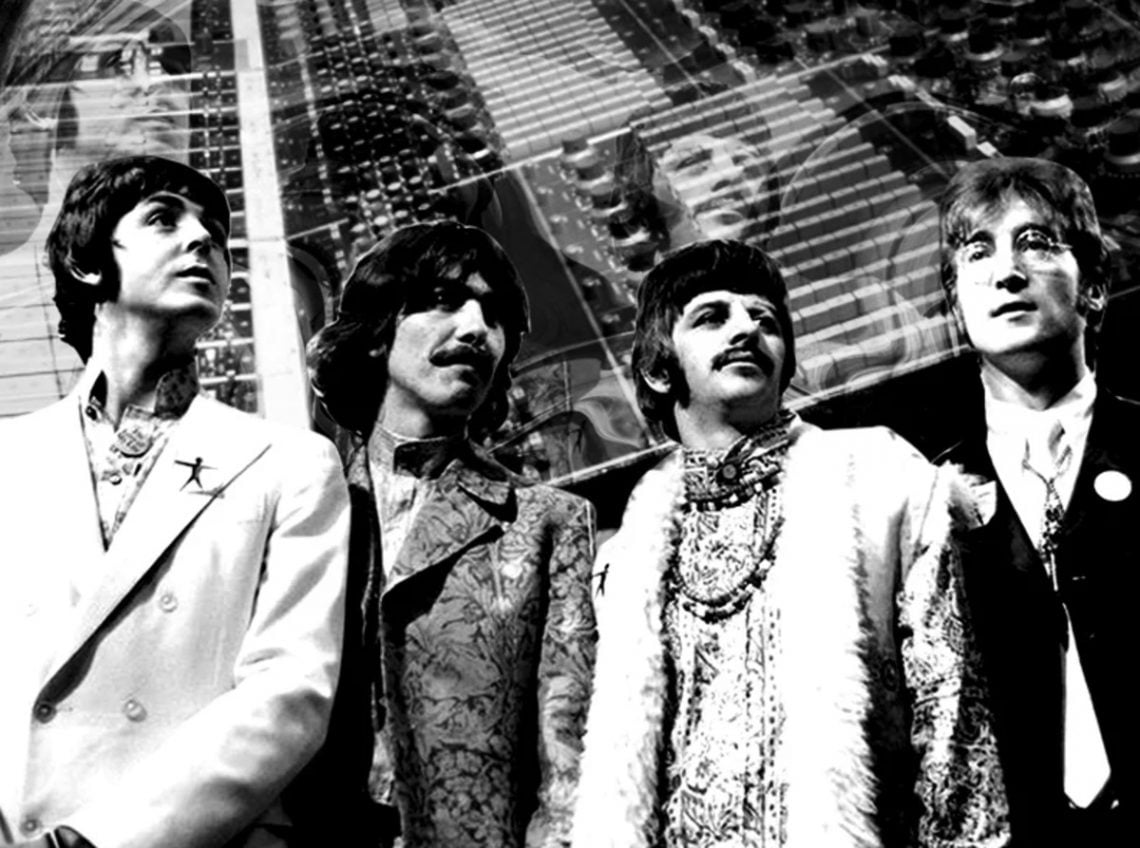
So when did this all change, you ask? Well, the band with the most extended series of firsts to their name played the first-ever stadium show. Of course, this is none other than the ‘Fab Four’ themselves, The Beatles.
Back in the mid-1960s, the concept of the stadium show was incomprehensible to almost everyone, but then something strange happened. The four boys from Liverpool burst onto the scene with 1962’s ‘Love Me Do‘, and after, the world was never the same again. They went from strength to strength, leading the British Invasion and kicking off a craze known as Beatlemania, which preceded all other forms of maniacal fandom that was to come.
Given just how big they were, on August 15th, 1965, when Beatlemania was at its peak, John Lennon, Paul McCartney, George Harrison, and Ringo Starr smashed all previous records for concert attendance when they played to 55,000 fans at Shea Stadium in New York. As was customary for The Beatles, this set a precedent for all the developments to come in the music industry. After the show, they had made a whopping $300,000, which is around $2 million by today’s estimations.
Ironically though, The Beatles may have financially benefitted from performing at Shea Stadium, but they were drowned out by their crazed fanbase due to the limitations of the sound equipment, and in August of the following year, they retired from touring. This decision enacted a period of brilliant innovation that would take their cultural importance to new levels entirely, setting culture on a different path in the process.

Never Miss A Beat
The Far Out Beatles Newsletter
All the latest stories about The Beatles from the independent voice of culture.
Straight to your inbox.