

The Price of Music: What Ticketmaster’s “dynamic pricing” means for the future
Read More


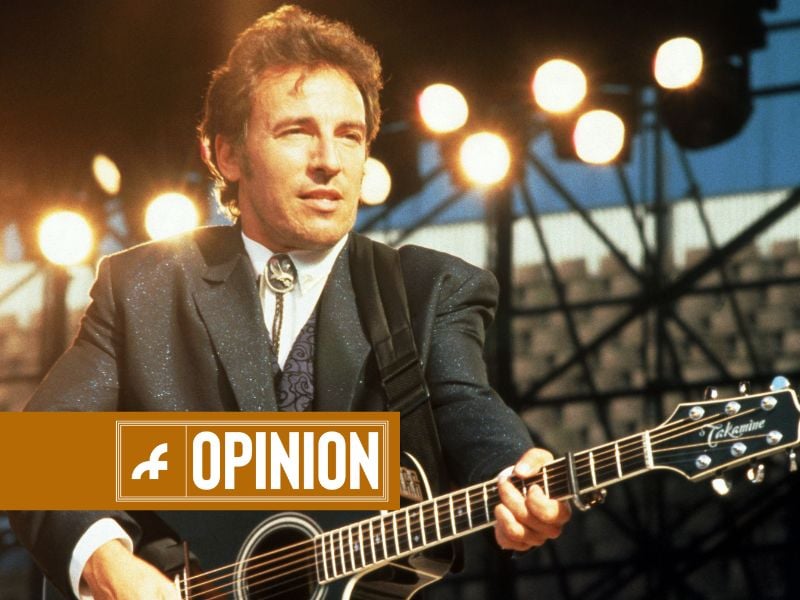
This week, Bruce Springsteen has found himself at the forefront of one of music’s biggest debates, and from my perspective, it appears to be a PR disaster for the man who has for so long been affectionately celebrated as ‘The Boss’ and music’s resident man of the people.
For the entirety of his career, the New Jersey native has positioned himself as the champion of the little man and, more importantly, has invariably made good on his words with affirmative actions. However, the latest storm involving Springsteen is alarming, as uncomfortable questions are directed towards his decision-making while also indicative of a much broader trend involving artists of his stature.
The longer his radio silence continues, the more damage it will do to his reputation. As it stands, increasing numbers of fans are already turning away as the question of what Springsteen truly represents is brought to the fore, something he’s been able to dodge for years due to his array of charitable efforts.
In May this year, I authored a piece that investigated the “dynamic pricing” model of the American ticket sales and distribution company Ticketmaster, a website which has long held a monopoly over the concerts of some of the world’s most renowned artists ranging from Paul McCartney to Taylor Swift. Pulling together the experiences of people across the world, the findings were stark.
So what is the Ticketmaster concept of “dynamic pricing”? Operational since 2018, it is a practice that we’re all very familiar with, but now it is just under a different name, which many have taken as yet another example of the company’s endless subterfuge. To add context to the practice, the only necessary aspect to highlight what the system is – and how it works – is to mention the ride-hailing service Uber and the notorious “surge pricing”, which means prices of journeys rise exponentially when there’s high demand.
This means that when the demand for tickets is higher, so are the prices. This raises Ticketmaster’s market share and value, and whilst making more money for the artist and venue due to pre-existing contracts, it also leaves the audience’s wallet increasingly empty, something that cannot be ignored as we enter one of the worst economic periods in the modern era. Universally known as the ‘Cost of Living Crisis’, the name denotes that the basic human function – the basic right – of ‘living’, in all its various forms, is now becoming increasingly problematic due to financial reasons.
May’s piece concluded: “We all need to speak out on this practice in the hope of getting the most famous artists whose live tours are worth the most to rethink their partnership with Ticketmaster, as they’re the ones who determine the real price we pay. We need to force the middle man out and bring down ‘dynamic’ ticket pricing. Still, I can’t help but think that this is becoming just the first front in what is shaping up to be a battle between artists and their fans, as they grapple with a dwindling market due to the loss of revenue from streaming as they look to the live circuit as the last way of making any genuine money.”
Unsurprisingly, since the release of May’s article, no prominent musicians have spoken out about Ticketmaster’s “dynamic pricing” despite it being concert season, and now everyone’s favourite everyman, Bruce Springsteen, has been dragged into the debate, finding himself at the mercy of his large and devoted fanbase.
Their outrage is entirely understandable. When the first-day sales for the opening dates of his 2023 arena tour went on sale earlier this week, US fans found tickets were eye-wateringly expensive. At the peak of their sale, ticket prices ranged from $4,000 to $5,000 for sub-par, mid-range floor seats.
As Chris Willman of Variety points out, if these ticket prices were being offered on the “secondary market” by scalpers, the enemy of both artists and fans, we wouldn’t bat an eyelid. However, the fact that these prices are face value is what has sent Bruce Springsteen’s fanbase – and music fans as a whole – into a frenzy. Off the back of their dynamic pricing concept, Ticketmaster has confirmed that they are now the middleman. Ticketmaster is the scalper.
What caused most of the anger was the fact that for many American fans, their attempts to secure tickets to Springsteen’s tour in 2023 was the first time they have been introduced to Ticketmaster’s dealings, a shock that is akin to receiving your first energy bill after the new price hike. Interestingly, the most stinging part of “dynamic pricing” is that “platinum tickets” are placed in any location in the venue, ranging from the front to the back, fluctuating in price as a computer algorithm calculates a fee based on the demand. It has been proven in numerous cases outside of the Springsteen furore to always be insane amounts of money, despite the differences in seat location inside the venue.
Allegedly, this system allows the prices to rise to the level that resellers would get for them, squashing the secondary market by keeping the money for the artist, promoter, and Ticketmaster. However, due to the incredible demand to see Springsteen and the E Street Band live in action, this price shot to unprecedented heights, with the unregulated algorithm wreaking havoc on the ordinary people who just want to catch one of their favourites do his thing.
Many people have even postulated that in the days when scalpers were the scourge of live music, none would raise their prices to such incomprehensible prices, as surely there is a limit on what live music is worth — even for the best-selling artists. It is much less than the $5,000 for a seat that would usually go for under 20% of what these undesirable “platinum tickets” are.
Reflective of the anger felt was a social media post from Backstreets, the Bruce Springsteen fan magazine, who, alongside a screenshot of the price for a single seat on the tour’s opening night in Tampa, Florida, tweeted: “Tampa mid-floor for $4,400, anyone?” Compounding this sentiment were fans who voiced their anger on social media at the high prices they were being offered, even after going through the company’s “Verified Fan System” and waiting in a long online queue.
This also made people question Ticketmaster’s practices as the “Verified Fan System”, just like “dynamic pricing”, was meant to obstruct scalpers, but it was swiftly found through looking at the availability for the date in Tulsa, Oklahoma, that around a fifth of the seats had already been put up for sale on the secondary market using Ticketmaster’s in-house resale programme, where fans selling their tickets for free set their own prices. This implies that Ticketmaster have brought the scalpers under their wing, and at the very worst, turned more people onto the practice which is so damaging to the live music industry.
The original base price of these tickets ranged from $299 to $399, which was to be expected, and with the furthest away tickets costing a relatively minor $60, a small portion of fans were happy, but these were in the minority. Therefore, it is understandable why the majority of fans were so incensed.
Esteemed Radio DJ Rich Russo offered up an account of the state of ticket pricing on his website, explaining that it’s the result of a trio of factors. He claimed that it is a delicate balancing act, one that sees artists attempting to keep their fans happy, as well as striving to get all the money they deserve for their labour, whilst also stopping scalpers.

Taking a trip down memory lane, Russo asserted that the origins of “dynamic pricing” began when American soft-rockers Eagles reformed in 1994 and they instituted the now-ubiquitous “Golden Circle” tickets, which were the best-located positions in the era, sold for around four times the price of the normal seats. Understandably, fans were outraged, and when asked about the band’s reasons for bringing in what seemed like such a greedy practice, drummer Don Henley told an interviewer: “Why should some guy on a corner or in an alley make more than we do?”
In many ways, Henley was right. Scalpers should not make more than the artist, but herein lies the problem. The practice has been largely unregulated in the US due to lobbying and greed on the part of the artist, booking agents and Ticketmaster, meaning that it has enacted a free-for-all where everybody wins apart from the fan.
Turning his attention to the state of live music in contemporary times, he described how “dynamic pricing” came to fruition and why it is here to stay: “Now what? How can an artist serve their fans and keep ticket prices not only reasonable but out of the hands of those who try to make more money per ticket than themselves? Well, the easiest way to achieve this would be to make all concert tickets non-transferable and can only be put back in the system and resold at only face value for every venue in every state. Well, that won’t happen, the genie is already out of the bottle and lobbyists have blocked that sort of thing.”
After suggesting a cap of 10% on the resale of all tickets and then saying that it will never happen either because the genie is “way out of the bottle”, Russo contended that this gave rise to “platinum” and “dynamic pricing”. Noting that it is fair on the artist as they’re seeing all the fruits of their labour, as they always should do, he did label the practice “a fucking shit show”.
We cannot argue with musicians getting the money they are worth, but surely there needs to be something put in place that stops fans from being fleeced, as no one wants to or can afford to pay $5,000 for one of the worst seats in the building. It’s just ridiculous. Whilst this is a discussion that is likely to rumble on for an age, the Springsteen ticket fiasco has also asked his fans another glaring question. Is he really ‘The Boss’? His actions, or lack of them, bring his status into serious doubt. This is because, at the time of writing, Springsteen’s camp is yet to provide a comment on the situation, despite the outpour of both quantitative and qualitative data from fans, commentators, and other industry members.
The only murmur heard from Springsteen’s camp has come from E Street Band member Stevie Van Zandt, who replied to a tweet that simply asked him if he’d seen the ticket prices: “I imagine you’re tired of answering questions for Springsteen but you are the only one that interacts regularly with fans on Twitter. Curious if you’ve seen the cost of tickets for the US tour? Several thousand for floor tickets. These are the Ticketmaster costs.”
Shockingly, the usually affable Van Zandt tweeted in response: “I have nothing whatsoever to do with the price of tickets. Nothing. Nada. Niente. Bubkis. Dick.”
Without getting waylayed by Van Zandt’s uncalled-for response to the enquiring fan, the finger is now firmly pointed at Bruce Springsteen. By now, he is surely aware of what’s been going on for the best part of two days, and with each passing minute, he is doing more damage to himself by not responding to his fans, many of whom have been with him for over 40 years. For the entirety of his career, Springsteen claimed to be the champion of the little man, so where is he now?
His radio silence is alarming. It suggests that The Boss has finally given into the spell of unlimited capital and that after all of his years of rebelling, he has entered the mysterious inner sanctum that only the most wealthy musicians secretly know as ‘The Golden Circle’, taking a seat next to The Eagles, Paul McCartney and many more.
If there is no reply from Springsteen, everything will be clear. He’d have turned his back on the people that made him what he is, allowing himself to be in the position he now finds himself in. If so, it is clear what is to be done. Boycott the concerts of Bruce Springsteen, and where possible, continue to go to shows that aren’t sold on Ticketmaster. Although this seems increasingly unfeasible, it’s the only way change can commence.
