


“The potential to be wonderful, extraordinary”: the fight for greater artistic freedom in Cuba

In 1963, Cuba began jamming radio broadcasting, marking the first nation in the western hemisphere to do so. This was part of a government plan to censor content that appeared ideologically threatening to Fidel Castro’s government, including books, films, and music, to control the influence of external values and prevent “counterrevolutionaries” from disrupting the regime.
The concept of censorship, especially for governments, often signals a slightly tainted notion about unsolicited control over entire nations. From their perspective, it’s likely less about prevention and limitation than protection and order, even if it means adopting a meticulous approach to what members of the public consume and how they may or may not be influenced by Western content.
However, the fight for greater artistic freedom in Cuba has long been the subject of ongoing tensions, with some claiming it to be a direct misalignment with what the government says it sets out to achieve. The initial blacklisting from 1959 onwards sought to remove musicians from public reach in an effort to maintain and perpetuate the Communist-run ideals. However, this also led to many challenging the boundaries of censorship and testing the waters of the country’s flexibility, in whatever capacity.
Throughout the 1960s and 1970s, this was achieved through somewhat passable means, with many musicians implying underlying concerns with the regime without doing so explicitly or openly enough to result in scrutiny. However, in recent years, more have rallied more urgently to remove the censorship, especially in genres like jazz, pop, reggaeton, and hip-hop, with general calls for the Cuban government to reconsider its restrictions.
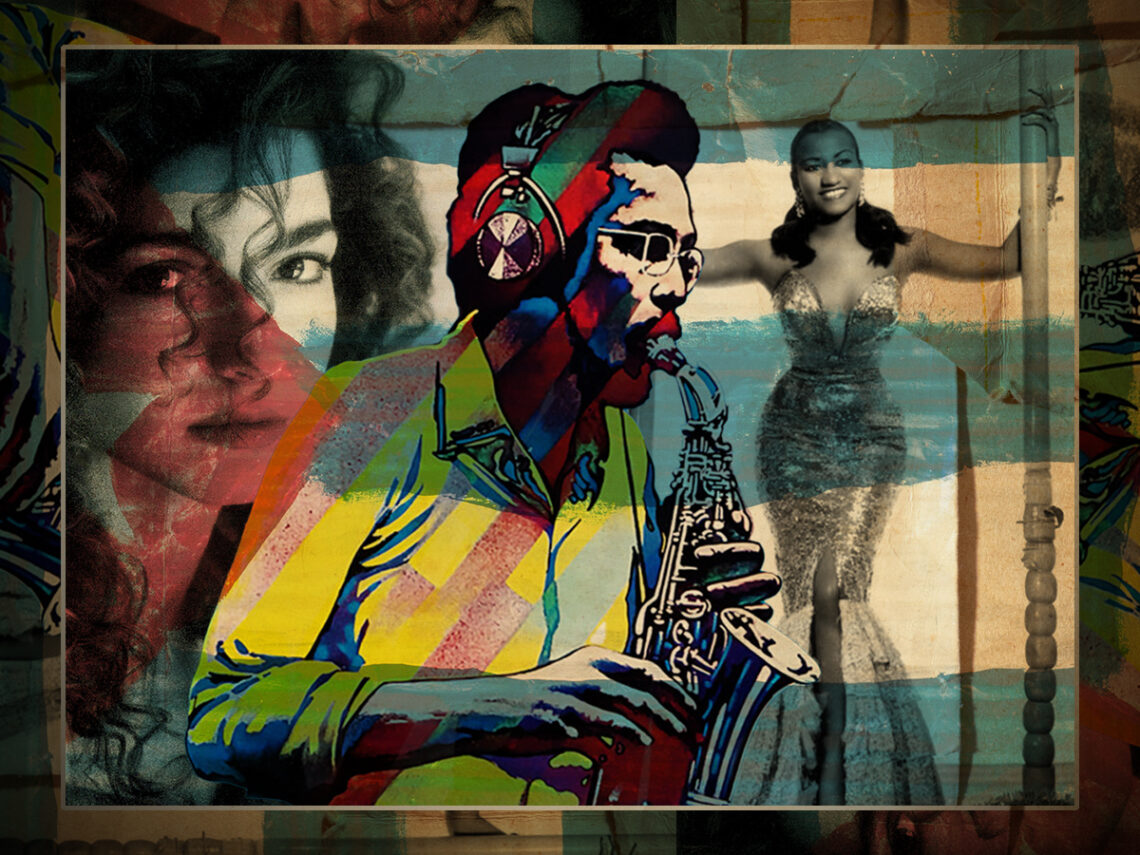
Despite the long-term battle, a potential turning point occurred in 2012 when the BBC reported about a subtle change to Cuban radio station blacklisting. According to some broadcasters, previously banned artists were suddenly allowed radio play, leading many to suspect that things were slowly changing in the community, even though the Cuban government didn’t confirm it. Among these artists were Gloria Estefan, Celia Cruz, Paquito D’Rivera, and Willy Chirino.
Before, these artists weren’t permitted to be played on public radio for various reasons, like Estefan and d’Rivera’s overt criticisms of Castro’s reign. “As long as that government is there, some things may change, but they are still taking repressive measures,” Estefan told the Rock and Roll Hall of Fame, explaining her decision not to perform there as rejection of “a place where the people that live in that country can’t enjoy the same things that I can as a Cuban exile”.
While musicians like Estefan suddenly played on certain stations in 2012, it wasn’t clear why, although many took it as a positive step toward a more liberal embrace of artistic expression beyond what the government previously allowed. However, little seemed to change in the moments and years that followed, leading to a more commanding call to action in 2021, when people came together to protest against the government in the largest demonstration since the rally for greater freedom in 1994.
Certain factions were spearheaded by reggaeton artists demanding consideration of freer artistic expression. However, this movement was responded to with intensity after the government made hundreds of arrests, despite many claiming the protests to be mostly peaceful. Even today, the point of contention continues to be their refusal to acknowledge the pleas for looser reins, with many criticising the resistance as a deliberate means of perpetuating negative order rather than societal stability.
The fight to raise awareness continues with varying degrees of impact. For instance, the 2020 documentary AfroCuba ’78 sought to draw attention to an extraordinary jazz group that dissolved against the rule of the Cuban government, exploring how its politics dismiss or create tensions that ensure such talent ripples out before it becomes anything meaningful. As director Emilio Oscar Alcalde said, per Jazz With An Accent: “This film is about how political manipulation and the games the system in Cuba creates destroyed a project that had the potential to be wonderful, extraordinary.”
The concern is that such control eradicates the display of talent, quashing any chance of a thriving arts and music scene with an old regime designed to restrict cultural creativity. While the anxieties around Western ideology remain, the criticisms around such an infrastructure centre around the unwavering and seemingly unnecessary suppression, and whether this remains a means to maintain safety and cultural integrity or is merely symptomatic of a fearful leadership that desires to shut its doors to harmless expression.
