


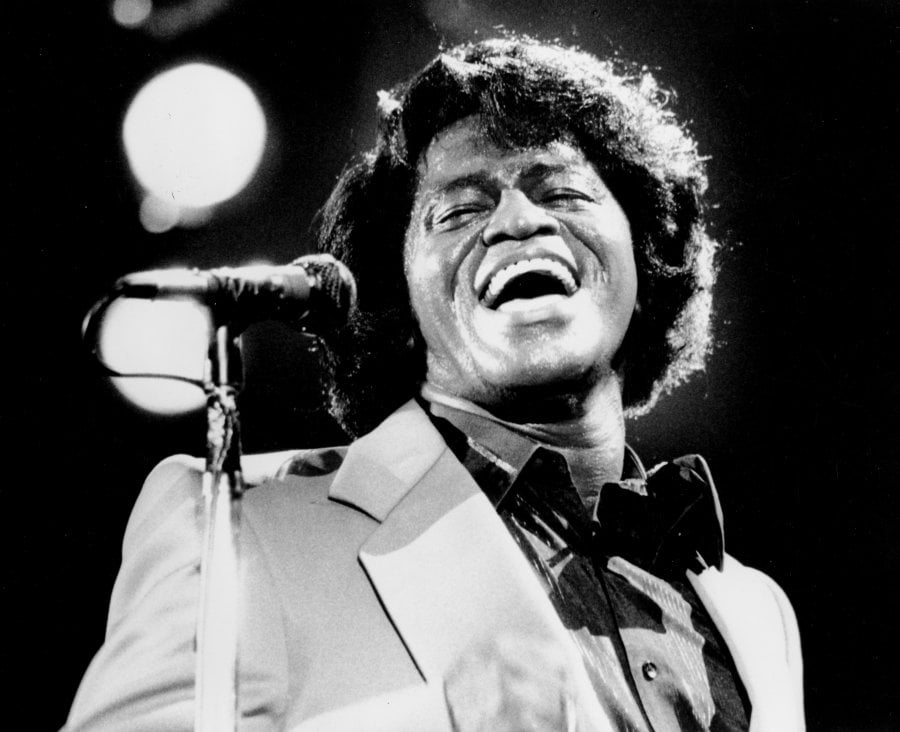
The fateful final words of James Brown

How do you put a full stop to a life as influential as James Brown’s? Very few musicians have managed to have the kind of impact he had, as Brown was not just responsible for good music but for changing the landscape of music as a whole. With a sound so iconic it can be recognised within seconds, Brown left behind a legacy most musicians can only pine for, so how could his last words ever do what he had accomplished justice?
The truth is, they couldn’t. We tend to put a significant emphasis on last words. There is something so profound about the final thing somebody said before they died, as that sentence, that phrase, doubles up as an utterance on the brink of death and a lasting sentiment that stays even once they’ve gone.
“I’m going, but I’m going in the name of the Lord”, “What the devil do you mean to sing to me, priest? You are out of tune”, and “Tomorrow, at sunrise, I shall no longer be here” are the poignant parting words of Bessie Smith, Jean-Philippe Rameau and Nostradamus, but very people are lucky enough to leave the physical world on something as cool and as representative to who they were. Bessie Smith was a religious blues singer, Rameau was a snobbish composer, and Nostradamus could predict world events. So, what was James Brown?
To appreciate the magnitude of his final words and whether they live up to his legacy, we need to understand more about who he was. That’s where the difficulty comes in. Brown was far from one-dimensional, and to just label him as a singer or a musician seems to be somewhat of a disservice.
If modern musical performance is the entire universe, James Brown and his big band were the Big Bang. He set the standard for a dynamic live performance and became the absolute pinnacle of soul music in the process. When you go to live gigs today, if you see flamboyancy and dancing, over-the-top set design and stage production, all of it can be attributed to him. He was more than just a musician; he was a milestone in how music is made and performed.
Equally, James Brown had a troubled life in parts. He spent six years in prison because when he was high on PCP, he went into the insurance company next door, brandishing a shotgun and complaining that the people in the office had been using his toilet. This is a reflection of the complicated relationship he had with drugs and his strong temper.
Subsequently, if you were to describe James Brown in his essence, pairing those major highs with the major lows, you would arrive at the term human. In that sense, his final words are incredibly fitting.
He passed away on Christmas Day, 2006. It was the early hours of the morning, and his long-time manager and friend, Charles Bobbit, was by his side. Then, when James Brown passed away, he didn’t leave behind words that would make it into textbooks or that perfectly summarise his legacy. Instead, one human to another, he turned to Bobbit and simply said, “I’m going away tonight,” before taking his final breaths.
