


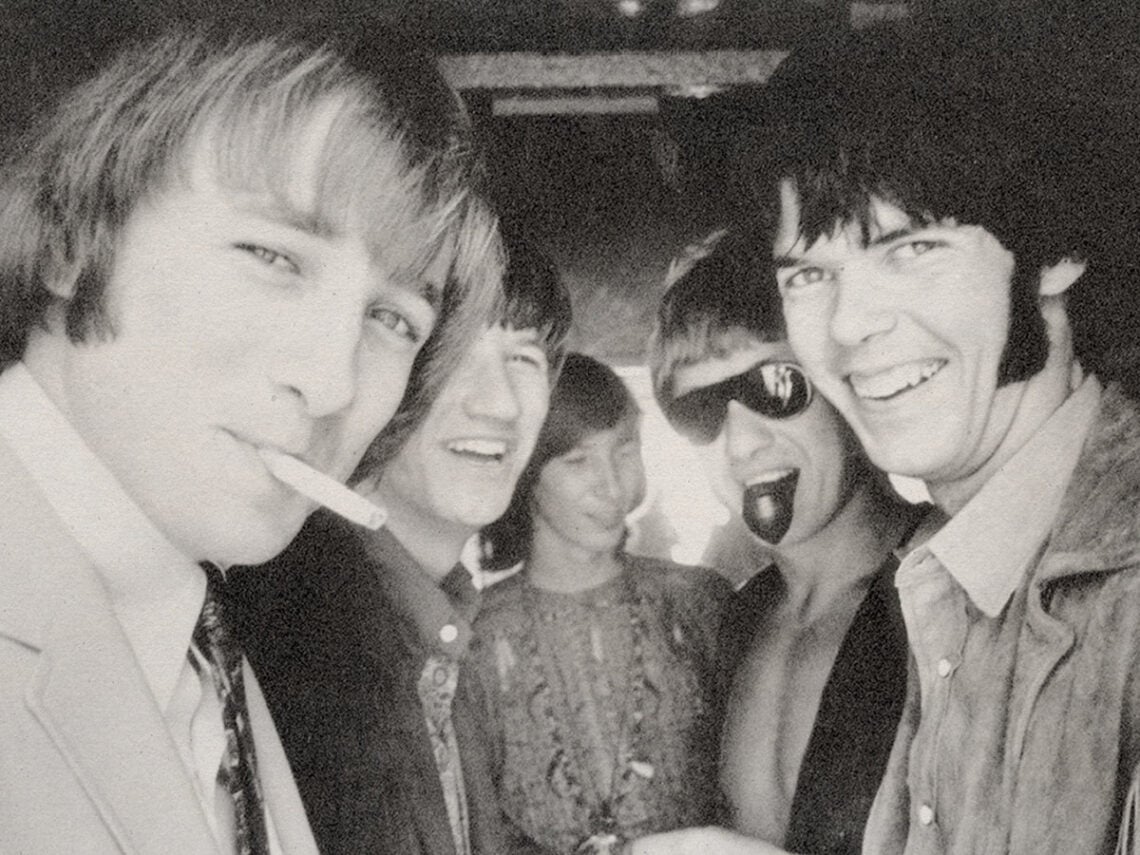
The drug bust that ended Buffalo Springfield and destroyed counterculture: “They came in and knocked my tooth out”

It’s hard to look at Los Angeles in the late 1960s with anything other than rose-tinted glasses.
The rising tide of hippie counterculture had swelled to the west, where it was set to wash out the Californian coastline in kaleidoscopic colour. Writers, musicians, artists and filmmakers all migrated to the state in a bid to profit from the cultural gold rush that was about to explode.
It all started in San Francisco, of course, primarily on Haight Street, where the beat movement of the ‘50s spawned into something more colourful in the following decade, led by its artists profiting off the economic opportunity of its cheap housing. But eventually, it moved south, into warmer and more glamorous climates, before taking over Los Angeles completely and directing the mainstream into a state of cultural liberation.
Sex, drugs and rock and roll moved freely down the city’s highways, intoxicating a generation hungry for experimentation. At the epicentre of that were a collection of musicians who congregated in the Hollywood hills, more specifically, Laurel Canyon. Joni Mitchell, The Byrds and Buffalo Springfield were but a few of the iconic names who congregated in this communal neighbourhood, losing themselves to the intoxicated process of songwriting.
Lost in those hills, it was easy for its inhabitants to forget about the outside world and thus live loosely outside of the laws they deemed antiquated in a modern society. After all, modern musicianship was built on an unhealthy relationship with drug use, so why should they fear the repercussions of such behaviour? Especially when you were a band so critically heralded as Buffalo Springfield.
But with the law looking to swiftly stifle counterculture, the band were made an example of when they reached their third strike in 1968. A year prior Bruce Palmer had been deported back to Canada for marijuana possession and then snuck back into the country and rejoined the band, he managed to be the cause of another drug bust, leading to a second deportation in ‘68.
Then that year they completed the hat trick, when the cops busted in on Stephen Stills, Neil Young and Richie Furay jamming with Eric Clapton, fuelled by a mountain of pot. Stills quickly escaped and called the band’s lawyers, anticipating the arrest, which came for his bandmates, who were swiftly taken down to the local cop shop.
“They took me down to the Sunset and Clark, the police station,” Young remembered. “Took me inside. We were inside that cell. The cops were calling us names and everything. The one cop had real short hair, like sticking up, he had big horn-rimmed glasses and he kept calling me ‘animal’. So I called him a grasshopper. They came in and knocked my tooth out; they did this other stuff and banged us around. It happened really fast. That was kind of the ambience, you know?”
That night proved to be the final straw for Buffalo Springfield, who were already batting off rising internal tensions and their arrest that night proved to be something of a warning shot to the remaining members of the hippie movement.
