


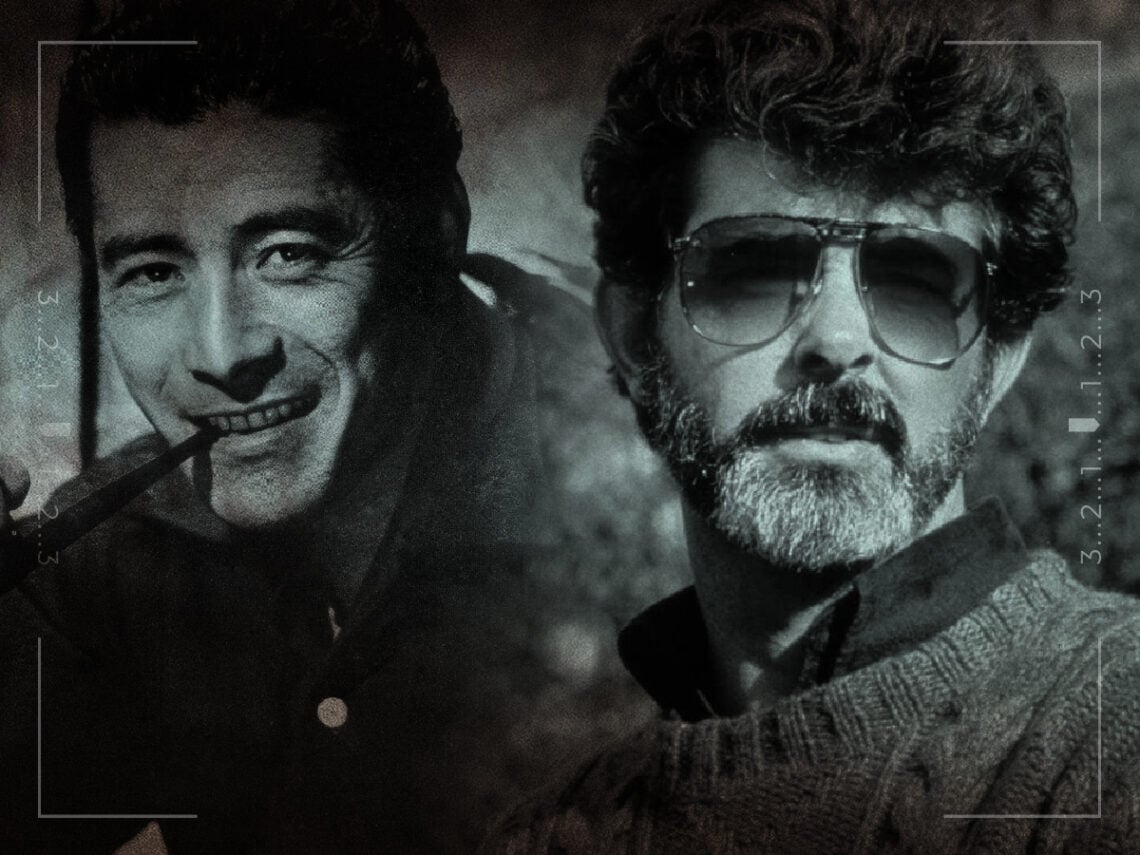
When Toshiro Mifune turned down George Lucas to protect the image of the samurai

George Lucas is one of the biggest billionaires in Hollywood, but money was no allure to Toshiro Mifune, the man he wanted to cast in his Star Wars opus.
One of the primary reasons that Star Wars became such a phenomenon was the vast array of influences that Lucas drew from when making the original film in 1977. While on its surface it appeared to be a classical science fiction serial in the vein of Buck Rogers or Flash Gordon, Lucas also drew from the philosophy of Joseph Campbell, the stories of Greek mythology, the style of JRR Tolkien’s The Lord of the Rings, the spaghetti westerns of Sergio Leone, and his own interests in anthropology, but the biggest influence of all was the films of Akira Kurosawa, the brilliant Japanese director who had become most famous for his samurai films.
For instance, he based the bumbling, comedic duo of R2-D2 and C-3PO on the two primary characters in Kurosawa’s adventure epic The Hidden Fortress, and the lightsaber fighting style from the original trilogy drew from the sword duels from several of his classics, such as Seven Samurai and Rashomon.
Star Wars was an independent production that had virtually no stars, as the most notable name from the cast was Harrison Ford, with whom Lucas had previously worked on his second film, American Graffiti, so it was necessary to get some bigger names attached, with the role of Jedi Master Obi-Wan Kenobi calling for someone who could convey authority and knowledge.
Thus, given his respect for Kurosawa, Lucas first thought of Toshiro Mifune, who had made 16 films with the director, because he felt Mifune embodied all the characteristics that he wanted out of the film’s mentor character, but the legendary Japanese actor turned him down, according to his daughter, Mike Mifune.
“I heard from my father that he was offered the role of Obi-Wan Kenobi, but he was concerned about how the film would look and that it would cheapen the image of samurai, on which George Lucas had based a lot of the character and fighting style,” said the younger Mifune, “At the time, sci-fi movies still looked quite cheap as the effects were not advanced and he had a lot of samurai pride. So then, there was talk about him taking the Darth Vader role as his face would be covered, but in the end, he turned that down too.”
Mifune’s concerns weren’t entirely off-base, given that science fiction was a genre not treated with much respect around the time that Star Wars was put into production, and one of the reasons the film’s success was so shocking was that it was largely anticipated to flop, but instead, allowed Lucas to retain merchandising and sequel rights, which single-handedly made him a billionaire.
Although Mifune certainly would have been an interesting choice to play a character like Obi-Wan, or even Darth Vader for that matter, there’s no guarantee that he would have enjoyed being part of the phenomenon, as seen in the case of Sir Alec Guinness, who earned a ‘Best Supporting Actor’ Oscar nomination for his performance as Obi-Wan in Star Wars but famously spoke out about how he regretted taking on the role.
He was frustrated that after a career of making classics, he only ended up being recognised because of Star Wars, and it’s possible that Mifune would have had many of the same concerns, so it’s best he treaded his own path.
