


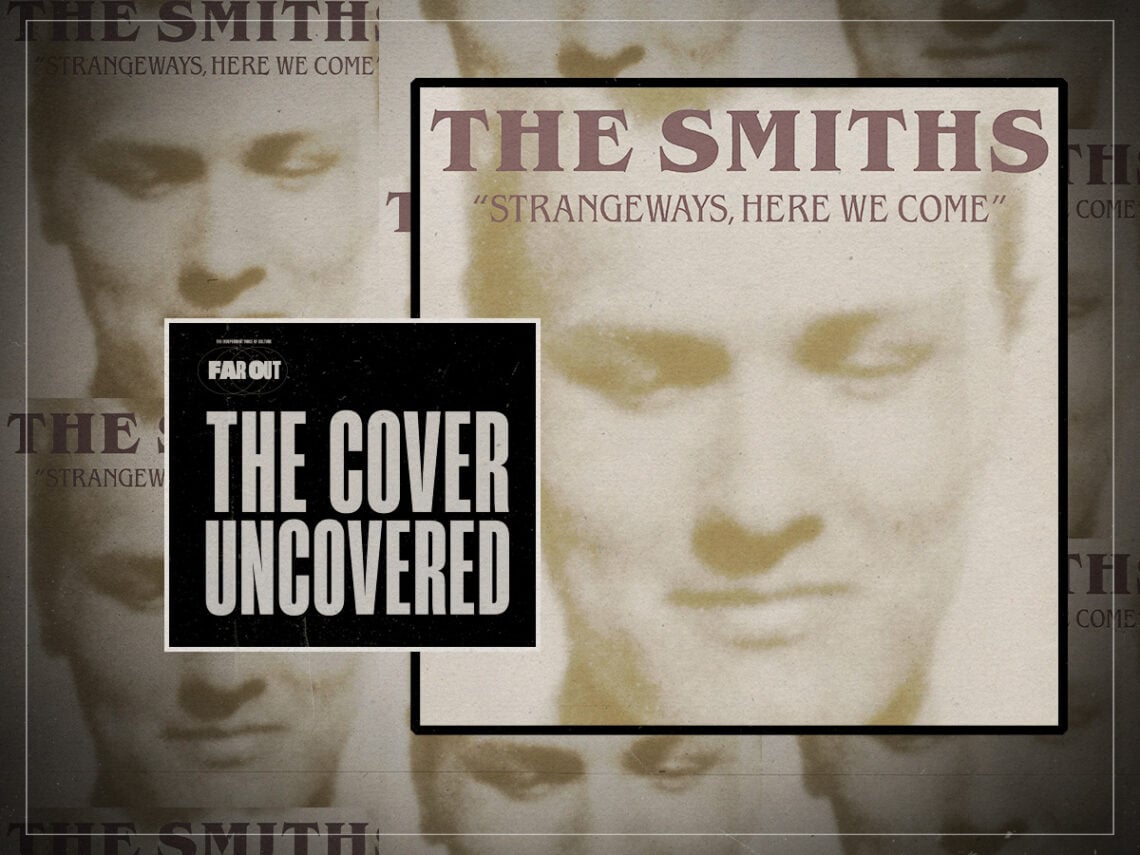
The Cover Uncovered: The story of The Smiths’ ‘Strangeways Here We Come’ artwork

In 1967, a full 20 years before The Smiths said an unplanned farewell with their final album Strangeways Here We Come, a young American film director named Martin Scorsese introduced himself to the world with his feature-length debut, Who’s That Knocking At My Door.
These might seem like two thoroughly unrelated events from pop culture history, but if Morrissey had gotten his way, the two would have an indelible link. As had already been well established throughout The Smiths’ run of classic records in the mid-1980s, the band’s frontman insisted on having say over the cover art on every record sleeve, from the singles to the LPs to the compilations, and while this did result in a cohesive string of instantly recognisable visual entries in their discography, it also created some headaches at the offices of their label, Rough Trade.
That’s because Morrissey, as a very particular cinephile, almost always plucked his cover art from pre-existing movie stills or vintage promotional photos of actors and actresses he liked the look of. The first Smiths LP features a torso-centric still of American actor Joe D’Allesandro, cropped out of a scene from the 1968 film Flesh, directed by Paul Morrissey (no relation). The famous cover of The Queen is Dead? That’s French actor Alain Delon, snipped from 1964’s L’Insoumis; he was the fourth option that Morrissey settled for after Alan Bates, Albert Finney, and George Best had all declined the honour.
Even when someone said ‘yes’ to a Moz request, however, there was still the hurdle of clearing the rights to the image with the movie studios and production companies, and more, a task that often fell to Rough Trade production manager Jo Slee, who worked alongside Morrissey on every Smiths cover, and later became his manager in the ‘90s.
“We’d get new artwork roughs in from Morrissey, and then I took on the Pinkerton’s Detective Agency job of tracking down who was in the picture or who had the rights,” Slee recalled in the book Document and Eyewitness: An Intimate History of Rough Trade.
“We had some initial refusals from people Morrissey wanted to use on record sleeves. Harvey Keitel, as I recall: gracious but cautious.”

Harvey Keitel was a well-established Hollywood star at 48 when Slee managed to get a hold of him in 1987. He was a bigger name than the average Smiths album cover star, but there were hopes he’d approve of Morrissey’s desire to use a still image of his face from that aforementioned 1967 film, Who’s That Knocking At My Door, which very few people, outside of true Martin Scorsese completists, had seen (the film was made on a $70,000 budget and made less than $17,000 in cinemas).
The image Morrissey had selected of a 28-year-old Keitel laughing maniacally, head tilted back, mouth agape, cigarette in one hand, whiskey glass within reach of the other, was ideally suited to the title and tone of the new and ultimately final Smiths album, Strangeways Here We Come. Designed with a dark blue Pantone in the old jazz record style that Morrissey preferred, it might have gone down among the best of all the Smiths record covers, if only Keitel had given Rough Trade the thumbs up.
Instead, according to Slee, the Taxi Driver and Reservoir Dogs star let it be known that, having never heard of The Smiths himself, he couldn’t, in good conscience, agree to the use of his image. Caught a bit off guard by the rejection, Slee and Morrissey were forced to scurry about for a new idea, as Strangeways was essentially in the can and ready to go, but was now lacking its lead actor, so to speak. Under pressure, Morrissey found himself drawn back to an old, reliable source of inspiration: James Dean.
Only a few months earlier, Morrissey had proven that his taste in cover stars wasn’t limited to performers from obscure British kitchen sink dramas, as he’d had the sheer audacity to put none other than ‘the King’, Elvis Presley himself, on the sleeve of the single for ‘Shoplifters of the World Unite’. If Elvis was fair game, Moz’s life-long hero, Jimmy Dean, certainly could be, too. Rather than bark up that tree, though, he returned to the 1955 film East of Eden, and honed in on Dean’s lesser-known co-star, Richard Davalos.
Davalos, unlike Keitel, was a bona fide Smiths fan; the 56-year-old actor, perhaps having read Morrissey’s cult-classic biography of James Dean, or merely admiring his retro quiff, made a point of connecting with the singer during the Smiths’ 1986 US tour.
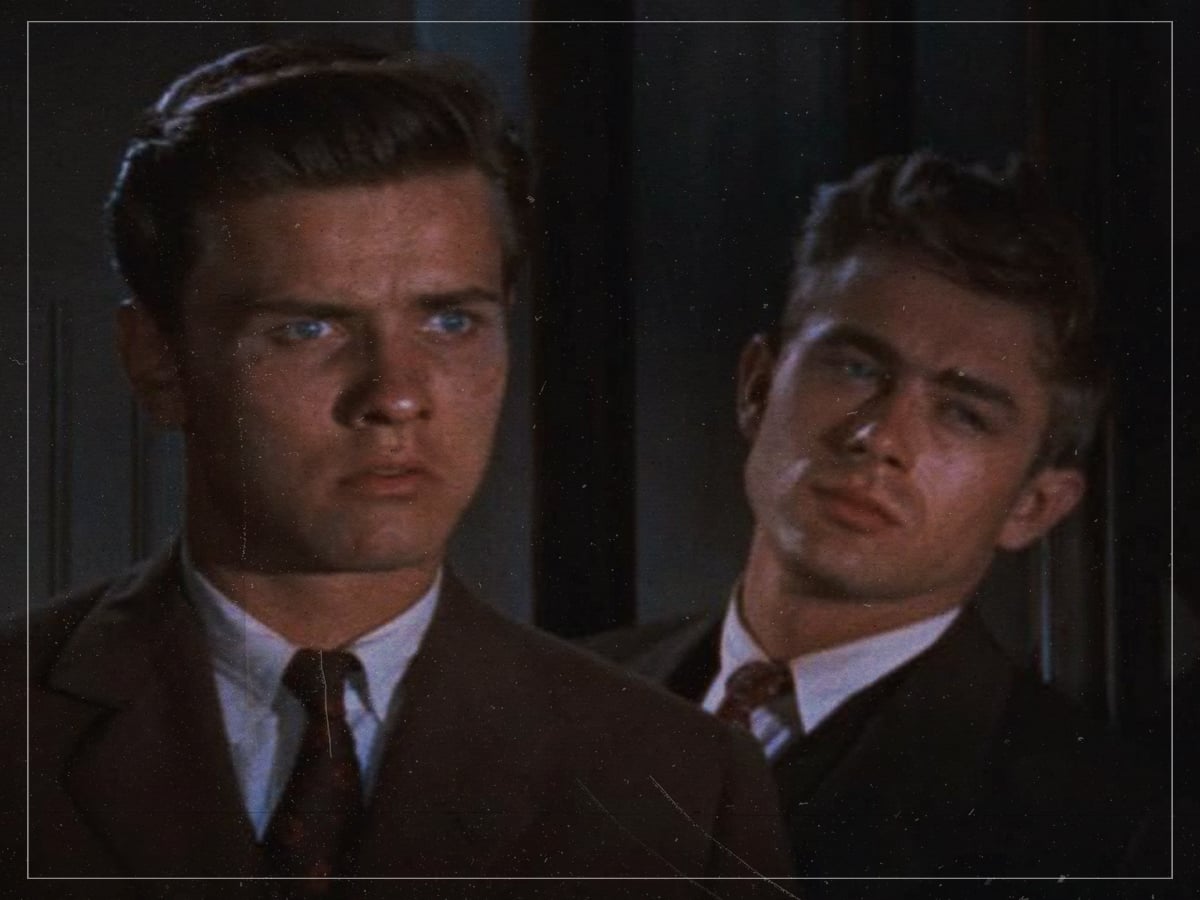
“Backstage in Los Angeles,” Morrissey wrote in his Autobiography, “The actor Richard Davalos walks towards me, and, saying nothing, places a square-faced silver ring on the third finger of my left hand. Looking not an hour older than when he famously played James Dean’s screen brother in East of Eden in 1955, Davalos now lives in Echo Park and tends to his garden. A series of beautifully printed letters from Richard arrive at Cadogan Square: ‘By way of thanks for your magnetic performance here in Los Angeles. It was a truly remarkable evening. You are so very special. RICHARD’.”
With that surreal moment fresh in his mind and the ring still on his finger, Morrissey decided to pay the ultimate tribute to Davalos and selected a grainy photograph from the set of East of Eden as his inspiration for a new Strangeways album cover. In the image, Davalos is standing behind James Dean, looking down at the actor, who’s sitting awkwardly and pensively in a chair, seemingly preparing for their next scene together. Interestingly, Morrissey elected to use this photo, but to crop his hero clean out of it, focusing on the slightly out-of-focus face of Davalos, as if the glow of Dean’s stardom was shining towards him, creating a glare.
Davalos would later wonder why a better picture hadn’t been selected, and even admirers of Morrissey’s Smiths-era designs have routinely frowned on the Strangeways cover, finding it a bit of a bland one compared to its predecessors, and certainly compared to the Keitel alternative, which was later used as a stage backdrop during Morrissey’s solo career, after Harvey came around on it.
Knowing the full context of the Davalos photo does add some pathos to the image, though, as you can sense James Dean just out of frame, his absence adding some considerable heft to the overall effect of the headshot. It becomes particularly effective with the additional knowledge that The Smiths, themselves, were fracturing, and that Morrissey and Marr would soon be cropped out of one another’s careers, as well.
“The essence of Smiths Art (MozArt) was the will to have every Smiths sleeve as well turned out as possible,” Morrissey wrote in his memoir, “And it came from an idea I had to take images that were the opposite of glamour and to pump enough heart and desire into them to show ordinariness as an instrument of power, or, possibly, glamour. Bits of neo-realism, bits of brutality, with the task being to present cheerless and cluttered bed-sitter art in a beautiful and proudly frank way.”
