


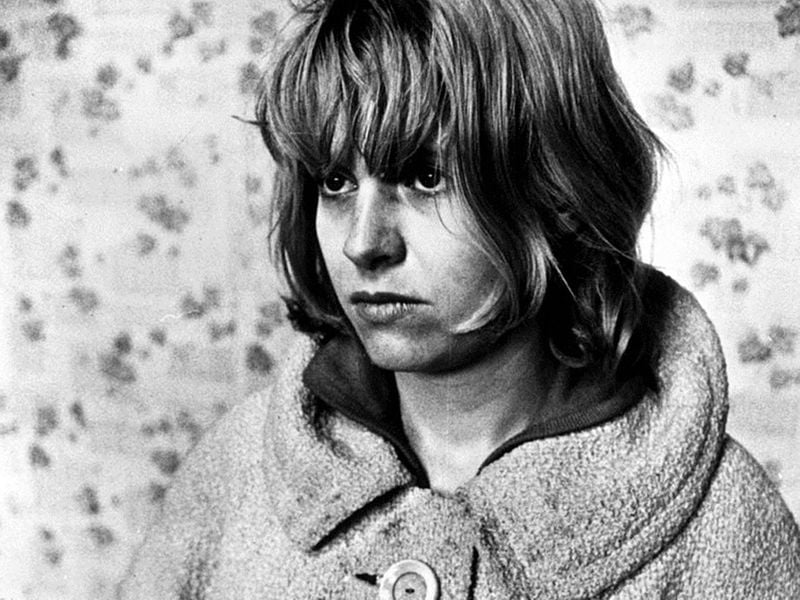
10 essential films from the ‘Kitchen sink realism’ movement

Kitchen sink realism was a unique cultural movement in British history that exposed the social problems of modern society through art. Kitchen sink dramas broke from the “well-made” tradition of their predecessors by indulging in social realism that unsettled the status quo. A general theme from this movement was the disillusionment of “angry young men” who rebelled against the oppression of modernity.
One of the pioneers of the Kitchen sink realism movement, Tony Richardson, once said in a 1960 interview: “The sort of films I will always want to make will be this kind, about the world we are living in, films that are part of that world, and I think this is the sort of thing the film does best. So far it has been possible to finance these films-although there will always come a time when one can’t, but so far we have been very lucky.”
He went on to talk about the landscape of British cinema during that period, “I don’t think there are many people yet in England who want to make the films I have been speaking of in England, but I think there will be. Film is a director’s medium, and I don’t think there are enough directors who want to do this sort of film.”
Our latest spotlight on world cinema features 10 essential films from the Kitchen sink realism movement. Through this curated collection, we hope that the reader can get a better idea of the artistic sensibilities of this cultural shift in British cinema.
The ‘Kitchen sink realism’ movement best films:
Room at the Top (Jack Clayton – 1959)
Based on John Braine’s eponymous novel, Room at the Top follows the life of an ambitious young guy as he navigates the labyrinths of existence. A fascinating investigation of class issues and the institution of marriage, the film remains a relevant sociological document.
Room at the Top received widespread critical acclaim and was nominated for six Academy Awards, winning two of those categories including a Best Actress triumph for Simone Signoret. It is now remembered as one of the first dramas from the Kitchen sink realism movement.
Saturday Night and Sunday Morning (Karel Reisz – 1960)
A fantastic film adaptation of Alan Sillitoe’s novel, Saturday Night and Sunday Morning tells the story of a young machinist who rebels against the conservatism of his elders by drinking and indulging in an illicit affair. The film received multiple accolades and the BFI named it as the 14th greatest British film of all time.
Reisz commented, “The cinema reflects society rather than changing it, because suddenly you find different things in the nerves of the audience, and those are the things that become popular. But these movements, changes, are extremely difficult to perceive.”
The Loneliness of the Long Distance Runner (Tony Richardson – 1962)
One of the finest coming-of-age films ever made, The Loneliness of the Long Distance Runner provides a powerful commentary on youth and discipline. Richardson explores themes of class-consciousness through the case of a young boy who manages to find individual liberty in an institution that constantly tries to de-individuate its subjects.
“I just love making movies,” Richardson once said in a 1982 interview. “I love the life of a film set. Once on a plane I sat next to Alfred Hitchcock, and he told me that because he’d planned everything in his head before he even walked on the set, shooting a film was something of an anticlimax.”
The L-Shaped Room (Bryan Forbes – 1962)
Starring Leslie Caron and Tom Bell, The L-Shaped Room is about a young French woman (played by Caron) who arrives in London while she is pregnant. Her new affair with another guest at her boarding house is threatened by the looming reality of motherhood. For her brilliant performance, Caron won the Golden Globe and BAFTA for Best Actress.
In a conversation with Alfred Hitchcock, Forbes said: “Film is better in black-and-white for me. I confess that I have never been satisfied with the films I have made in colour.” Hitchcock responded by stating, “I think that colour should be reduced and desaturated down so that the only colour left on screen is the flesh colour of the face.”
Billy Liar (John Schlesinger – 1963)
Like many of the works from this movement, Billy Liar launches an indictment of economic inequality and misguided youth. It stars Tom Courtenay as an underachieving young man who squanders his opportunities and makes poor decisions.
“If most of my films have anything in common,” Schlesinger said during an interview with Roger Ebert, “It’s an interest in human relationships, particularly the more extraordinary and difficult kinds. I find the struggle of characters against the odds terribly interesting.”
This Sporting Life (Lindsay Anderson – 1963)
An adaptation of David Storey’s novel, Anderson’s 1963 drama explores the travails of a coal miner who gets recruited for a rugby team. This Sporting Life stood out from its contemporaries by indulging in what has been labelled as “emotionalism”.
Anderson reflected, “By the end of the ’60s the radical impulse in British filmmaking was over. In particular, the rush to conformism which has characterised Britain during the last twenty years has deeply affected movie making here. On the positive side, television, and specifically the policy of Channel 4, has helped filmmakers in this country, since it has given some relief to the eternal economic problem.”
The Leather Boys (Sidney J. Furie – 1964)
An important addition to the legacy of queer cinema, The Leather Boys investigates the rocker subculture. The film touches the subject of homosexuality through the story of a gay motorcyclist who gets trapped in an unwanted marriage.
“I think it’s just the ability to pretend, and having that imagination and passion and being consumed about what I do. I always want to get it right,” Furie said. “I immerse myself in it and every single detail is important. Frankly, that’s the fun part, the fact that you’re able to do that.”
Cathy Come Home (Ken Loach – 1966)
Once voted as the “best single television drama”, Ken Loach’s 1966 work was a part of BBC’s The Wednesday Play anthology. It presents the difficulties faced by a British woman who is betrayed by the country’s poorly managed welfare system.
Loach cited the Italian neorealism movement and the Czech New Wave as his primary sources of inspiration: “In these films, people are just being, not performing. And what I was doing was getting performances I didn’t believe. So I learned from my mistakes.”
The Family Way (Boulting Brothers – 1966)
This 1966 comedy-drama presents the awkwardness of a newlywed couple who end up stuck with the husband’s family instead of embarking on their honeymoon. Instead of the usual romanticisation of such events, The Family Way emphasises the suffocating lack of privacy.
The Family Way ended up receiving favourable reviews and became a commercial success in the country. John Boulting even claimed that it was the most successful British film that was made that year. Hayley Mills delivered a standout performance as the frustrated bride, adding a surprising depth to her on-screen persona.
Bronco Bullfrog (Barney Platts-Mills – 1969)
Bronco Bullfrog marked Platts-Mills’ brilliant feature film debut, telling the story of a 17-year-old who oscillates between the exciting realms of crime and love. The film gives an insight into the familiar feeling of escapism, defying the monotony of a mediocre existence.
Platts-Mill’s work faded into obscurity after its theatrical run and the master negative of the film was lost in a rubbish skip. Fortunately, a lab employee rediscovered it and Bronco Bullfrog was released by the BFI in DVD and Blu-ray formats later.
