


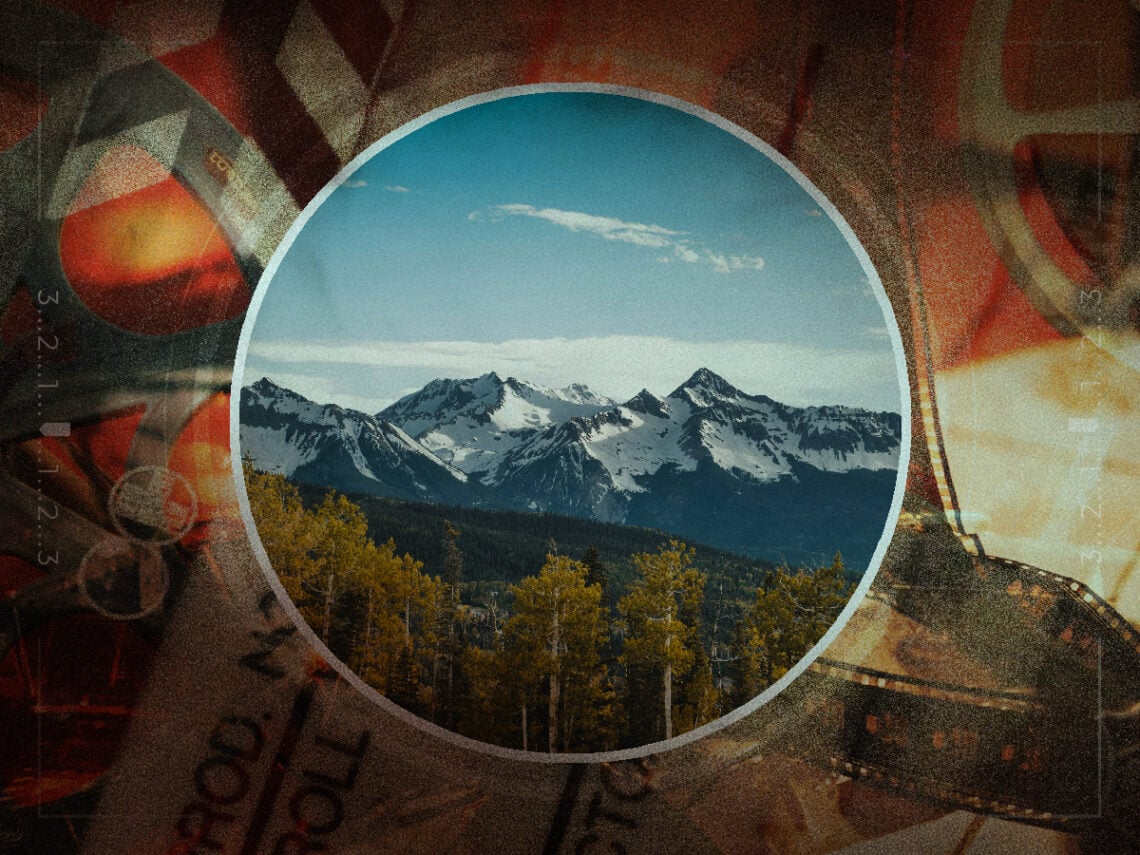
“We’re country folk up here”: The Colorado mountain town that became an iconic blockbuster backdrop

I’ve truly never understood the purpose of running on a treadmill; whenever I walk past my local gym and lock eyes with someone, endlessly running but not moving an inch, I wonder what the world did so badly to them that they daren’t take their exercise outdoors.
Right now, you share that same puzzlement, I suspect, wondering what the hell this has got to do with Hollywood. Well, it is how I would encourage cinema goers to feel when they watch a grand action-thriller, only for the outdoor sequences to be filmed inside a soundstage.
Look, I get it; the variables are completely controllable, and ultimately, it saves the precious egos of whatever Hollywood talent has been cast from waking up at the crack of dawn to film in what could be extreme temperatures. But like running outdoors, what happened to the beauty of suffering?
The most iconic action sequences of all time have simply happened outdoors. The D-day beach landing in Saving Private Ryan, the Downtown LA shootout in Michael Mann’s Heat or any of the outrageous Tom Cruise stunts from the Mission Impossible series can be used as telling examples of this, but one of the true custodians of this school of thought is the ever ambitious Christopher Nolan, who has made it his career goal to revolt against any of the industry shortcuts that have been introduced over the years and instead pay homage to the analogue method of recording in film, on location, at all times.
It meant that for his 2006 film The Prestige, when he wanted to faithfully portray the life of Nikola Tesla, who built a laboratory in 1899 in Colorado Springs to test wireless power transmission, rather than keep the scenes safe within the walls of a studio, he flew his crew out to the American state to complete scenes that made up a small percentage of the film.
His attention to detail was rewarded, even if he didn’t use the springs themselves and instead filmed in the town of Telluride. But he knew it would work there, for their mountain ranges have become somewhat of a mainstay in Hollywood blockbusters and have regularly been deployed to depict the vast mountain ranges of wild America. Butch Cassidy and the Sundance Kid, True Grit, City Slickers and Cliffhanger all made up some of the 20th-century big hitters that have all filmed there, while Quentin Tarantino’s The Hateful Eight also joins the alumni, proving the Telluride mountain range has become as reliable as anything in modern Hollywood.
Its reliability largely comes from the fact that it has snow on the ground seven months out of the year, which Tarantino particularly utilised in his western thriller. In doing so, he descended his nearly 200-strong crew to the 900-acre Schmid Family Ranch. The Schmid family have become somewhat accustomed to Hollywood royalty heading inland to their ranch, where, despite their continued visits, they still can’t come to grips with the different style of life.
“We’re country folk up here. You get 150 people around that don’t know about the country, it’s a learning experience,” Sid Schmid said, “People were not used to driving on snowy roads and things we deal with every day in the country. It was fun, (but) Hollywood is a lot different than Wilson Mesa, Colorado.”
Every single one of these examples has not only represented the very best of Colorado and its people who helped the crew, but ultimately benefited the film. There’s no replacing the real world with curated artifice, and in trying times of AI danger, that’s as important a message as ever.

Never Miss A Take
The Far Out Quentin Tarantino Newsletter
All the latest Quentin Tarantino content from the independent voice of culture.
Straight to your inbox.