


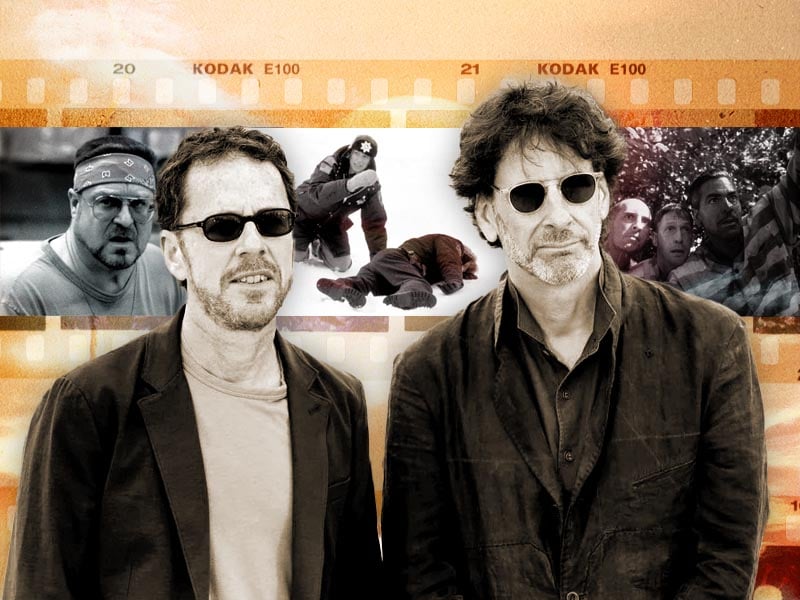
The Coen brothers’ favourite Federico Fellini film

In his masterpiece Karoo, Steve Tesich wrote: “Life, it seems, is not meaningless but, rather, so full of meaning that its meaning must be constantly murdered for the sake of cohesion and comprehension. For the sake of the storyline.” This is a premise that has never been lost the Coen brothers, or Federico Fellini for that matter.
Both directorial maestros understand that life is surreal, so films should surely follow suit. Greater realism and meaning can be borne from flirting with the wayward nature of life in the little fables that they tell. The Big Lebowski and Juliet of the Spirits might deliver a linear message, but amid the irreverent madness, there is a lot more depth, fidelity to the way life really goes, and meaning that a million other blockbusters combined.
It is little surprise that the Coen brothers took inspiration from Fellini on this front. They have long cited the Italian director as one of their joint favourites and a major influence on their style and stories. However, for them one film stands out as is finest: Il bidone.
The movie arrived in 1955 and is sandwiched between La strada and Le notti di Cabiria in what has become known as Fellini’s loneliness trilogy. While it might be somewhat more overlooked than the former of those two, it arguably offers more in the deft way it intermingles humour and tragedy in a filmic fable of the perpetuating human comedy.
The neo-realist masterpiece sees a trio of conmen continually swindle the poor and needy before karma turns the table in comic style. Starring Broderick Crawford, Richard Basehart and Giulietta Masinna, the film – often referred to as the translated title, The Swindle – captures Fellini’s penchant for the flamboyant in the brilliant Nino Rota dance scenes and how these are quickly tempered with shocking moments of poignancy when story suddenly takes hold of the scenes.
Hot on the heels of La Strada, the film helped to cement Fellini’s place as one of the most prominent filmmakers of the era. But sadly, perhaps because of how prolific he proved at the time and the landmark nature of La Strada, it movie has since been somewhat overlooked despite it being perhaps his defining movie, effortlessly depicting how isolation and struggle can make us lose sight of life and its evident virtues.
Lines such as, “The most important thing when you’re young is to be free. It’s more important than the air you breathe. If you’re scared now, imagine when you’re my age. The years roll on by,” live long in the memory and show the rarely recognised truth of Fellini that the Coens most certainly seem to be aware of: the magic of Fellini is in the script, the bells and whistles just make a ball of it all.
