


The classic 1968 rock song Neil Peart couldn’t stand: “The antithesis of what I want to do”

Every part of Rush’s catalogue was about expanding the palette of what rock could do.
Even though not everyone wanted to get on the prog-rock train with them, those who decided to stick around got an education on what could be done within an odd time signature and nine minutes of time, with the Canadian icons pounding away on their instruments until they were pleading for mercy. Although they had their progressive heroes to learn from, Neil Peart felt that this iconic psychedelic tune was far from his favourite tune to revisit.
When you break it down, though, psychedelic rock wasn’t too far away from progressive music back in the day. There were people who were still willing to put flowers in their hair circa 1969, but those willing to get a bit weirder started to go down the road that King Crimson helped to pave, usually taking odd time signatures and seeing where their songs could go.
And it wasn’t like Rush was averse to the psychedelic brand of rock and roll. Across their covers EP Feedback, they were more than happy to cover ‘For What It’s Worth’ by Buffalo Springfield and ‘Seven and Seven Is’ by Love, which shows that they at least had some records in their collection that were good to get stoned to.
Considering their love for long songs, ‘In-a-Gadda-Da-Vida’ by Iron Butterfly should be right up their alley. The whole point of the tune was to make an excuse to play endless solos, and since one of the main sections contains one of the most epic drum solos of all time, it feels like Peart could have been taking notes when he was sculpting together his first solos.

Then again, there’s a difference between being an elongated jam and having something carefully choreographed, and for Peart, Iron Butterfly crossed the line more than a few times. Even though the central riff is fantastic, it’s hard to take everything seriously after three minutes when everyone stops worrying about the song and starts throwing in different pieces for the hell of it.
For someone known for making distinct parts, this loose sense of jamming never sat well with Peart’s taste, saying, “‘In-A-Gadda-Da-Vida’ – that was not an inspiration. See, these are the divisions. ‘In-A-Gadda-Da-Vida’ was the antithesis of what I wanted to do. It was plodding and monotonous. People would come up to me and go [affects stoner voice], ‘Can you play ‘In-A-Gadda-Da-Vida’, man?’ And I would go, ‘No, I cannot. I can play Wipe Out!’”


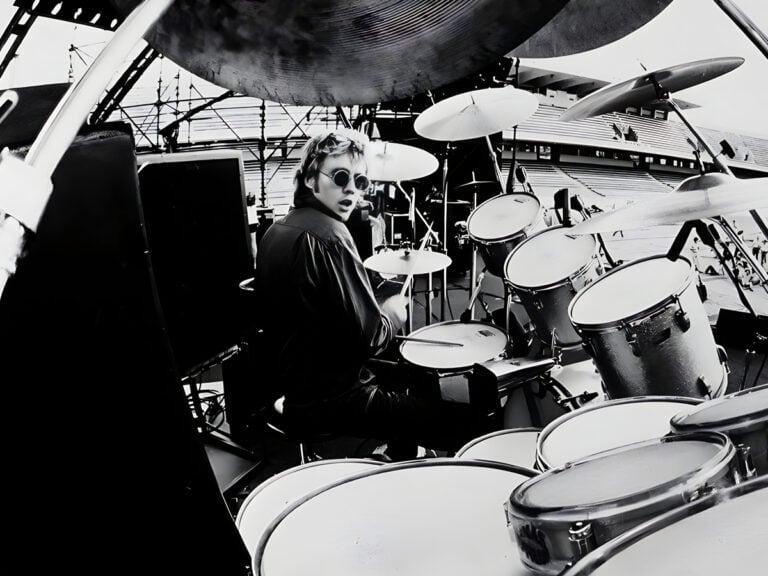
And it’s pretty easy to see where Peart was coming from. Even though a tune like ‘Xanadu’ matches the psychedelic classic in terms of run-length, everything is carefully constructed, whether that’s the different pieces that layer on top of each other or hearing the different chapters that Peart wrote about a man held within a pleasure dome and drinking the milk of Paradise.
For Peart, technical ambition only worked when it served a larger emotional or narrative purpose. Rush could stretch songs past the ten-minute mark and fill them with dizzying instrumental passages, but there was always an internal logic holding everything together.
Whether it was the science-fiction storytelling of 2112 or the shifting movements of Hemispheres, the complexity was carefully mapped out rather than left to chance. That attention to structure was what separated progressive rock from simple indulgence in Peart’s eyes.
Even so, his criticism of ‘In-A-Gadda-Da-Vida’ never came from a place of disrespect toward experimentation itself. Rush owed plenty to the psychedelic era’s willingness to push beyond the three-minute pop song, and bands like Iron Butterfly helped create the environment where sprawling rock compositions could exist at all. Peart simply believed that evolution meant refining those ideas into something sharper, more disciplined and ultimately more rewarding for the listener.
So, despite being one of the most insane progressive rock bands in the world, Rush still understood the importance of keeping everything structured. There are still pieces in their catalogue that were absolutely insane, but it was all done in service to a song rather than cheap instrumental wankery.
