


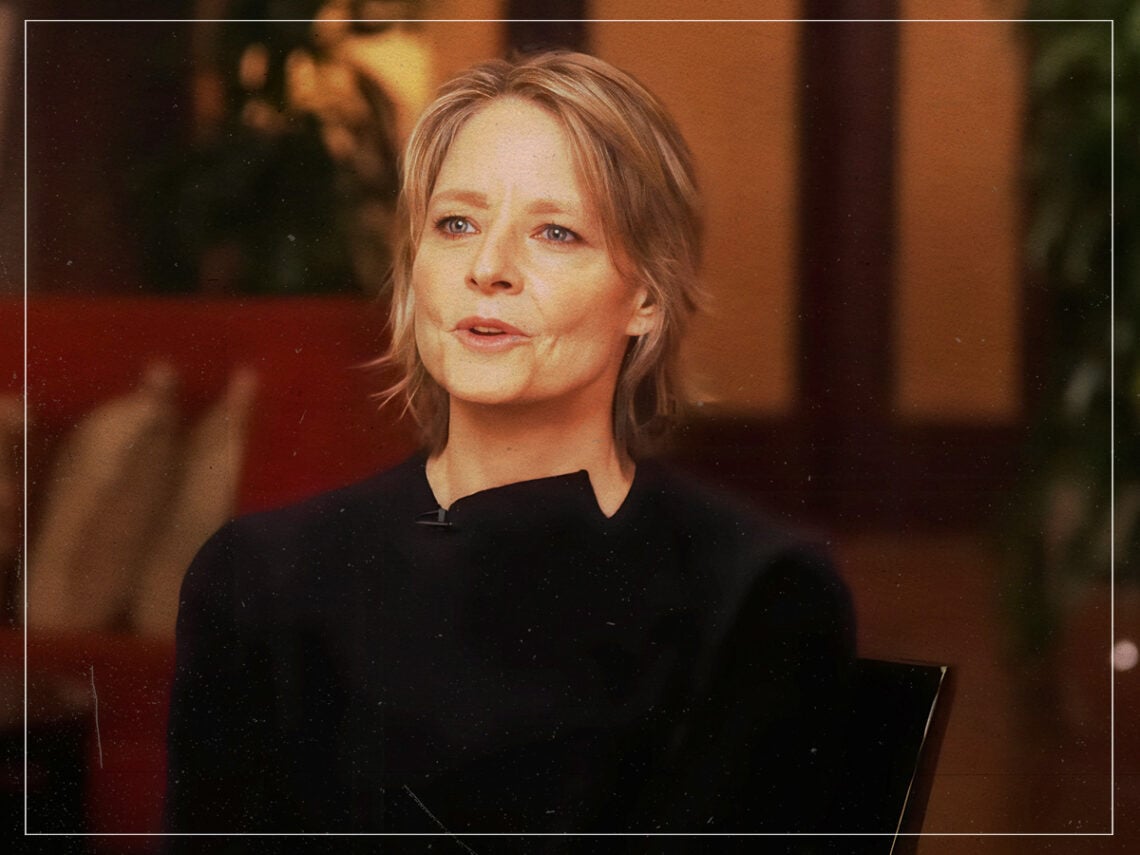
The career regret Jodie Foster will never forgive herself for: “Part of me is ashamed”

It seems almost impossible that Jodie Foster might have significant regrets about her career, given she is without doubt one of the most acclaimed actors in Hollywood history, but it’s still the case.
She’s someone who has been able to achieve the kind of longevity in the movie industry that’s rarely seen, certainly at the level she’s maintained, and that’s primarily because she was a star before she was an adult, becoming incredibly experienced in front of the camera by the age of ten.
Foster went from filming TV ads to becoming a mainstay on US network shows, appearing in more than 50 different series before making a feature film debut in 1972’s Napoleon and Samantha at just nine, a film about a boy and his pet lion (Foster was injured by the lion on set). The film that changed everything for her, however, was Martin Scorsese’s psychological thriller Taxi Driver in 1976.
At just 13, Foster put in a remarkable performance as the streetgirl who befriends Robert De Niro’s Travis Bickle, and she was duly nominated for ‘Best Actress in a Supporting Role’ at the following year’s Oscars. She would have to wait 13 years for her next nomination, but it came when she was arguably at the peak of her powers.
In a three-year span, she picked up two ‘Best Actress’ Academy Awards, first for 1988’s legal drama The Accused and then for the global sensation that was The Silence of the Lambs opposite Anthony Hopkins’s Hannibal Lecter. Three years later, she collected another nomination for period drama Nell, but then had a 20-year wait for her final nod, for 2023’s sports biopic Nyad.
For someone so talented and accomplished at such a young age, it’s probably not a surprise that she turned director at just 16 when she got behind the camera for a documentary short she wrote called Hands of Time after the BBC decided to give her the cameras and crew to make it. But it was the same year she appeared as FBI agent Clarice Starling that she helmed her first feature, 1991’s Little Man Tate.
And it’s the fact she hasn’t been able to direct as much as she would have liked that forms the basis of her major regret in cinema. She told the Directors’ Guild of America, “Part of me is ashamed that I didn’t direct more. How come I’ve only directed four movies? I had the opportunities. But I had a big career as an actor and I also raised my two sons. There was never a doctor’s appointment that I didn’t go to or a pair of shoes that someone else bought them. I’m really glad I went to every school play. And I’d never take any of that back.”
Foster’s most successful film as a director is probably 2016’s Money Monster, a thriller with George Clooney and Julia Roberts, which, while not a big hit with the critics, managed to claw in almost $100million at the box office against a budget of $27m. It told the story of a financial expert being held hostage live on TV by an irate investor.
Her most recent directing project came in 2020 when she helmed an episode in the fourth season of Charlie Brooker’s dystopian series Black Mirror, titled ‘Arkangel’. A commentary on the use of technology in ‘helicopter parenting’, it went down as one of the weakest instalments of the acclaimed show.
