


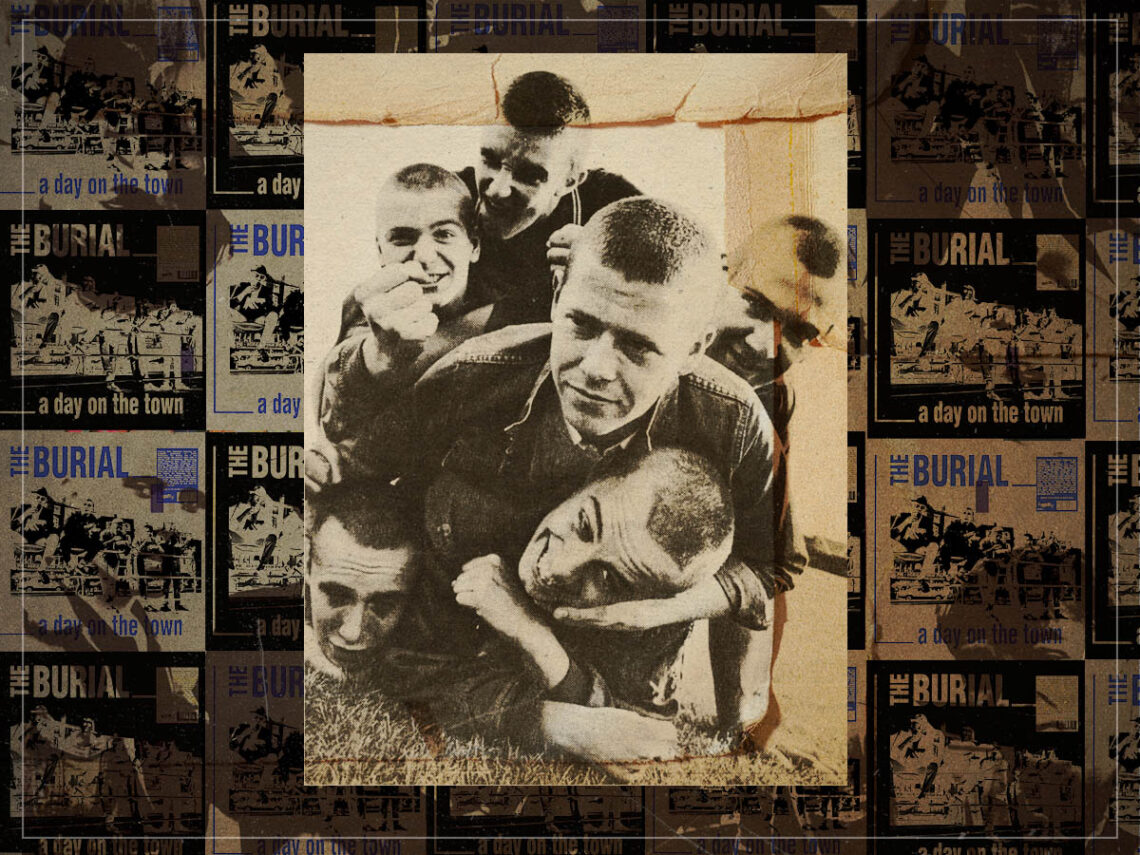
The Burial: The West Yorkshire skinheads who battled the National Front

Pop stardom is a common dream for young people, and it has been for decades. During the 1970s, however, the glitz, glamour, and fame of pop stars on Top of the Pops were unattainable for most ordinary kids—having their voices heard was little more than a pipe dream. Punk rock changed all of that. All of a sudden, the means of production were placed into the hands of any budding young musician with enough determination and DIY spirit to make their voices heard.
Groups like The Clash, Buzzcocks, and The Slits ushered in the age of punk, but before too long, every provincial town across the UK had its own distinctive punk scene. Bradford was no different.
An industrial landscape built on wool and soot-stained stone, the West Yorkshire city was on the decline during the late 1970s, much like the rest of northern England. The world was moving on, and the demand for mills and factories was rapidly depleting, leaving an entire generation of young people with no prospects and no hope for the future. This quickly proved to be a fertile breeding ground for punk rock, with local groups like The Negatives, with anthemic tracks like ‘We’re From Bradford’ inspiring a sense of hometown pride.
At the same time, Bradford was proving to be a fertile breeding ground for racism, too. Like many industrial cities across the north, Bradford saw an increase in immigration as people from Pakistan, Bangladesh, and the wider region of South Asia relocated to the city in order to work in mills and factories. These communities became an intrinsic part of the city’s cultural fabric, but far-right hate groups like the National Front were quick to hijack this multi-culturalism as a reason for rising levels of unemployment among young people.
The impact of the National Front during the late 1970s and early 1980s can be seen through the changing sound of punk rock. Early punks, overtly or not, tended to be left-wing in their output, with The Clash being a particularly prevalent example, dedicating themselves to causes like Rock Against Racism. By the early 1980s, however, an aggressive new style of punk had begun to emerge, known as Oi.
Often linked to National Front skinheads, the Oi scene gave rise to an unavoidable number of far-right and neo-Nazi punk bands, Skrewdriver and No Remorse being prominent examples. However, Oi music was not inherently right-wing, and multiple Oi groups dedicated themselves to crafting an alternative to the rising levels of fascism within the scene. In Bradford, a young skinhead band called The Burial formed with staunch leftist politics and a sound which largely eclipsed Oi.
Formed in 1981, The Burial quickly became an intrinsic part of Bradford’s leftist punk scene, largely centred around the anarchist venue The 1 In 12 Club, which still acts as a haven for Bradfordian punk to this day.
Guitarist Eric Barnes was particularly outspoken about his politics, owing to his roots in the Trade Union movement in Middlesbrough. “A lot of my family were original skins, and to us skinhead was a working-class movement, and fascism is totally opposed to that,” he once shared. “The strong grounding in working-class politics has given northern skins an abhorrence of the National Front that London skins never had.”
Although they only released one album, 1988’s A Day On the Town, The Burial were essential in taking punk and the skinhead subculture back to its leftist working-class roots. They blended a typical Oi sound with elements of ska, northern soul, and old-school punk, with lead vocalist Mick Hall often evoking a Joe Strummer-esque delivery. The album is a true masterpiece of the Oi age, offering an expansive and unparalleled sound which perfectly subverted the image of Nazi skinheads, which had become synonymous with Oi by that time.
The Burial disbanded the same year that A Day On the Town was released, and the band soon joined the ever-growing list of obscure local punk bands who came and went without achieving much in the way of mainstream attention. Nevertheless, their existence was vital in offering an alternative to the far-right leanings of Oi and the National Front’s hijacking of the skinhead subculture.

Never Miss A Beat
The Far Out Punk Newsletter
All the latest Punk content from the independent voice of culture.
Straight to your inbox.