


‘Boots and Braces’: Five albums that capture the spirit of skinhead

The musical landscape of the United Kingdom was once presided over by warring factions of youths, each with their own image, music, and attitude. Mods, rockers, hippies, punks, skinheads, dressers, and goths—all of these disparate youth tribes have left their mark on the cultural fabric of this island. However, none of these subcultures has enjoyed as complicated or controversial a history as that of the ska-obsessed skinhead movement.
Skinhead first established itself on the scene during the latter years of the 1960s, after the mod subculture began to die down somewhat. Many people had come over to the UK from the Caribbean to help rebuild the nation following World War Two, and by the 1960s, these communities had become an integral part of many predominantly working-class areas up and down the country. As a result, you had white British kids growing up side-by-side with kids from the West Indies. So, the original wave of skinheads were born from a blending of those two cultures.
Ska and reggae music, which had exploded in popularity in Jamaica following the island’s independence from Britain, provided a national identity to many Jamaicans, and they had brought that identity with them to the UK. Soon, many white British kids became entranced by the infectious rhythm of the music, and thus, the skinhead subculture was born. Despite its multicultural origins, however, the movement was soon hijacked by far-right hate groups like the National Front, who preyed upon the disenfranchisement of the youth during the 1970s to spread racism and hate speech.
During the latter part of the 1970s, this racist reputation that skinheads had amassed was wrestled back somewhat by the popularity of the 2-Tone ska movement, which blended old-school ska with modern punk music. Then, during the 1980s, skinhead changed once again, embracing the punk-centric sounds of ‘Oi!’, which had very little in common with the boss reggae beginnings of the subculture back in the 1960s. Given its ruthlessly diverse history, it can be difficult to navigate the music of the subculture, so we have helpfully selected five records that sum up the spirit of this misunderstood youth tribe.
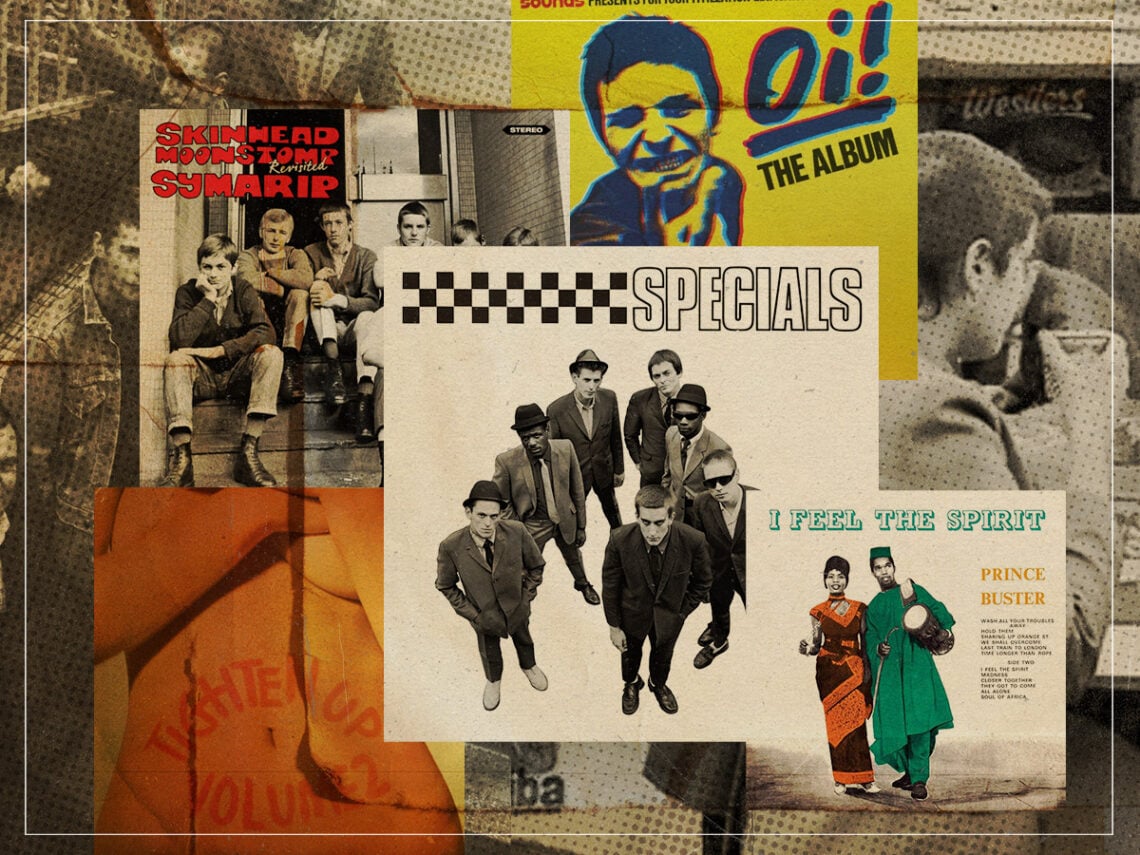
Five albums that capture the spirit of skinhead:
Prince Buster – I Feel The Spirit (1963)
Without the mod subculture, it is likely that skinhead would have never happened. Mod rose to prominence during the early part of the 1960s and was largely characterised by a love of Italian suits and scooters, as well as American soul and jazz music. However, as the movement grew, it began to incorporate other musical styles, including some of the very early ska releases, like Prince Buster’s I Feel The Spirit.
Buster was an essential architect of the ska genre, and he amassed a colossal following within the mod culture after being introduced to the UK by the children of the Windrush generation. It was records like this which first introduced UK audiences to the incredible music of Jamaica, which would later be expanded upon when the roots of skinhead began to emerge from the back-end of the modernist movement.
Various – Tighten Up Volume 2 (1969)
The story of ska in the United Kingdom would be nothing without the influence of Trojan Records. Founded in 1968, just as the skinhead subculture was starting to establish itself, the label released all the best Jamaican ska, reggae, and rocksteady onto the UK market. Their Tighten Up series of compilations were particularly influential on skinhead, owing to their low cost and saturation of incredible ska tunes.
Volume Two of the series was released in 1969, at the peak of skinhead’s first wave. Featuring music from the likes of The Pioneers, Lee ‘Scratch’ Perry’s The Upsetters, and Joya Landis, among many others, it offers a compelling smörgåsbord of early ska excellence. Without Trojan Records, it is unlikely that skinhead would have ever experienced the all-encompassing impact of ska that came to define its early period, and Tighten Up Volume 2 is a prime example of that fact.
Symarip – Skinhead Moonstomp (1970)
For the most part, the early skinheads adopted music from elsewhere—whether that be the underground sound systems of Britain’s Caribbean population or the recycled records of the Trojan catalogue. That all changed in 1970 when the British-based reggae group Symarip started to make music exclusively for the skinhead demographic. Their Trojan-released album Skinhead Moonstomp marked a definitive point in the history of the subculture, showing how much these Dr Marten-clad youths had impacted the music scene of the UK.
The album itself is probably best remembered for its title track, based on the Derrick Morgan classic ‘Moon Hop’, which had been released in the UK a year prior. The infectious rhythm and football terrace chanting made it an essential part of every skinhead’s record collection. Years later, during the 2-Tone revolution, the track witnessed something of a renaissance, as groups like The Specials would regularly cover it during their live performances.
The Specials – Specials (1979)
While the 2-Tone movement, which kicked off with the release of The Specials’ ‘Gangsters’ in 1979, was not exclusively targeted towards the skinhead subculture, skinheads formed a significant portion of its audience. The release of the stunning debut album Specials helped to establish this new era of ska music within the musical mainstream and, in doing so, spread a message of racial unity and togetherness, in stark contrast to the far-right politics which had infected skinhead.
The tracklisting of this album features numerous covers of old-school ska classics like Dandy Livingstone’s ‘Rudy, A Message To You’ or The Maytals’ ‘Monkey Man’, updated to reflect the politically tumultuous period of the late 1970s. On songs like ‘Concrete Jungle’, ‘Do The Dog’, and ‘Doesn’t Make It Alright’, The Specials denounce the violence of the National Front, offering a refreshed identity to this new generation of skinheads, more in keeping with the original ethos of the subculture.
Various – Oi! The Album (1980)
During the 1980s, the spirit of skinhead became almost totally removed from its original aims with the rise of ‘Oi!’ music. The hardened offspring of punk rock, Oi, featured a stripped-back, abrasive sound and an aggressive performance style. The greatest efforts of this movement – of which there are, admittedly, few to choose from – were encapsulated on the 1980 compilation album Oi! The Album. Featuring tracks by Cockney Rejects, 4 Skins, and Angelic Upstarts, among others, the LP acts as a good reading list for the Oi movement.
However, this style soon attracted the very same National Front crowd that 2-Tone had hoped to eradicate, leading to the establishment of neo-Nazi Oi groups like Skrewdriver, No Remorse, and Skullhead. The Oi scene caused irreparable damage to the skinhead subculture, forever linking the image of shaved heads, Dr Martens, and braces with extreme violence, hatred, and racism. Even in the years since, with multiple groups attempting to resurrect skinhead, it will perhaps never shake the reputation that Oi gave it.
