


‘The Bride!’: when an ambitious idea falls flat on its face

Seated for The Bride! at my local cinema, I didn’t really know what to expect, except that a powerhouse performance from Jessie Buckley would be abound. I’d kept my knowledge of the plot to a minimum because sometimes it’s best to be surprised, but in this case, my surprise was quickly mixed with confusion.
As soon as the movie began, Buckley’s embodiment of Mary Shelley appeared in the form of a shadowy, spectral close-up. She’s instantly captivating, speaking with the most perfect, poshest English accent imaginable, but when she said, “Here comes the motherfucking bride”, I couldn’t help but feel disappointed by the sheer amount of cringe on display. You can imagine Maggie Gyllenhaal dropping her pen in pride as she wrote that.
What ensues is a mess of ideas that seems to have real potential, but what we’re left with is an incoherent jumble of electricity, sparks flying in all different directions, uncontainable. There are moments that are genuinely exhilarating, the 1930s gangster setting providing us with some real Bonnie and Clyde action, but it’s almost as if Gyllenhaal is literally asking for clichéd reviews which compare her muddled mesh of ideas to Frankenstein’s monster.
Here, Christian Bale plays the monstrous creation, although what he really wants is love, well, the touch of a woman. He wants to experience the carnal desires he has never had access to before, so he gets Annette Bening’s Dr Euphronious to dig up Ida, a recently deceased woman whom they can make his wife. There’s certainly some rich feminist commentary here, with the ghost of Shelley reflecting on her desire to create a fleshed-out characterisation of the Bride, who is never fully realised in the novel.
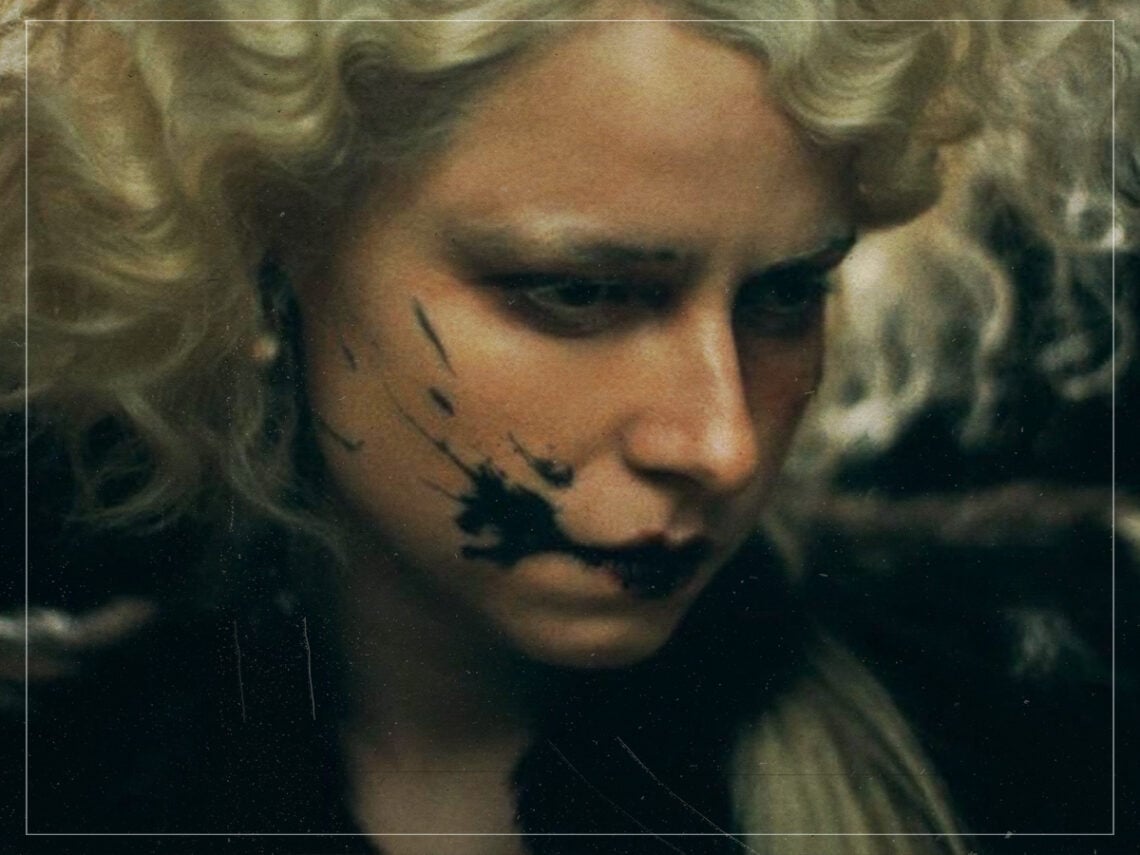
Of course, we know the character from Bride of Frankenstein, the 1935 film which saw Elsa Lanchester play her, complete with her iconic streaked hairstyle. Here, she’s imagined with a more punky edge, the film’s style and atmosphere a blend of the post-Prohibition era and the rebellious streak of the ‘70s punk revolution. The costumes are impeccable, and there are some beautiful scenes (the image of Buckley’s head in a bell jar recalls those otherworldly photos of Lee Miller), but this can’t save a film that jumps from one idea to another with little semblance of cohesion.
It’s certainly an ambitious leap to take pre-existing intellectual property and do something genuinely interesting with it, but Gyllenhaal’s ambitions feel premature. Sure, she has plenty of experience as an actor, and her debut feature, The Lost Daughter, was pretty great, but here, there’s a level of naivety.
It’s like the filmmaker assumes that we’re going to easily understand what she’s going for, but the hybridity of love story/sci-fi/musical/crime flick/gothic fantasy/thriller just blurs into something inscrutable, enough to inspire whiplash in even the most well-accustomed of viewers.
We move from Shelley possessing Ida, Franka and his new wife performing choreographed dance numbers, the pair shagging in their abandoned building hide-out, to Penelope Cruz’s Myrna investigating murders and trying to prove herself as a female detective. It’s a tonal mess, which is sometimes funny, sometimes tragic, but it’s Buckley and Bale’s performances that become the inchoate film’s saving grace.
You have to applaud the ambition found in Gyllenhaal’s film, but unfortunately, it falls flat on its face, resulting in something more insulting to Shelley’s legacy than celebratory, which really shows that sometimes, it’s best not to cram all of your ideas into one movie and spread them out a bit.
