


Putting women in the picture: how Lee Miller’s photography addresses gender bias

Before photojournalist Lee Miller even held a camera in her hands, she was being picked up by the waist by an American media titan. In a chance meeting, she’d stepped out in front of a car on a busy Manhattan street, but by sheer luck, Condé Nast grabbed her before she could be run over. That inadvertently launched her modelling career, and she was soon gracing the cover of Vogue. The editor-in-chief thought she was the perfect reflection of a “modern girl”, a description she consistently over-delivered on as she broke out of modelling and into the art world.
While Miller was embraced by New York’s photographers, she was dropped as quickly as she was discovered. Kotex had used a picture of her, without her permission, to advertise their menstrual pads. The fashion world had dubbed her the perfect modern woman but effectively ended her career over the incident. She dabbled in fashion for a while longer, mainly drawing outfits, but soon found she was drawn to photography.
Part of Miller’s feminist appeal was her boldness, and in the face of industry sexism that drove her out of modelling, she simply set out to Paris and said: “I would rather take a picture than be one.” In France, she quickly fell in with the Surrealist crowd, apprenticing under Man Ray. He famously didn’t take on students, but Miller rocked up anyway, instructing him she was his new student, and that was it. Ray became a collaborator, lover, and muse all in one – working together so often that her photographs are often wrongly credited to him.
Alongside Ray, Miller stumbled on solarisation – a photographic technique that inverts light. It was a total accident. A mouse had run over her foot, and she’d rushed to switch a light on as a photo developed. It became a visual stamp of the couple, seen in Miller’s portraits of Dorothy Hill and Meret Oppenheim. Despite making massive waves in French Surrealist circles, befriending Pablo Picasso and Paul Éluard, she abandoned it all in 1942.
In another fearless career pivot, she became a wartime correspondent for Condé Nast publications. Armed with the support of Vogue’s Audrey Withers, Miller approached the military policies that discriminated against women with total disregard. Her entire focus was documenting the atrocities of war, which she did with an unflinching eye. Miller recorded the first use of napalm at St. Malo, the corpses of Nazi officers, and children living in poverty.
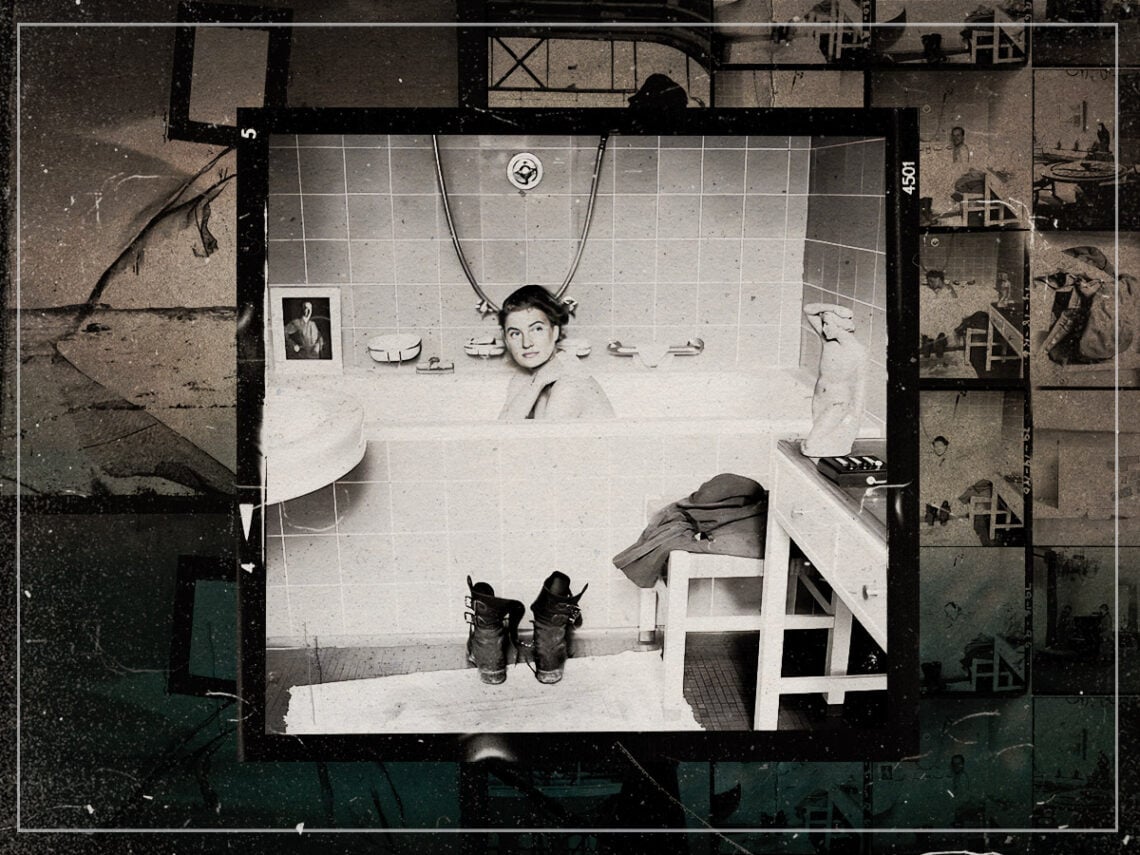
Confronted with these various horrors, she drew on her Surrealist background to poignantly document the deepest recesses of human brutality. In one of the most iconic and literally surreal images to come out of this period, fellow photographer David E. Scherman took a picture of her in Adolf Hitler’s bathtub – on the day he committed suicide.
