


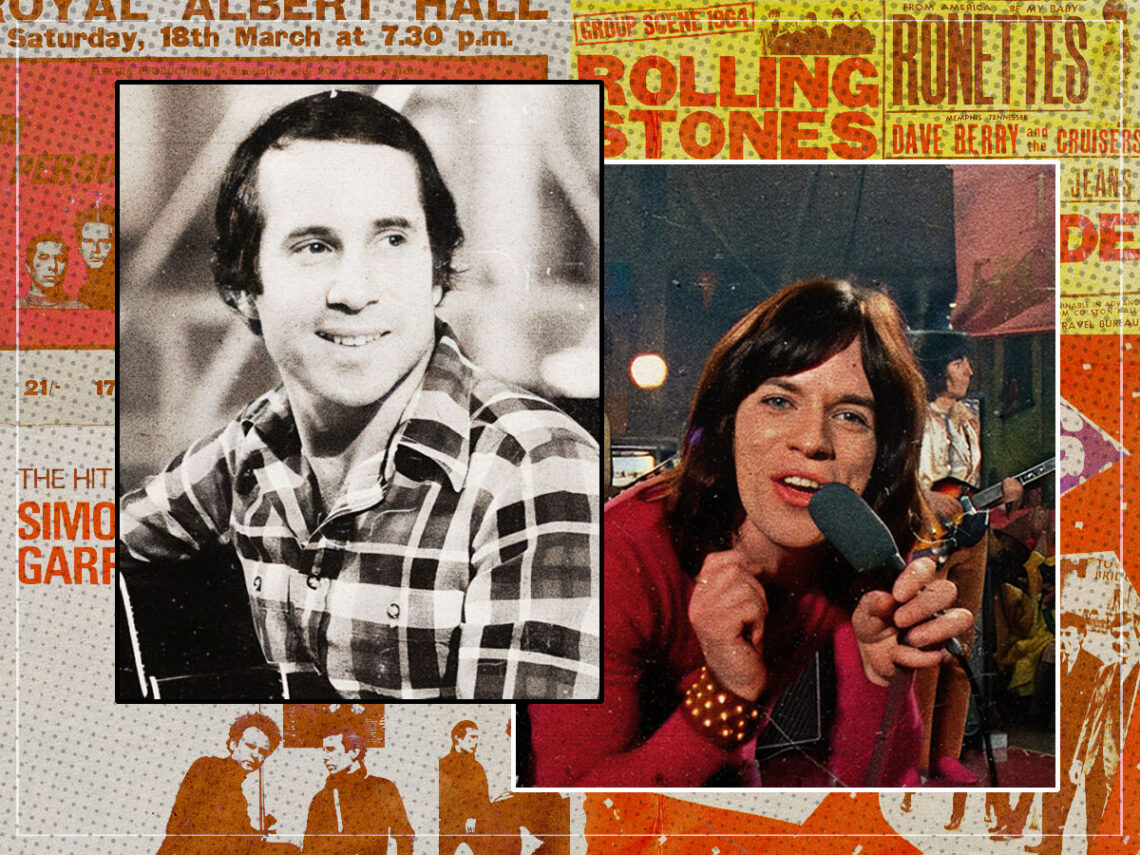
Paul Simon thinks Simon and Garfunkel were a “bigger phenomenon” than The Rolling Stones

In 1970, at the height of their fame, Simon and Garfunkel unceremoniously split.
Only a few months before the break-up, Bridge Over Troubled Water was romping through the charts, pushing the duo towards a new global pinnacle. It soon became the best-selling album of all time, and at the close of the 1970s, it clung to the top spot with 25 million sales recorded, nearly twice that of Led Zeppelin III in second place.
Despite the end of the duo, their ubiquity had never been more pervasive. They were bigger than ever.
In truth, they had been far from strangers to the masses in the 1960s. Their acclaimed debut, Wednesday Morning, 3 A.M., might have only peaked at 30 in the US album chart and 24 in the UK, but they went on to close the decade of peace and love with just shy of 90 million record sales, making them the fourth most popular musical act of the 1960s. The third-placed artist with 110 million sales was none other than The Rolling Stones.
However, when the haze of the ‘60s subsided, and the dream of the counterculture revolution was turning in for the night, the lasting influence of the artists of those heady years was being reassessed. So, in 1972, with Paul Simon moving on to new pastures, with Bridge Over Troubled Water‘s record-breaking ways still trundling along and assuring the sustained legacy of Simon and Garfunkel, the diminutive folk legend was confident enough to assert that his mark on the cultural zeitgeist had been markedly more monumental than that of The Rolling Stones.

A grand claim
“I never compare myself with the Rolling Stones,” Simon told Rolling Stone in 1972, mere seconds before doing just that. “I always was well aware of the fact that S. & G. was a much bigger phenomenon in general, to the general public, than the Rolling Stones.”
At the time, this prompted an intake of breath. Looking back, this remark retrospectively opens up a much more nebulous discussion about the nature of legacy and commerciality. In truth, at the time, Simon’s remark carried significant weight. After all, as Simon proudly asserted, the success of 1970’s ‘A Bridge Over Trouble Water’ was unprecedented. Its success was global, and its humble message of peace and companionship was quietly rippling through middle-class communities reassessing Apartheid and other such political fractions.

Meanwhile, at the exact same time, The Rolling Stones were sullied by the mainstream media following the debacle of Altamont, and the notion of freewheeling rock ‘n’ roll was beginning to seem like a bygone relic of a counterculture uprising that had suddenly regressed to the mists of time like an illusory hope never cemented beyond that.
Sticky Fingers and Exile on Main St. – the two records the Stones had released in the 1970s at the time of Simon’s statement – might have both made it to number one and been hailed as masterpieces, but they were also condemned, derided by conservatives, and failed to achieve the beloved transcendence of Simon and Garfunkel after the initial buzz of their release.
In ‘72, Simon was far from alone in thinking the world had moved on from lairy classic rock. However, now, the Stones and the raucous high water mark of rock ‘n’ roll that they represent truly is transcendent. Their divisive attitude underpins the mainline of an era we’re still positively reeling from.
Meanwhile, Simon and Garfunkel may well still be beloved, revered, and respected, but the notion of what they represented is subsumed by the songs themselves. Masterful songs like ‘The Boxer’ and ‘America’ may well provide more in-depth commentary on the era than anything the Stones mustered, but in terms of a cultural “phenomenon“, it is harder to see where they sit.
Ask the average history student to knock up a collage of the prominent iconography of the ‘60s era tomorrow, and it is likely that it would feature the English rockers far more prominently than their Greenwich Village folk counterparts.
Quite why this is the case and whether it will remain so in another 50 years time remains to be seen. However, Simon’s comment is a fascinating illumination of the mystique that surrounded the modern renaissance that the counterculture movement is beginning to be seen as. Polemics are still unspooling daily, trying to capture the true nature of the age. As Hunter S. Thompson wrote even at the time: “It seems like a lifetime, or at least a Main Era — the kind of peak that never comes again”.
He continued, “San Francisco in the middle sixties was a very special time and place to be a part of. Maybe it meant something. Maybe not, in the long run… but no explanation, no mix of words or music or memories can touch that sense of knowing that you were there and alive in that corner of time and the world. Whatever it meant…“ Quite where the artists central to that energy sit in the sands of time is a shifting notion, it would seem. As Simon said following his comparison, “Maybe I’m not gonna do my thing until I’m fifty.”
Whether he was right or wrong to claim Simon and Garfunkel were the “bigger phenomenon” really depends on when it is being asked.
