


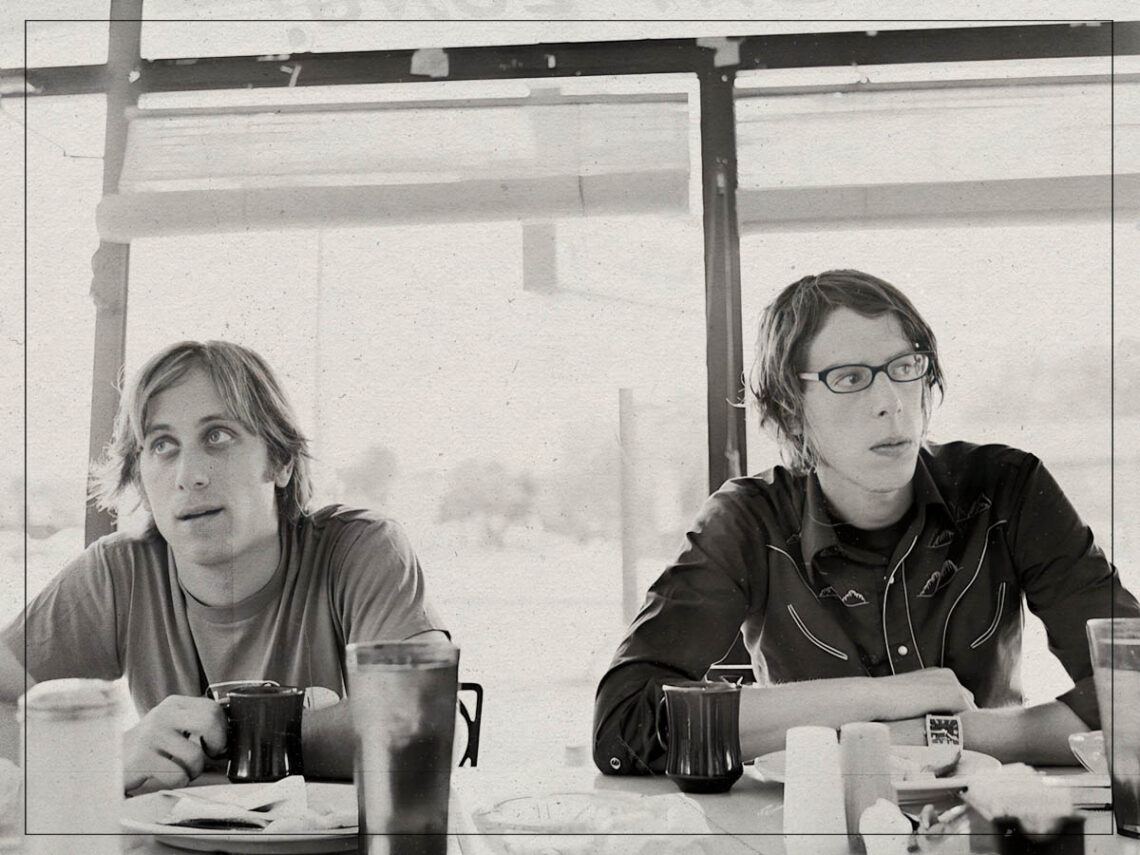
The Black Keys album recorded in the dying heart of their Ohio hometown’s industrial landscape

If you’ve got a desire to make music, then sometimes you simply have to make do with what you have available to you in the hope that one day you’ll be afforded the opportunity to work in a more lavish environment. If there’s any example of a modern band who have risen from this super-DIY approach to global recognition authentically, it’s The Black Keys.
Now perhaps one of the most formidable garage rock acts in the world, their humble beginning started out not in a garage, but in the basement of the building where drummer Patrick Carney lived. He and frontman Dan Auerbach were unlikely to have designs on taking over the world at this point, and the carefree nature of the music they were making only underlined how much of a passion project it was at the time.
There’s frankly nothing polished about The Black Keys’ first two studio albums, with everything about them appearing very raw and slipshod in its presentation. However, that doesn’t prevent them from being brimming with character and a clear sense of identity, something that they’d carry into their later work as they gained more notoriety.
However, with the garage where they spent their formative years having been rented, they had to up sticks and find somewhere else to make their third record. With the advance from their label, Fat Possum, still not being enough to cover the cost of hiring out somewhere flashier, they scouted out places in their hometown of Akron, Ohio.
Akron was, once upon a time, known for its formerly booming rubber industry, with General Tire having formed there during the First World War. However, when the company folded in the late ‘80s, many abandoned factories were left standing in a city that relied on its existence for the economy.
By 2004, when Auerbach and Carney were making their third record, appropriately named Rubber Factory, the city was a run-down shadow of its former self, and so, for a fee of $500 per month, the band decided to rent out a floor of the former General Tire factory to gradually tinker away on their new record for five months.
A factory is perhaps the worst place one could choose to make a record, given how the acoustics in what is a windowless warehouse with high ceilings aren’t designed for this purpose. Given how strapped for cash the duo were, and the economic climate of the area they hailed from, they had no choice but to go for this inconvenient location as a makeshift studio.
And yet, with cables running from one corner of the second floor to another, and the band self-producing and mixing on a cheap second-hand console, the band made what is arguably their finest record in this dilapidated location, and it ended up being the album that put them on the map, even if Akron itself remains something of a ghost town.
They’ve since adapted to working alongside producers in fully kitted-out studios, but sometimes you can’t beat the simplicity of what you’re able to make under the greatest restrictions. The heart of Akron’s industry was thought to be dead, but with Rubber Factory, The Black Keys pumped life back into it one last time in a fittingly gritty tribute to their native city.
