


Garageland: 10 overlooked classics from the garage rock era

Real rock and roll has always resulted from grassroots artists and underground scenes. From the raw beginnings of America’s R&B scenes to the endearingly abrasive stylings of the punk movement, underground artists existing in defiance of the musical mainstream has routinely produced some of the rawest and most revolutionary rock records. This was never more abundantly clear than during the mid-1960s, with the emergence of the garage rock movement.
While the pop charts of North America were chock-full of the polished professionalism of Motown, or maybe the teeny-bopper romanticism of early-period The Beatles, the college towns and cities of the continent were rapidly becoming infected with a fuzzy, rough-around-the-edges style of rock and roll. Pioneered by young groups of outsider artists and untrained musicians, garage rock placed ultimate focus on attitude and style rather than profound lyrics or pop structures. All you needed to create a groundbreaking garage record was an attitude and a few guitar chords.
Due to its roots in the underground and independent music scene, garage rock never made much of a mark on mainstream rock. Although tracks like The Kingsmen’s ‘Louie, Louie’, or even The Trashmen’s ‘Surfin’ Bird’ found cult audiences among certain rock scenes, and groups like The Stooges or The MC5 took the core appeal of garage rock and expanded upon it, the scene was largely full of virtual unknowns. The ravages of time have since rendered many revolutionary garage records obscure gems, as a result.
Like with any cult music scene, there are obsessive record collectors and labels who have dedicated themselves to uncovering swathes of these initially obscure garage rock gems. While the work of these individuals and record labels, which will undoubtedly make appearances throughout this ranking, is invaluable, the original wave garage rock can still seem like an almost impenetrable scene for ordinary listeners. So, we are here to expose you to ten of the finest garage rock gems which you might never have encountered before.
10 overlooked garage rock anthems:
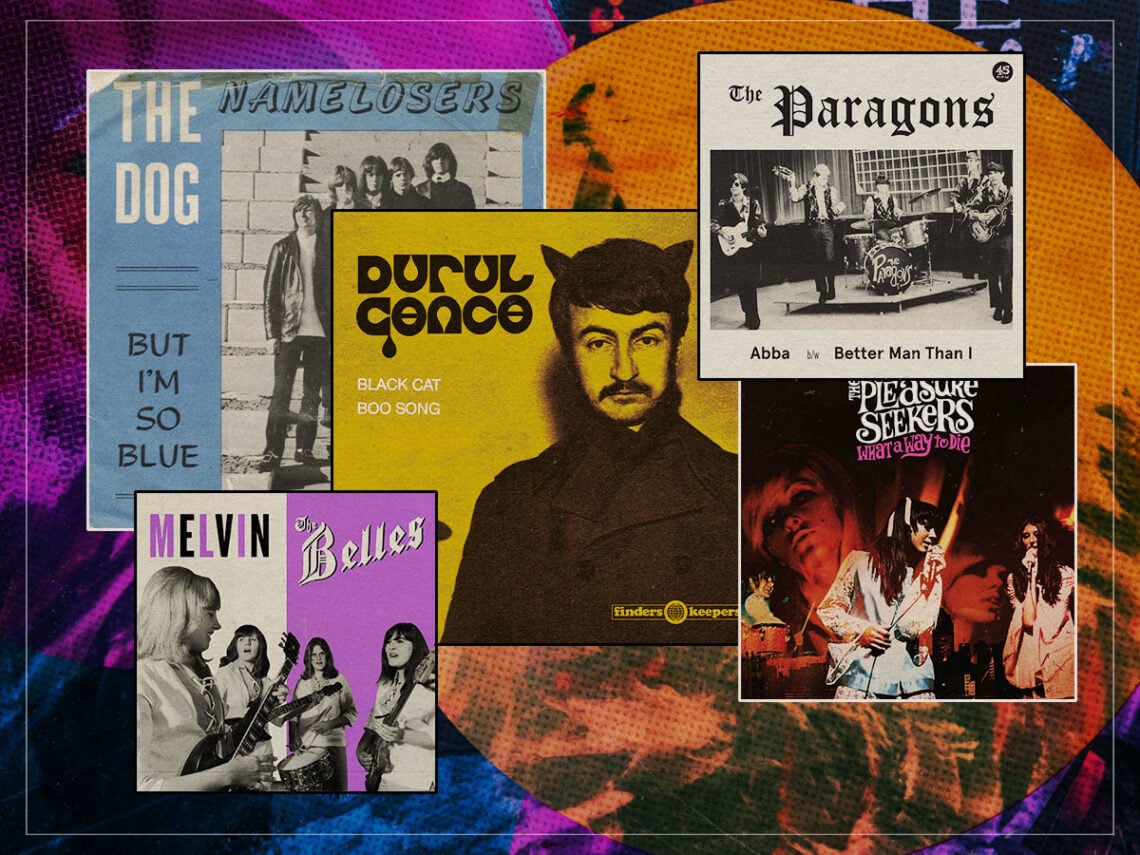
The Belles – ‘Melvin’ (1966)

‘Gloria’, the song penned by Van Morrison and released by Them in 1964, at the peak of the British Invasion period, is perhaps among the most iconic garage rock anthems of all time. Its legacy is so vast and enduring that the track became similarly influential on the development of punk rock, thanks to a cover by Patti Smith in 1975. Nevertheless, this particular interpretation of the classic track, recorded in 1966 by Miami’s all-female garage heroes The Belles, remains shrouded in obscurity for most audiences.
Featuring the same kind of raw power as the original recording, The Belles manage to imbue the track with surf-inspired guitars, a sneering attitude, and a certain satirical quality resulting from the unwhelming nature of the name ‘Melvin’ in contrast to ‘Gloria’. Although The Belles only released two singles during their tenure, neither of which gained any degree of mainstream attention, ‘Melvin’ has witnessed a certain degree of resurgence thanks to an excellent reissue by Chicago’s Numero Group.
The Namelosers – ‘But I’m So Blue’ (1965)

Although it was North America that originated the sounds of garage rock, with some aid from the advent of British Invasion groups during the mid-1960s, the grassroots rock revolution soon spread across the globe. Exemplifying this fact–along with various other international releases on this list–is the incredible group The Namelosers, hailing from Malmö, Sweden. In 1965, the depressingly short-lived outfit released their cover of Rufus Thomas’ ‘The Dog’, but it was the self-penned B-side which commanded the most attention.
At less than two minutes in length, the song is a perfect encapsulation of the short, sharp, rock euphoria inherent in the garage rock scene. Musically, the track is rooted in the same kind of blues styling that made The Rolling Stones a household name, and it packs a lot into its relatively short runtime. The guitar solo is a particular highlight, and Tommy Hansson’s harmonica skills could give even the most seasoned of blues obsessives a run for their money.
Durul Gence – ‘Black Cat’ (1974)

Another triumph of international garage rock, Turkish-born musician Durul Gence was an integral part of raw rock and roll in the Middle East and Europe throughout the 1970s. Performing with a variety of notable artists and mastering the elusive style of Anatolian psych rock, he recorded a compelling garage track called ‘Black Cat’ back in 1974. Adopting a dark atmosphere of brooding psychedelia, it is perhaps one of the most developed, polished tracks on this list, yet it still retains a sense of spontaneity and intrigue.
‘Black Cat’ was never intended for widespread release; it was the product of a spontaneous half-hour studio session akin to a handful of musicians messing around. As a result, this captivating garage-psych masterpiece did not see the light of day until 2019, when it was discovered and released by Finders Keepers Records, sounding just as inventive in the 21st century as it must have done all those years ago
The Paragons – ‘Abba’ (1967)

Your eyes do not deceive you, this is a song called ‘Abba’, but it thankfully bears no relation to the Swedish pop giants who would emerge onto the global scene only a handful of years later. Instead, it is the defining track by North Carolina garage outfit The Paragons, who achieved ‘local hero’ level fame in their hometown of Charlotte during the late 1960s, but never quite made it into the mainstream consciousness.
Taking unavoidable cues from the likes of The Rolling Stones, the original single was backed with a rendition of The Yardbirds track ‘Better Man Than I’, which acts as a decent indicator for the blues-rock mastery contained on the A-side. At three minutes in length, the song is longer than many garage anthems, but the infectious guitar riff and abundance of youthful energy mean that the song flies by in an instant, ripe for repeated replays.
The Pleasure Seekers – ‘Light of Love’ (1968)

Male-dominated groups often dominated the garage rock scene, but the all-female Detroit outfit The Pleasure Seekers eventually became one of the movement’s defining groups. In the modern day, the band are largely remembered for gifting the world the revolutionary sounds of Suzi Quatro, and for their storming debut single ‘What A Way To Die’, which predicted the rise of a ‘live fast, die young’ attitude which came to define certain sectors of rock and roll.
However, the follow-up single ‘Light of Love’ is equally worthy of note. Incorporating elements of R&B and Motown-adjacent soul, the song exemplifies the sonically diverse nature of both The Pleasure Seekers and garage rock on the whole. Unfortunately, the track also ended up being the band’s final official single release before they reinvented themselves as Cradle, and before Suzi Quatro embarked upon her incredible solo career.
GIN – ‘Pseudo Funk’ (1975)

Another innovative garage rock masterpiece which has only been uncovered in recent years, ‘Pseudo Funk’ was originally recorded by the little-known outfit GIN back in 1975, and eventually saw a widespread release by Perfect Toy Records in 2021. Other than the fact that the band was led by musicians John Bennett and guitarist Lon Reeder, GIN remain shrouded in mystery. Even their city of origin is unknown, although the B-side track ‘Louisville Luck’ might suggest Kentucky.
Either way, ‘Psuedo Funk’ remains an absolute triumph of garage rock, blending the raw rock sounds of the movement with the kind of funk and psychedelic rock that defined the American underground during the late 1960s and early 1970s. The mysterious band packs so much into the song, from guitar solos to chanting vocal choruses, yet it never feels particularly overbearing. If the single had been released, as intended, back in the 1970s, perhaps more people would know the name GIN.
Rita Chao and The Quests – ‘Hanky Panky’ (1967)

Singapore is about as far away as you can get from the college towns of North America, but that did not stop the infectious sounds of garage rock from taking root in Southeast Asia. Rita Chao was among the nation’s premier garage rock exporters, and her self-titled 1967 record featured an abundance of garage masterpieces. ‘Hanky Panky’ is arguably the album’s highlight, seeing Chao and her backing group, The Quests, reinterpret the track originally penned by The Raindrops.
‘Hanky Panky’ had already been a garage hit for Michigan outfit The Shondells in 1966, but Chao’s version is a different kettle of fish altogether. Opening into one of the greatest basslines in the history of garage rock, Chao’s go-go vocal style perfectly contrasts the moody distortion of The Quests’ backing music. There are multiple bizarrely infectious moments on the track, particularly the wailing guitar solo–which is accompanied by a howling wolf–that mean this track captures the grassroots euphoria of garage rock better than most.
The Outsiders – ‘Won’t You Listen’ (1967)

One of garage rock’s most boastful claims was that the movement popularised the use of guitar distortion, which went on to define punk and alternative rock for the rest of time. If that is true, then it is songs like ‘Won’t You Listen’ which best exemplify the power and potential of that distortion (particularly when accompanied by a screaming blues harmonica). Released on their debut album in 1967, ‘Won’t You Listen’ sees Dutch garage outfit The Outsiders tear their way through three minutes of raw rock excitement.
The band might have hailed from Amsterdam, but you would never have guessed that based on their American R&B-infused offerings. ‘Won’t You Listen’ almost sounds like an old-school R&B track but played on 78 RPM rather than 45, and its amphetamine-fueled energy means the track has certainly stood the test of time as a commanding garage rock presence exuding rebellious rock energy.
Snoyd – ‘Places To Do’ (~1972)

In a similar vein to ‘Pseudo Funk’, Perfect Toy Records has uncovered a wealth of forgotten garage rock masterpieces over the years. One recent discovery is the track ‘Places To Do’, recorded by Snoyd sometime between 1972 and 1974. Hailing from Palatine, Illinois, Snoyd reportedly recorded swathes of garage rock excellence back in their 1970s heyday, but only one album and one seven-inch single ever saw the light of day. Listening to ‘Places To Do’, it is difficult to figure out why.
Expertly building tension through driving guitar distortion and vocal harmonies, the song is imbued with the kind of fuzzy, spontaneous energy that garage rock was synonymous with, although it seems to have far more energy than some of Snoyd’s widespread releases. It might have been buried in the sand back in the 1970s, but its rock and roll spirit is far too infectious to ignore, even in the modern age.
The Benders – ‘Can’t Tame Me’ (1966)

Garage rock paved the way for the punk explosion which followed in the 1970s, laying the foundations of short, sharp rock and roll songs, barre chords, and a sneering attitude towards the musical mainstream. If pushed to pick one garage song which captured this proto-punk spirit better than any other, The Benders’ ‘Can’t Tame Me’ is the obvious choice. Recorded in 1966 while the band members were studying at college in Wisconsin, the track was the only official release by the band.
Despite this, the song forms an integral moment in the history of rock and roll, inspiring the development of punk rock and marking the pinnacle of garage rock’s rebellious attitude. ‘You Can’t Tame Me’ might have been aimed at a particularly demanding lover, but it might as well have been screamed into the faces of music industry executives; this style of rock and roll could not be bended to the wants and desires of bosses or marketing executives; it was forever rooted in the grassroots of rock rebellion.
