


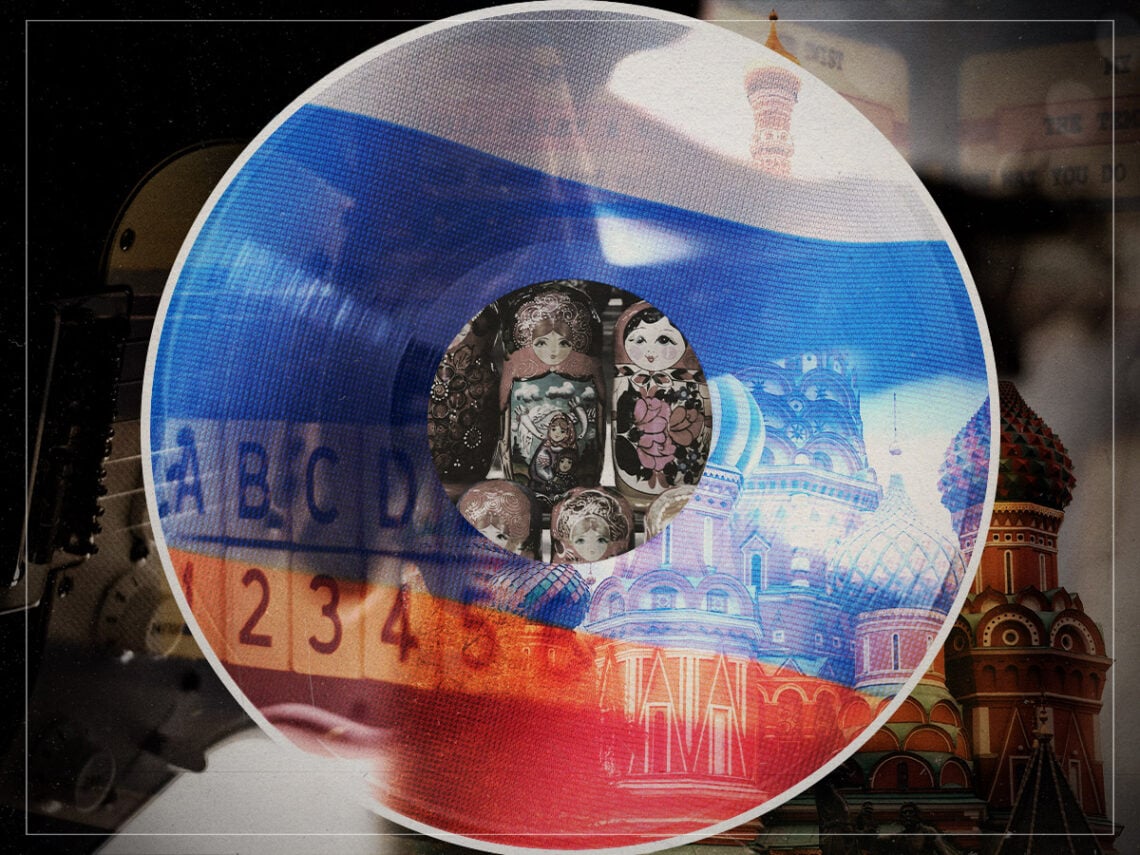
The best-selling classic rock album in Russia

Rock ‘n’ roll was first introduced to Russia during the Soviet Union in the 1960s, heavily influenced by Beatlemania and the influence of Western rock music, which spawned numerous student rock bands and beat groups forming across Moscow, Leningrad and beyond.
There were, however, glaring issues that arose when trying to obtain Western rock music in Russia, as censorship and copyright factored into the lack of tangible music products made available to Russian listeners. Western music was often smuggled into the country or, on the other hand, released by Melodiya, a Russian record label that was state-owned by the Soviet Union until April of 1989.
The label held a monopoly on all legal music sales in Russia, from its inception in 1964 to the dissolution of the USSR in 1991. Shipping 100-200 million records on a yearly basis in the 1970s and ’80s, with the majority being sold locally, Melodiya was the only way for foreign musicians to sell music in the country.
Compiling a list of Russia’s best-selling foreign albums between 1974 and 1993, Chart Masters assessed the shipment codes found on the backs of vinyl pressings. Only vinyls once had these codes printed, not cassettes, nor did every vinyl pressing include them. Melodiya implemented these codes on most of their releases since 1974. These codes indicated the shipment year and the number of sales.
Thus, Chart Masters combined the sales of different codes sourced from digital archives found on websites such as Discogs and records.su, a catalogue of Soviet records, in order to, at the very least, add together the minimum sales of each record.
So, what was the best-selling classic rock album in Russia?
The top-selling foreign album was 1981’s Long Play Album by the Dutch novelty pop band Stars On 45, with a count of 1.7 million sales and nearly one million shipments in 1983 alone.
Their 1982 follow-up, The Superstars, ranks at number 11 on Chart Masters’ list. Second on the list is the French electronic band Space and their 1977 album, Magic Fly. Associated with the “space disco” subgenre, as it was a precursor to electronica, Space’s debut album sold 1.5 million copies in Russia – more sales than the album achieved in the rest of the world, combined.
Russia’s best-selling classic rock album comes third on the list, released in the post-dissolution of the USSR: a compilation from none other than Led Zeppelin. Released in 1988 by the Melodiya label, Led Zeppelin’s USSR exclusive compilation, titled Stairway to Heaven, included the title track, alongside six other classics: ‘Immigrant Song’, ‘Gallows Pole’, ‘Since I’ve Been Loving You’, ‘Black Dog’, ‘When The Levee Breaks’ and ‘Rock And Roll’.
Pressed on vinyl with a simple, orange-hued photograph of John Bonham, Robert Plant, Jimmy Page and John Paul Jones, the compilation album sold 1.38 million copies and would be Led Zeppelin’s only release in the country.
In his op-ed “On Hearing ‘Whole Lotta Love’ for the First Time in Moscow”, (first self-published on his website, srkn.ru, and later, in The New York Times), the Russian writer Vladimir Sorokin recounts the time when he, at 18 years old in 1972, was first introduced to Led Zeppelin through his classmate, Vitya, who returned from a trip to Stockholm with three records, including Led Zeppelin’s II.
Sorokin describes how ‘Whole Lotta Love’ “rose up with a beckoning howl,” continuing: “Corks formed of cloying Soviet music flew out of our ears. And a young man’s brain experienced irreversible biochemical change. It was the unforgettable lesson of freedom. It was probably on that very day that I spontaneously became a dissident.”
The writer notes that bands like Led Zeppelin and Deep Purple – namely Robert Plant and Ian Gillan – sang in “the language of the West — a forbidden tongue kept from us by maybe not quite an Iron Curtain, but at least a wooden one”. These vocalists became Godly figures for young people living in Russia, their lyrics, as they were written in English, remaining as enticing as ever.
“We Soviet students saw the long-haired vocalists as angels come down to earth to sing in heavenly tongues,” Sorokin wrote, continuing, “This Anglo-rock for many of my contemporaries became Angelic-rock. We believed in it, we forgave it everything.”

Never Miss A Beat
The Far Out Led Zeppelin Newsletter
All the latest stories about Led Zeppelin from the independent voice of culture.
Straight to your inbox.