


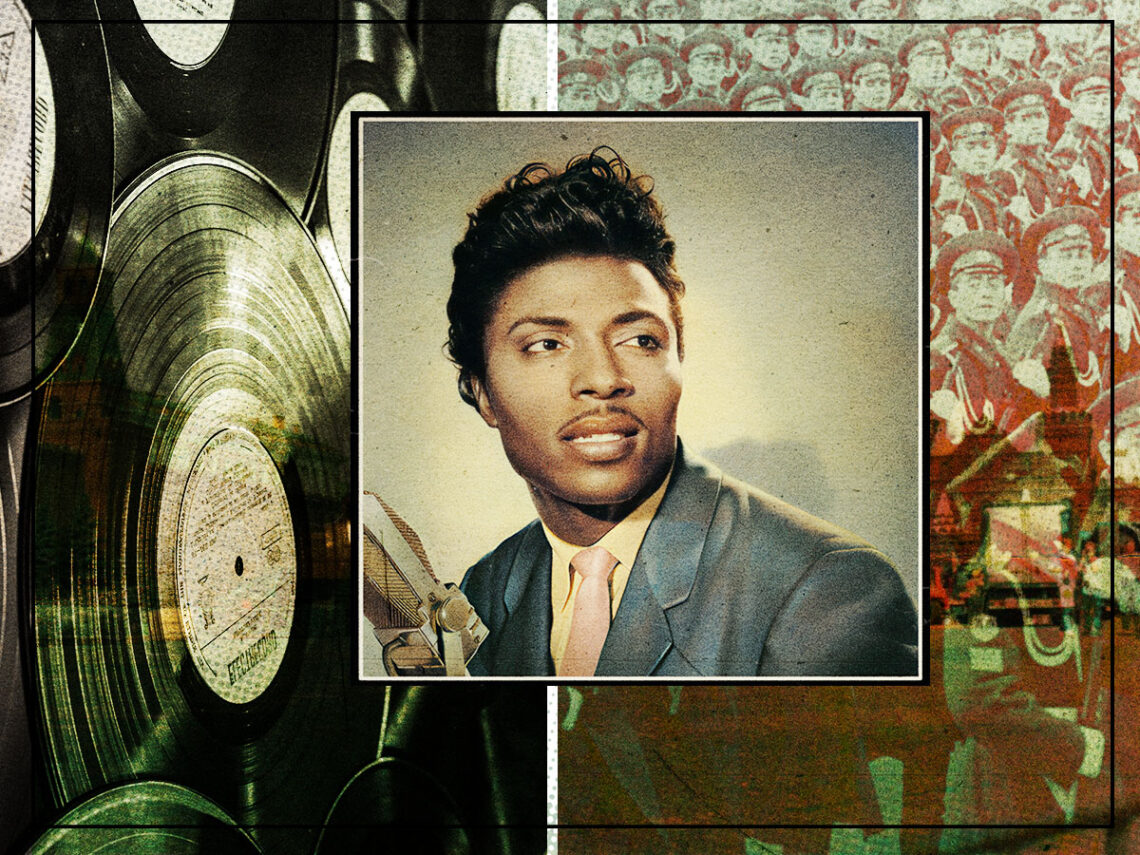
Little Richard on a Broken Leg: How rock ‘n’ roll was smuggled into Russia

“If you fight with a dictator like Putin, you have to show them that you are willing to die—and I was,” Nadya Tolokonnikova recently proclaimed. Her band Pussy Riot has been a central instigator of the suppressed rock ‘n’ roll rebellion against Russia’s current regime. Back in 2011, their protest anthem ‘Release the Cobblestones’ decreed: “Your ballots will be used as toilet paper by the Presidential Administration.” This was a symbol, no matter how small, of the subversive force of rock ‘n’ roll, a mark of progress in itself, given that there was a time when it was barricaded from the region.
In the former Soviet Union, western music was outlawed. The official line was akin to old pastors in the Mississippi Delta who yelled that the blues was “the devil’s music” when emergent rockers began to divert donations away from the collection basket and into their tip jar. Except the USSR banned the sonic illness of Western rock ‘n’ roll because it spread disgusting “capitalist and imperialist messages”.
At first, the only way that those living under Soviet rule could hear the post-WWII expansion of Western music was via the American propagandist radio stations Radio Free Europe and Radio Liberty that were broadcast into the USSR from just outside the Eastern Bloc. Via this benevolent Cold War service, the Soviets got their first crackling glimpses of rock ‘n’ roll.
It didn’t take long for black market record trading to pop up in various places throughout the 22.4 million km2 empire. However, the issue with vinyl is that it is bulky, impossible to stuff down a trouser leg and unmistakable. If a KGB officer caught you with a 180g 12” LP, you could hardly just tuck it up to your sleeves and makes haste unless you had a jacket like Gandalf’s.
The solution to this was genius and, frankly, ineffably cool. Some clever folks in St Petersburg and other port towns realised that you could press the vinyl onto X-ray film, making a discreet primitive flexi-disc. And the other benefit to this bounteous practice was that it was cheaper and even more discreet to press it onto used X-ray film sheets than new ones. Thus, the Little Richard records that rebellious Russian citizens craved that had been smuggled into the country by hardy mutineers were etched onto sheets of cracked ribs and shattered shin bones. If that wouldn’t add an allure to the already endearingly dangerous oeuvre of Western rock, then nothing would.
Aside from the obvious peril, consumers faced another issue. Inherently with the black market, you don’t get a receipt thusly some of these early X-ray records featured a sort of primitive ‘rick rolled’ situation whereby after a few bars of sweet rock music, the valorous vigour would be short-lived as a laughing voice declared you a foolishly conned goon. For a while, this treachery and uncertainty stemmed the spread of Western rock ‘n’ roll.
But the so-called ‘Bone Music’ had made its mark. As Stephen Coates told NPR regarding the strange history of these rock ‘n’ roll relics: “In St. Petersburg [1946] — Leningrad, as it was then — a guy turned up, and he had a war trophy with him. That war trophy was what’s called a recording lathe: It’s like a gramophone in reverse, a device which you can use to write the grooves of music onto plastic. People who came into his shop observed what he was doing, and, as is the Russian way, they “bootlegged” his machine and made their own machines.“
“It was a bit like dealing or buying drugs, actually. These records were bought and sold on street corners, in dark alleyways, in the park,“ he says. This strange sense of subversion has given music a fortified defiance in Russia. This is evidenced by Pussy Riot – an act that roared out of the crackled reverberations of bone music records.
A mark of the group’s radical approach came to the fore in January 2012. With two of their most prominent members imprisoned, the collective staged their most riotous display to that point. Eight members of the group boldly stormed onto the Lobnoye Mesto in Red Square and performed the song ‘Putin Zassal’, which translates roughly to “Putin is pissing his pants”.
While public opinion in Russia remained relatively unsympathetic towards the band, the fact that anti-Putin rallies around the time managed to attract around 100,000 protestors is a mark of the subversive force that was gathering. As the group stated: “We saw how troops were moving around Moscow, there were helicopters in the sky, the military was put on alert. The regime just wet its pants on that day. And the symbol of the regime is Putin.” This remains a symbol of hope in today’s crisis, where despite iron-fisted rule, the modern equivalent of bone records continue to foist a subtle service of rebellion.
