


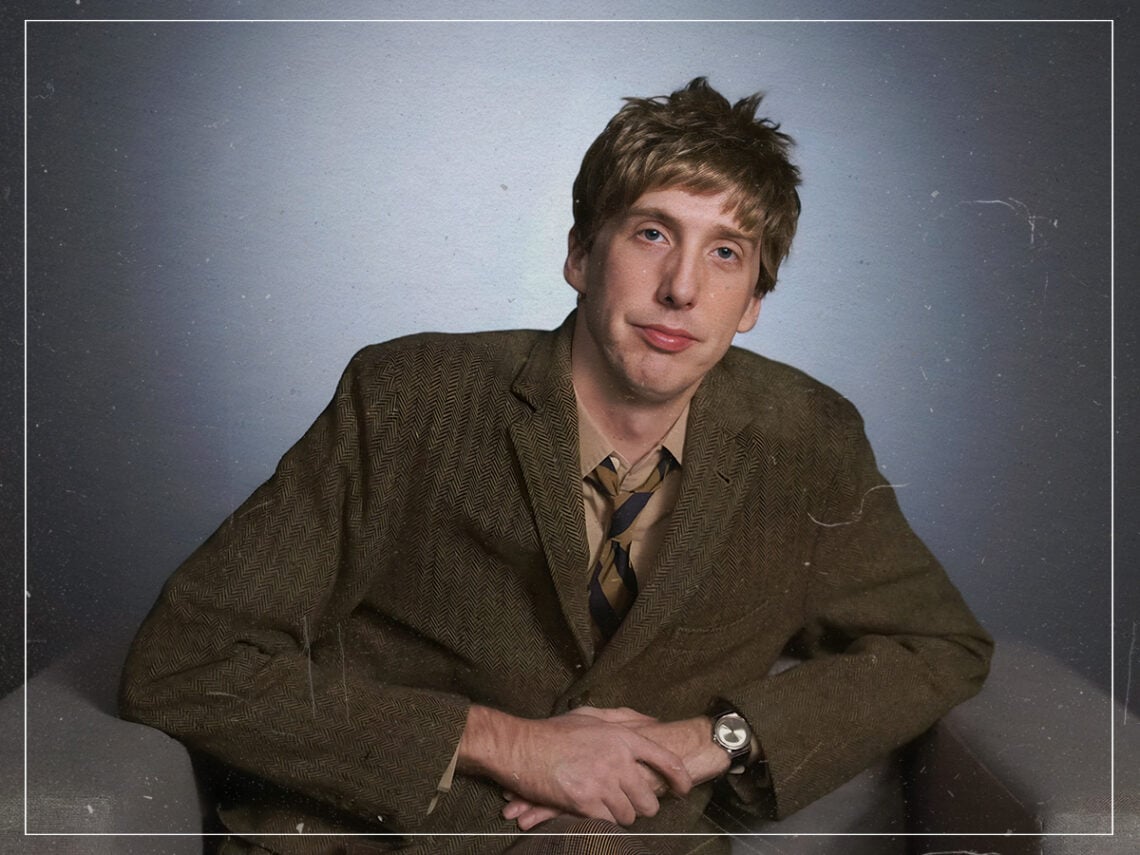
The best Deerhunter album, according to Bradford Cox: “Anybody that doesn’t like it has no idea”

To stand out from the menagerie of notable guitar bands that the 2000s produced took genuine talent, and it’s no surprise that most of those who managed to do so remain relevant today. One of the best and most influential groups the decade produced was Atlanta’s Deerhunter. This outfit has always been anomalous despite the familiarity of some of the areas they pull from to establish their distinctive sound.
Existing at a pulsating nexus between indie, shoegaze, garage, noise, krautrock and experimental, the band are perhaps best signified by their leader Bradford Cox — an outstanding songwriter and complex personality, who has conceived some of the most intoxicating and piercing moments a guitar band has brought forth this millennium. Encountering many obstacles in his life, including developing Marfan syndrome as a child, to assuage the isolating biological developments, he delved deep into the sanctuary of sonics, which played a crucial role in such an authentic approach materialising.
Explaining how Deerhunter’s very specific rendering of suburban ennui came to fruition, Cox once revealed that his and the band’s sound was based largely on escapism, concisely describing it as a form of heady urban pastoralism. It goes without saying that his personal experiences fed directly into this outcome, and it is certain that if his life had been so simple, the Atlanta group might never have formed, let alone been as resonant as they have.
Although the group have had various members over the years, including the late Josh Fauver – who produced some of the most emphatic and underrated basslines of the century – guitarist and occasional vocalist Lockett Pundt, who joined the group in 2005, has also been critical to their success. Offering a counterpoint to the pronounced and often dissonant texture of Cox’s vocals in the mix, Pundt’s subdued and melodic form of delivery not only provides a different texture from the band leader’s but symbolises the frictional nature of Deerhunter, an atom-like outfit bouncing between various genres, sounds and sentiments to spark utter sonic conflagration.
As a group with a cult following comprised of legions of dope-smoking cerebral wayfarers, indie kids and Radio 6 dads, the discussion of what is Deerhunter’s best record to date has long perplexed their fanbase.
The two most common shouts are 2008’s Microcastle, the opus that produced Fauver’s definitive performance of ‘Nothing Ever Happened’, and 2010’s Halcyon Digest, which saw the group hit a perfect middle ground between unbeatable narcotic magic and mainstream appeal. The latter is one of their most potent releases, including tracks such as ‘Desire Lines’, ‘Revival’ and the off-kilter ballad, ‘Helicopter’, one of the efforts that best distils their idea of urban pastoralism.
Naturally, the outspoken Cox has his view on the greatest record in his Deerhunter oeuvre. While you’d be forgiven for thinking it would be their most recent album, 2019’s Why Hasn’t Everything Already Disappeared?, which saw them strike upon a more country-oriented route, according to him in an interview with Vice that same year, it is actually 2013’s Monomania that takes the top spot as the group’s best effort.
In true Cox form, he said that anybody who doesn’t like the record, which produced highlights such as ‘Sleepwalking’ and the markedly overlooked closer, ‘Punk (La vie antérieure)’, has “no idea” what he’s about as an artist, and categorised them as simple indie fans and nothing more.
He explained: “Monomania is the greatest album I’ve ever made and anybody that doesn’t like it has no idea what I’m about or what I’m doing. They’re simply avid fans of what’s called indie rock and think we’re a notable indie rock band. I hate indie rock and never liked the term. I don’t consider myself a participant in indie rock. I think it’s a ghetto.”
