


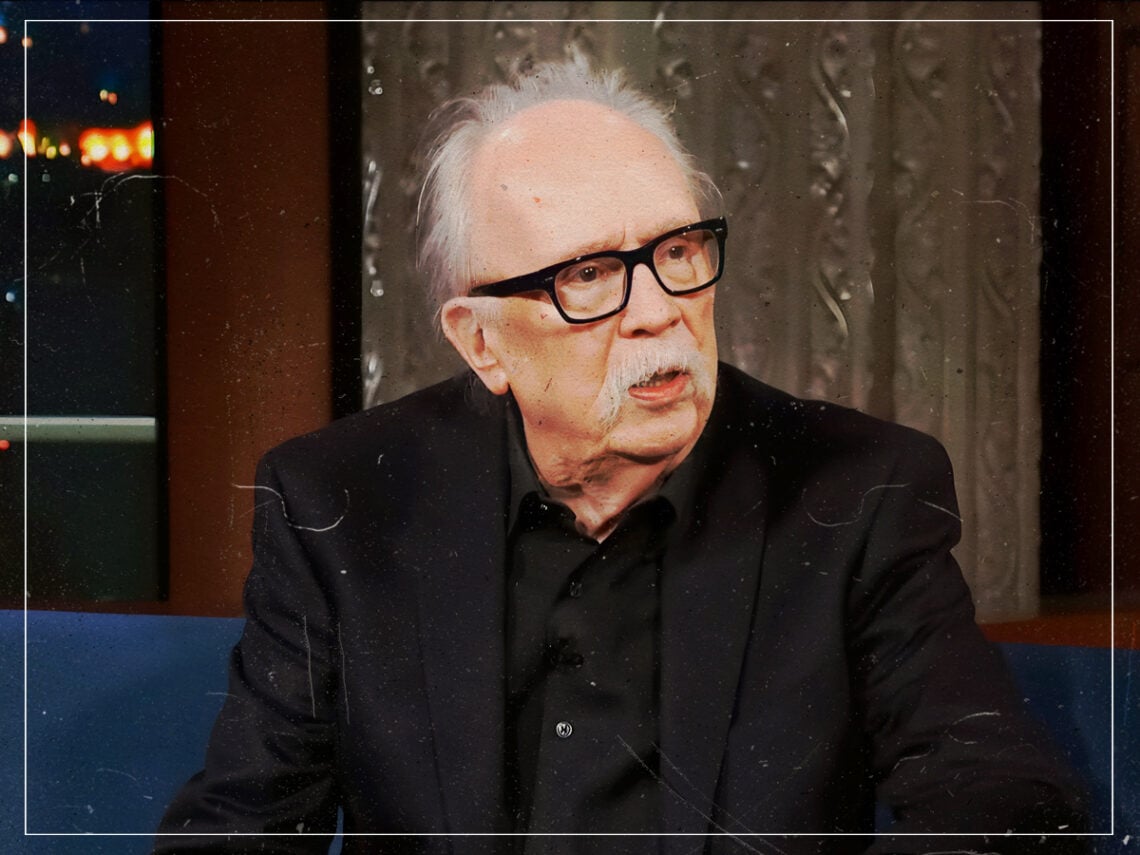
The best decade to be a movie director, according to John Carpenter: “Send me back”

John Carpenter is nostalgic for an era that he never experienced.
Carpenter may have been dubbed ‘The Master of Horror’ by cinephiles, but he’s the rare genre filmmaker who has done pretty much everything. Even if there’s a signature intensity and visual style that is consistent among all of his work, he’s shown no hesitation in swinging for the fences and constantly reinventing himself.
Within Carpenter’s filmography is the definitive slasher film Halloween, a space opera spoof Dark Star, a sci-fi romance Starman, a post-apocalyptic satire They Live, a martial arts adventure Big Trouble in Little China, the ultimate monster thriller The Thing, a provocative Stephen King adaptation Christine, an occult horror Prince of Darkness, a self-efacing tale of creative authorship In the Mouth of Madness, a brutal crime drama Assault on Precinct 13, and an explosive urban action epic Escape From New York. Even less well-received Carpenter projects, such as Memoirs of an Invisible Man or The Ward, showed some sort of ingenuity that would be rare from other filmmakers.
The challenge of his career has been to get financing, as he has consistently struggled to get the resources needed to make his films, and never felt like a true member of the other ‘movie brats’ directors who emerged in the ‘70s, such as Steven Spielberg, Francis Ford Coppola, Martin Scorsese, Brian De Palma, and George Lucas.
Carpenter has had his budgets slashed many times in the midst of productions, and has found that there are very few directors he can rely on. Although the movie brats are often associated with the New Hollywood generation that saw an overturning of the way that filmmakers managed to independently pitch and gain momentum for their projects, Carpenter has been more positive towards the traditional studio system that Hollywood had abided by for the first half-century of its existence.
“If I had three wishes, one of them would be ‘send me back to the ‘40s and the studio system and let me direct movies’,” he told the LA Times, “In those days, everything was geared to moviemaking, not all the [hassles] we have today. I would have loved to have been under contract to a studio where you could be doing a Bogart picture one minute, a western the next. They were genre movies, and those are the kind of movies I love. They’re the ones that last.”
Being a director-for-hire might have been an unthinkable prospect for directors like Lucas or Scorsese, but Carpenter doesn’t always write his own films, and seems to enjoy the directorial process itself, regardless of what he is working on.


He has often cited Howard Hawks as being one of his idols and has frequently spoken about the director’s ability to make all sorts of western, noir, action, and thriller films throughout the 1940s, so while the studio system of the time might not be replicable in today’s cinematic marketplace, it does have a parallel today in the way that television works.
Prestige shows on networks like FX, HBO, or Netflix often hire talented directors to execute a specific vision based on the confines of a series mapped out by a showrunner, but taking on this sort of work does come with safety, and since Carpenter has done occasional television projects at both the beginning and end of his career, he seems to have been comfortable with the medium, so maybe the ’40s would serve him well.
