


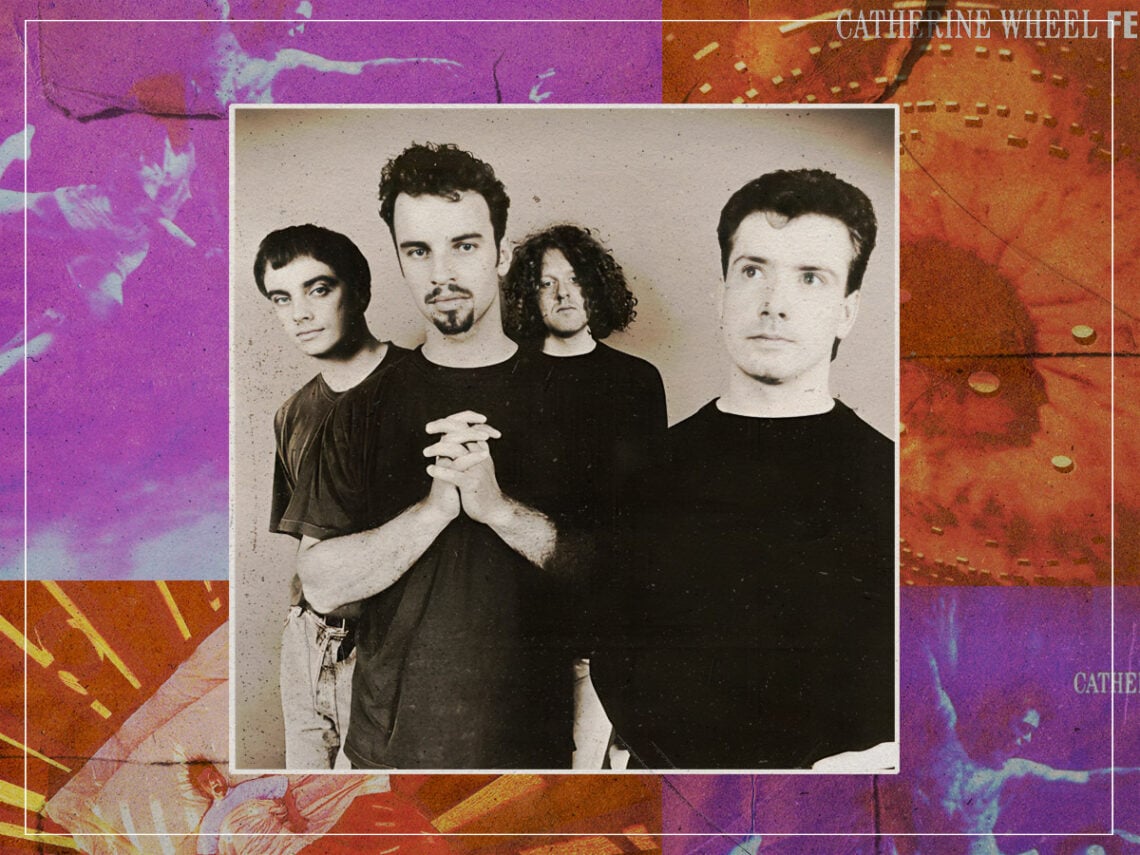
The Best Band You’ve Never Heard: Catherine Wheel, Norfolk’s forgotten shoegaze gem

Norfolk is more known for the flat topography of the Fens, Cromer Crab, and Delia Smith than for its music. Producing the likes of Queen drummer Roger Taylor, S Club 7’s Hannah Spearritt, and The Darkness – names that heavily imply how light its sonic yield traditionally had been – one group stands head and shoulders above the rest, Catherine Wheel.
A cult guitar band that delivered two essential albums before tailing off as the 1990s wore on, in their pomp, they existed at the blistering nexus between shoegaze and alternative rock. The sonics of their first duo of records were about as compelling as anything Britain produced at the time.
It might seem strange that a group forged in the beige belly of the seaside town of Great Yarmouth might conceive such creative illumination. However, headed up by the commanding frontman and guitarist Rob Dickinson, the cousin of none other than wailing Iron Maiden lead Bruce, they were ensconced in the vanguard of a wave of great guitar acts the early decade begot by carving out a unique space for themselves amid the mass of historic noise.
Although all their albums are relatively solid, the fact that the quality and fire of their early days dimmed in the second half of their decade of existence between 1990 and 2000 certainly played a part in their being overlooked outside of alt-rock and shoegazing circles today. Furthermore, this status was no doubt fed into by the fact that they were on Fontana in the UK and not Alan McGee’s storied tastemakers, Creation Records, a label which housed many of the era’s greatest outfits, whom, ironically, they were courted by before opting for Fontana.
Regardless, the first two Catherine Wheel albums, 1992’s Fermet and the following year’s Chrome, are two must-listens for fanatics of the decade’s rock music and those claiming to be alternative rock lovers. As clearly displayed by the transcendental but pulsating nature of their debut with tracks such as the undeniably affecting, effects-drenched ‘Black Metallic’, and arguably the finest number found on it, the perenially intoxicating closer ‘Salt’, the group put a striking spin on the shoegaze zeitgeist.
Of course, the heady textures, walls of effects, and ethereal melodies were present. Still, there was always a harder, heavier edge to the group in the guitar playing, production and Dickinson’s coarse but warm delivery, which was more prominent in the mix than in other more outwardly shoegazing groups such as Slowdive or My Bloody Valentine.
While the vintage t-shirt collecting purists will maintain that Ferment was the best era of Catherine Wheel, which might also have to do with the aesthetics of the album cover, Chrome is their finest. Produced by the revered Gil Norton, the man behind classics of the period such as Pixies’ breakout 1989 effort Doolittle – which laid the foundations for alternative rock as we know it – shoegazer’s Pale Saints debut The Comforts of Madness and perhaps most importantly, Echo and the Bunnymen’s Ocean Rain, it saw the band stretch themselves creatively, and iron out their craft.
The album is undoubtedly the most full-bodied in the group’s relatively small oeuvre of five. While the shoegaze elements persisted, they played a more supporting role amid a heightened glacial atmosphere in light of the group’s longtime spiritual devotion to Joy Division being delved into more robust riffs, guitar tones, and a fittingly dynamic rhythm section that played a crucial role in eliciting the general vibe of the record.
Producing the indomitable lead single ‘Crank’, which distilled this new, darker change of pace, the hard groove of opener ‘Kill Rhythm’, the stoned epic ‘Ursa Major Space Station’, and the dreamy tenderness of ‘The Nude’, there is much that compels, and little to be desired. Dickinson is particularly robust across its 12 tracks, reflecting the general essence of where Catherine Wheel were at that time.
It must also be said that ‘Fripp’ is one of the most glistening shoegaze songs ever created, morphing the formula in the band’s image to full effect, from the searing guitars to the resonant climax.
Although Chrome wasn’t a massive commercial success, it became a cherished moment for fans and critics alike and remains one of the highlights of the 1990s. Speaking to The Toronto Star in 2007, Dickinson revealed that Interpol and Death Cab for Cutie members had respectively informed him their groups “wouldn’t exist” without the record.
Following it, the band released the Britpop-leaning Happy Days in 1995, led by the minor hit ‘Judy Staring at the Sun’, which features none other than Breeders co-founder Tanya Donelly. The writing was on the wall, though, and they eventually called it a day following the lukewarm reaction to 2000’s Wishville.
Since dissolution, the four individual members have tried their hands at different endeavours, with Dickinson all but retiring from music and founding the American Porsche restoration company, Singer Vehicle Design, in 2009.
