


The Beatles’ Ed Sullivan Show appearance: Facts, myths and what really happened

“I never realised that I spoke any differently from anybody else,” the legendary American TV presenter Ed Sullivan once said, recalling the first time a guest of his variety show performed an impression of him back in the early 1950s.
People are still doing those impressions 75 years later, but it’s not usually out of any particular admiration for Sullivan or understanding of his career. He has, for better or worse, endured in worldwide popular culture primarily as the result of one brief monologue, given from the stage of CBS’s Studio 50 in New York on the evening of February 9th, 1964.
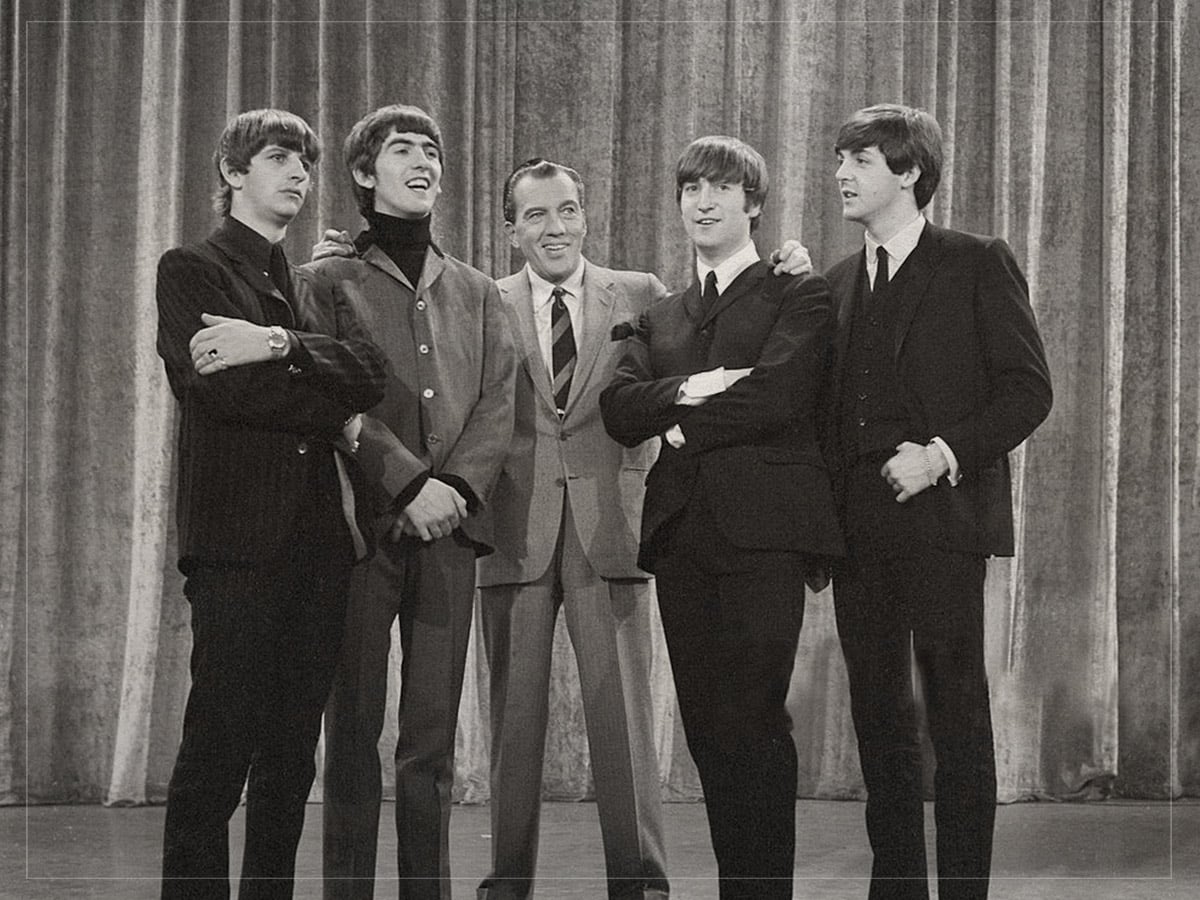
“Now yesterday and today our theatre’s been jammed with newspapermen and hundreds of photographers from all over the nation, and these veterans agreed with me that the city never has witnessed the excitement stirred by these youngsters from Liverpool who call themselves The Beatles,” Sullivan told his studio audience and an estimated 75 million viewers at home; a little less than half the US population at the time.
An old newspaperman himself and a lifelong New Yorker, the 62-year-old Sullivan delivered these words with the blistering speed of a cattle auctioneer, but swapping out the Texas drawl with the wise-guy staccato of a more demure Humphrey Bogart. His body movements, also essential to any good Sullivan impersonation, were stiff, herky-jerky, a little bit like Frankenstein’s monster out of the make-up.
Announcing, “Now tonight, you’re gonna be twice entertained by them, right now and again in the second half of our show. Ladies and gentlemen… The Beatles!”

Following on from Elvis
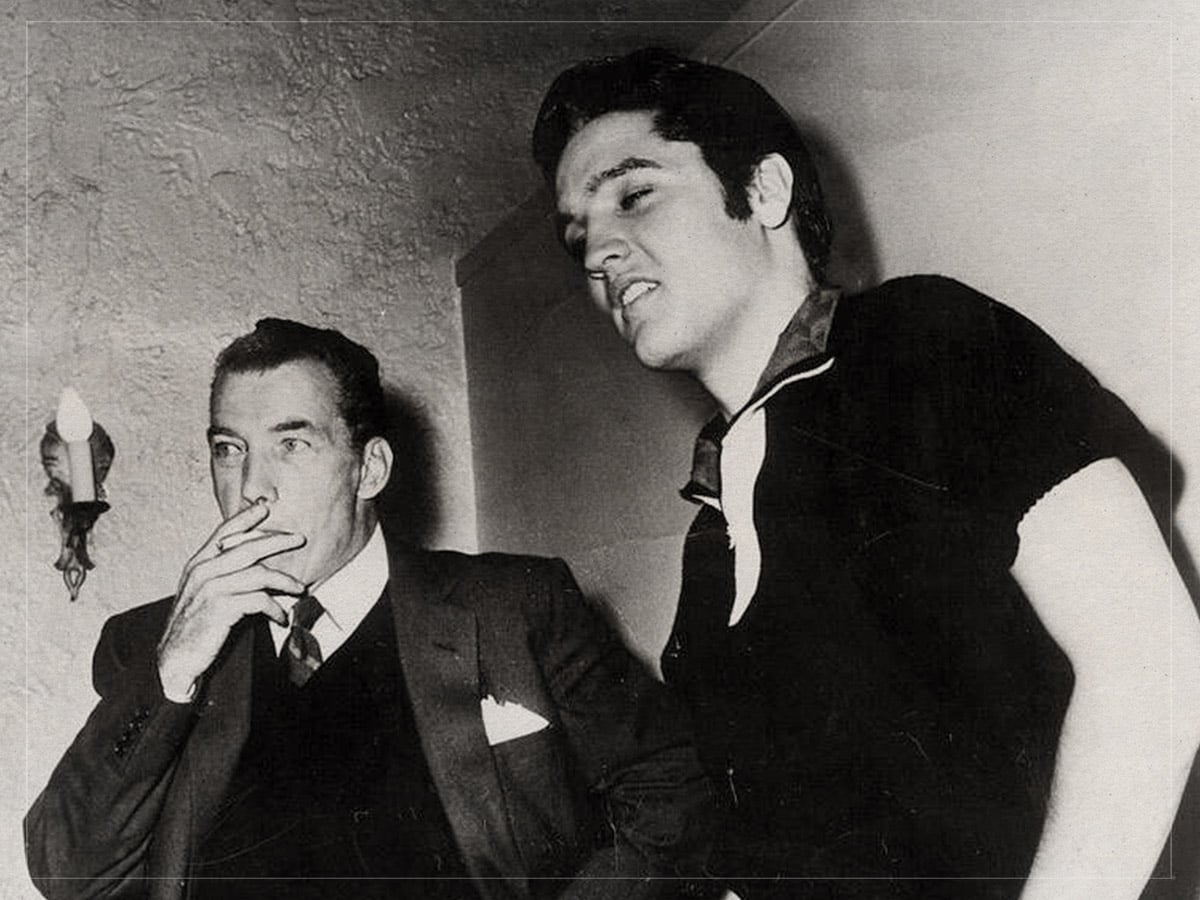
The next sound most of America heard wasn’t the first chord of the Fab Four’s ‘All My Loving’, but several seconds of the girls in the studio audience screaming uncontrollably, quite a bit beyond even the precedent that a hip-swivelling Elvis Presley had set in that same studio eight years earlier.
Elvis, it should be noted, was also mentioned in Sullivan’s famous intro, as The King and his manager, Col Tom Parker, had wired in a message to wish The Beatles success in their American debut. It was later rumoured that Parker had actually done this independently without Elvis’ endorsement, but it sounded like a passing of the rock and roll torch nonetheless.
It’s pretty difficult to overstate the impact of The Beatles’ first appearance on The Ed Sullivan Show, or their return visits for that matter, as countless musicians, writers, and artists from the Baby Boomer generation have since spoken of those broadcasts, ad nauseum, as moments of almost divine inspiration in their young lives, when the dark clouds from the previous autumn’s JFK assassination suddenly parted to reveal a bright, shining way forward.
Tom Petty, for example, who watched from his home in Gainesville, Florida, at the age of 13, equated it to receiving a blueprint for his own life. “Here was something that suddenly, like for me and thousands of other people, it’s that little explosion in your head where you went, ‘I see how this can be done,’” Petty said in 2014.
Adding, “This is a self-contained unit. And they make the music, they write the music. And they’re clearly friends and look like they’re having a lot of fun. This looks like what I should be doing; this is my ticket out.”
The Beatles, somewhat ironically, had felt the same sort of jolt from hearing American rock and roll records for the first time, and they were now completing the circle of influence. But it hadn’t come easy. According to some sources, the band had been jockeying to get a spot on the Sullivan show in a quest to break America since as far back as 1962, but if that’s the case, it was probably just their manager, Brian Epstein, making some phone calls.
As Paul McCartney recently reiterated to talk show host Stephen Colbert in a return visit to Studio 50, now known as the Ed Sullivan Theatre, he and the other Fabs were not well-versed in the American television hierarchy at the time.
“To tell you the truth, we’d never heard of it,” he said of The Ed Sullivan Show, which started airing on CBS way back in 1948, helmed by the already venerable journalist and radio host. “You know, England,” McCartney explained, as if he needed to remind younger viewers that foreign programmes were not yet streamable, VPN or otherwise, in the 1960s.
“When you close your eyes [here], do you hear the girls screaming?” Colbert asked. “Often,” McCartney jokingly replied as the audience tried to tap into the energy of those girls up in the balcony in ‘64. Paul did make a point of noting that the host and namesake of the venue, “Mr Sullivan [was] really nice. He was a really cool guy.”
Why was The Ed Sullivan Show such a big deal?
It wasn’t a shoo-in that Sullivan would be the platform for The Beatles’ introduction to American TV viewers. The early ‘60s was something of a heyday for weekly variety shows, and in 1964 specifically, Sullivan’s long-running programme had competition from the new Hollywood Palace on ABC, the Andy Williams Show on NBC, and several other similarly formatted entries on his own network, including the Danny Kaye Show and the Jackie Gleason Show. Johnny Carson was also on the rise as host of The Tonight Show, and American Bandstand had become the leading showcase for new rock and roll groups.
Up to this point, most of the booking agents for these programmes, including Sullivan’s man Jack Baab, were operating under the notion that British musical acts rarely appealed to the US market. Baab had actually attended a Beatles gig in England in the summer of 1963, at the direct invitation of a Brian Epstein associate and promoter named Peter Prichard, but he still wasn’t convinced that the growing mania around the band in their homeland would carry across the Atlantic.
According to Beatles lore, it was Ed Sullivan himself who finally made the call to book the lads – during a trip to London with his wife in October of 1963, Sullivan had supposedly witnessed a crowd of girls gathered at Heathrow Airport, waiting for The Beatles to return from a tour of Sweden… If there was even a tiny, remote chance that this fever could infect American girls in the same way, it could be Elvis all over again, only multiplied by four. Less than a week later, Brian Epstein was in New York, working out a deal with Sullivan to book The Beatles for not one, but three appearances on The Ed Sullivan Show.
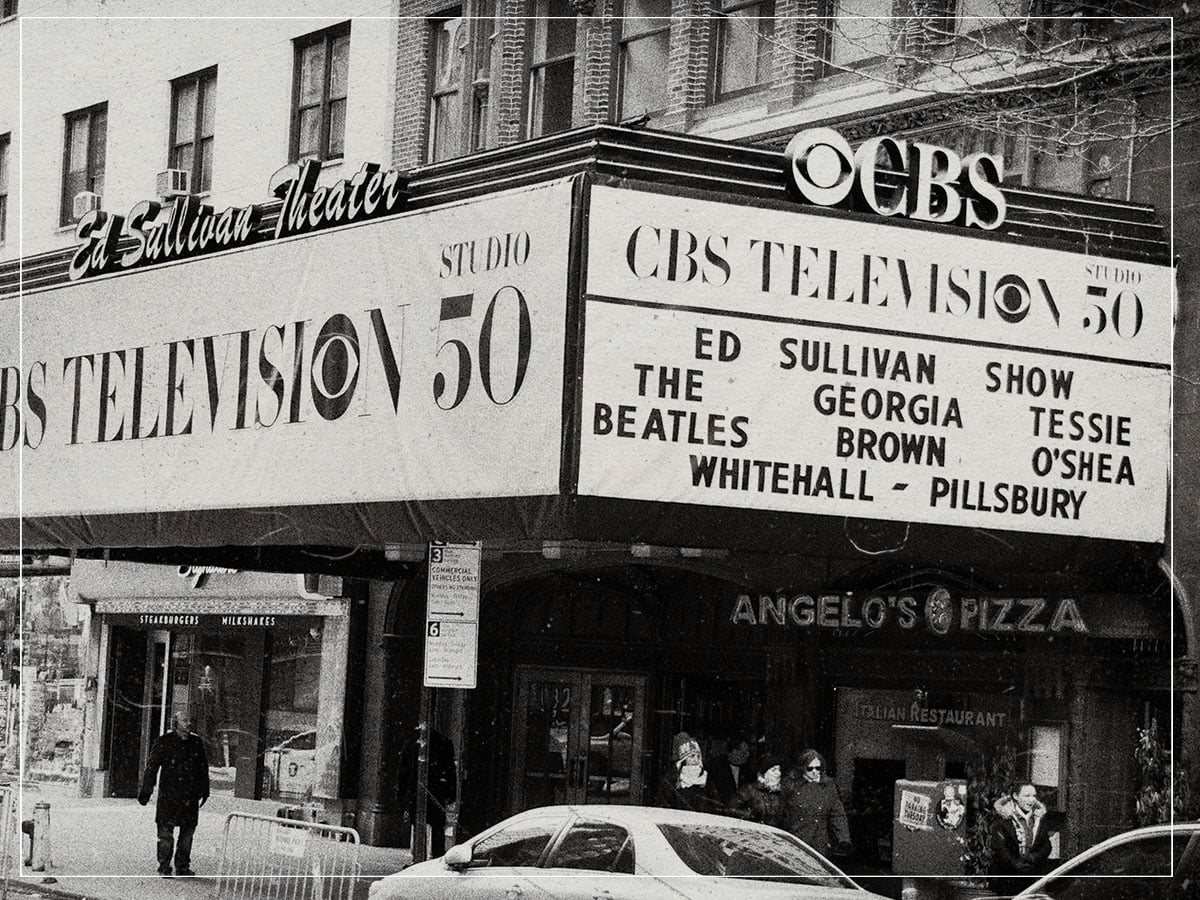
The deal didn’t generate much attention at the time, but shortly after Christmas, when The Beatles’ new single ‘I Want to Hold Your Hand’ started racing up the Billboard chart, Sullivan knew he had something special on his hands. Sure enough, as tickets became available for The Beatles’ February 9th appearance, CBS was inundated with requests, as 50,000 people wanted a seat in a room that maxed out at 728.
When the airdate finally arrived, the lucky folks who did manage to get a ticket to the studio were quickly reminded that this was not a proper rock concert they were about to witness, but a typical hit-and-miss variety show, with The Beatles’ performances merely sprinkled in amongst those of an illusionist, an impressionist (Frank Gorshin, later to play The Riddler on the Batman TV series), some acrobats, a stand-up comedy team, and a sampling of the Broadway hit Oliver! This was Ed Sullivan’s world, as it had been for nearly two decades. The Beatles were merely stopping by.
“I have no talent as a performer,” Sullivan said in a 1967 interview, separating himself from some of the actors and singers who’d become chat show hosts. “But I do have strength in two directions”.
Adding, “I can spot talent. This is partly a result of my training as a sports writer, because sports stars and stage stars are amazingly alike in temperament and under stress. And second, I let performers on my show perform without interference. I don’t get into their acts. I enjoy them, and I let them perform without amateur ‘help’ from me.”
That’s not to say that Sullivan’s production crew, or the standards and practices department at CBS, didn’t sometimes stick their nose into things. The Rolling Stones, famously, were asked to change the lyrics of ‘Let’s Spend the Night Together’ when they appeared on the show, as were The Doors, who defied the same order on ‘Light My Fire’… During The Beatles’ broadcast, John Lennon’s close-up was accompanied by a message on the screen, typed out by some buzzkill in the control booth: “Sorry Girls, He’s Married” – John was supposedly irked when he found out about it.
Decoding the myths
As will happen with any truly mono-cultural, monolithic event like the “Beatles on Sullivan,” there are dozens of myths and legends that have grown around it in the decades since. Some, like the fact that George Harrison was running a high fever and was nearly unable to go on stage, are pretty well agreed upon as fact. Others fall more into the folklore camp, like the oft-repeated story that the broadcast brought crime in America to a complete standstill for one hour.
Both John Lennon and George Harrison perpetuated this story at times, with George mentioning, as late as the 1995 Beatles Anthology documentary, that “even the criminals were watching” their first Sullivan appearance.
As it turns out, the origin of that myth was likely a single sarcastic comment made by Washington Post news editor BF Henry, who suggested “there wasn’t a hubcap stolen in America” during the show, implying that The Beatles’ fan base were essentially juvenile delinquents, briefly distracted from their usual mischief.
If the actual behaviour of America’s youth on that historic night remains up for debate, the behaviour of The Beatles themselves is well documented. They might not have heard of Ed Sullivan before meeting him, but they made sure they showed him the respect he was due as America’s slightly awkward but highly trusted tastemaker.
“When it came to Ed Sullivan, it was, ‘Yes, sir, no, sir, three bags full, sir,’” recalled photographer Harry Benson, who travelled with The Beatles throughout that first US tour. “They were very aware that this was the most important show they could do. They were quite gravely. Brian [Epstein] will have spoken to them, and they were aware of the status of the show and behaved very well. Ed Sullivan called them ‘charming young men’, and they were ready to play the role of polite English boys.”

Never Miss A Beat
The Far Out Beatles Newsletter
All the latest stories about The Beatles from the independent voice of culture.
Straight to your inbox.