


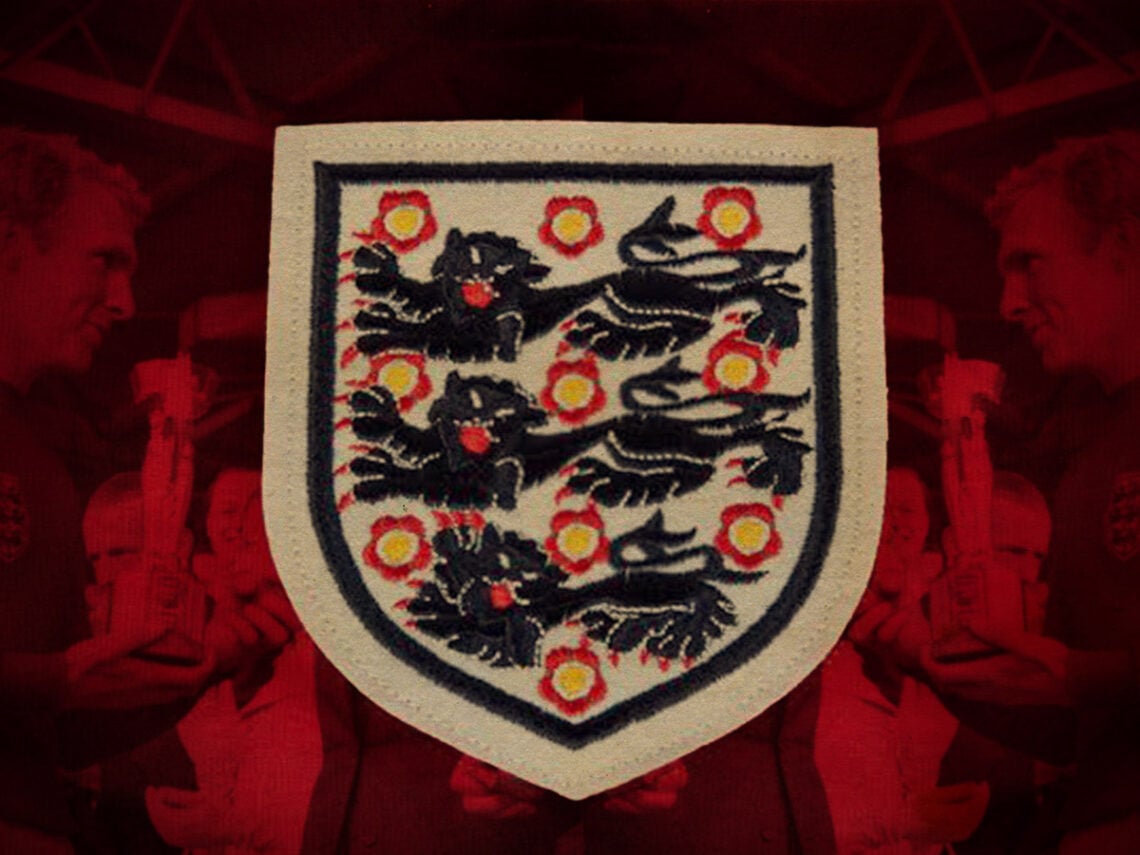
The banned 1982 World Cup song sung by the England heroes of 1966

World Cup fever takes the globe by storm once every four years, engrossing many people who are otherwise uninterested in football for well over a month or more.
Of course, some find themselves falling in love with the so-called ‘beautiful game’, much as I found myself doing in 2002 when the tournament was hosted jointly by South Korea and Japan, but others find different things to become obsessed with. Maybe you develop an affinity for a microscopic nation who are punching well above its weight and keeping the titans at bay, maybe you’ll discover that you actually enjoy the rampant sense of patriotic tribalism that comes with following international football, or perhaps you’ll find yourself falling in love with…the music?
Again, that could mean a number of things in and of itself, with some people choosing to painstakingly try to listen to the work of artists from every competing nation and decide who wins their alternative World Cup of pop hits, but on the other hand, you might find yourself fascinated by the chants heard from the terraces, with fans belting out impassioned songs in support of their country.
For example, why exactly do England’s horn-wielding sub-section of fans like to parp out a rendition of War’s ‘Low Rider’ every ten minutes? Why exactly have we previously held a fascination with making Neil Diamond’s ‘Sweet Caroline’ even more insufferable? And why haven’t we chosen to produce another anthem to replace the now extremely dated ‘Three Lions’, given how the “30 years of hurt” the song speaks of has now doubled?
The thing is, England’s six decades of misfortune at international tournaments aren’t just limited to performances on the pitch, but have also been present in the studios where our official anthems have been recorded. In 1982, prior to the country’s appearance at the tournament in Spain, the heroes of the 1966 squad who brought the nation glory were reunited to sing on a rousing track about their title-winning exploits.
The hope, much like with all World Cup songs, was that such a track would raise spirits and hopefully encourage the new guard to replicate their incredible feat. Unfortunately, ‘We Were There’ couldn’t have been further from its target; not because the team stumbled during the second phase of the tournament, and not because the song was absolute dross, but because it was banned from release until 2016, with the master tapes spending 34 years in an attic on the Isle of Man.
But what could be so controversial about a song recorded by England’s 1966 World Cup-winning squad that would prevent it from being heard by the general public for over three decades? According to the songwriter, Bob Wragg, the song itself had been well-received by the record label they’d sent it to, but it was shelved immediately upon the outbreak of the Falklands War in April 1982, with it being deemed inappropriate to release such a celebratory anthem during a politically fraught period.
Now, the song itself is far from anything special, and given Wragg had only 24 hours’ notice to even write the song after he was informed that the winning side would be gathering for a promotional shoot in Leicester, little should have been expected from the song. None of the members of the 1966 squad was a qualified musician, let alone singers, and while Alan Ball managed to learn harmonies and Bobby Moore acquired the basics of the tambourine in a short window of time, ‘We Were There’ was hardly going to be anything more than a novelty.
After Wragg uncovered the tapes that had been gathering dust in his loft in 2016, he chose to see about giving the track an official release in time for England’s appearance in the European Championships in France, with all of the proceeds of the track going towards the Alzheimer’s Society. It was unfortunate that the song had spent so long as a forgotten oddity in the history of World Cup songs, but if it was meant to encourage the team to perform well in 1982, it certainly didn’t manage to achieve its objective in 2016.
