


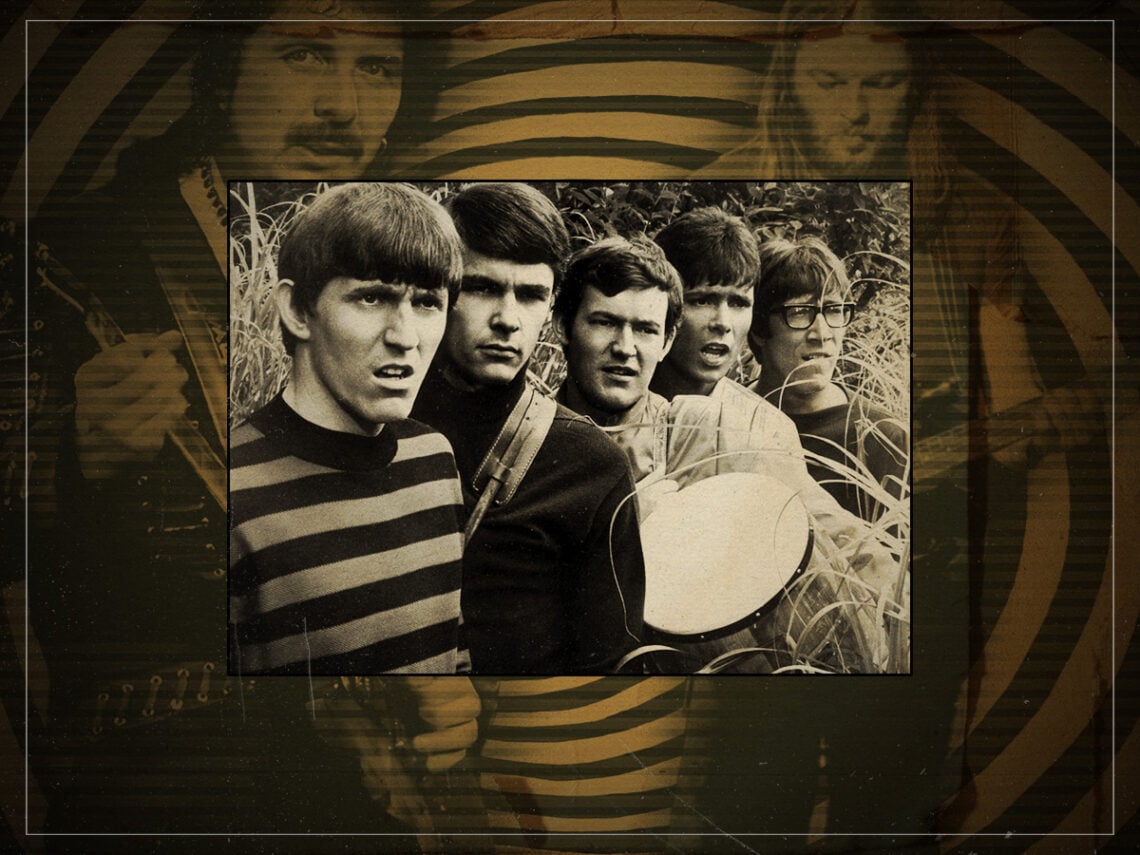
The Shadows: The band that taught David Gilmour and Tony Iommi guitar

Who influences the greats to learn to create their own sound? Sure as day, YouTube tutorials weren’t a thing back then; heck, even the best YouTube tutorial will only take you so far (trust me, I’ve tried).
Drawing on the last several decades of ambitious, genre-defining bands, we might land on Black Sabbath, re-entering our discourse due to the recently passed Ozzy Osbourne, or Pink Floyd, with David Gilmour alive and wielding his dynamic, blues-influenced melodicism, but who pushed them to run their course?
Believe it or not, the guitarists from both picked one primary influence on their plucking and strumming: Hank Marvin of the band The Shadows. Marvin became popular in the early 1960s as the laid-back, smiling guitarist beside Cliff Richard in The Shadows, though he never quite reached mainstream star status.
Marvin’s guitar work seeped into the sound of Tony Iommi and Gilmour. Iommi has several distinct styles, such as the powerful, simple riffs from early Black Sabbath days, on ‘Paranoid’ and ‘War Pigs’, which progressed into an inventive use of downtuning as a result of finger injuries he had sustained. Gilmour’s work in ‘Shine on You Crazy Diamond’ contains artful and intricate slides and phrasing. And all of that blossomed in Marvin’s work.
Iommi loved Marvin’s sound so much that he set to work in the recording studio, making his devotion official, appearing on the 1996 tribute album, Twang!: A Tribute to Hank Marvin & The Shadows. “Me and Brian May both loved Hank,” Iommi recalled, and went on to jokingly compare the two friends to their idol, adding, “We’re not widdly diddlies. Brian and I have done a few things, played together on albums. We were in the studio together once, and we started playing Shadows stuff.”
Gilmour noted back in 2006 that his melodies are “connected to things like Hank Marvin and The Shadows. That style of guitar playing where people can recognise a melody with some beef to it”. He’d had a similar argument over two decades before, when he stated in 1981 that Gilmour was “the first major electric sort of guitar hero for us Brits”. Sure enough, he’d attended a live show to see what the fuss was about, and almost cried in the crowd, quickly branding Marvin one of the greats.
This transparency about emulation and influence is something increasingly lost today. We are pitted against one another; artists have to prove who they are like, not to name their influences, but to prove how they are better than them. At least we have Gilmour and Iommi, willing and indeed excited to share where they first found inspiration.
What does Marvin have to say about all of this? In 2023, in a nod to his profound impact on music, the seasoned axeman was asked for advice he would give any aspiring young guitarists, to which he offered, “Really listen to other people because if you like something someone else plays, a phrase, or the way they approach a song, try and copy that first”.
He added as a caution, “But then move on to your own style. Every player starts off by copying, and then they develop their own path, and that’s what’s important for anyone”. He may well have had Iommi and Gilmour in mind here.
