


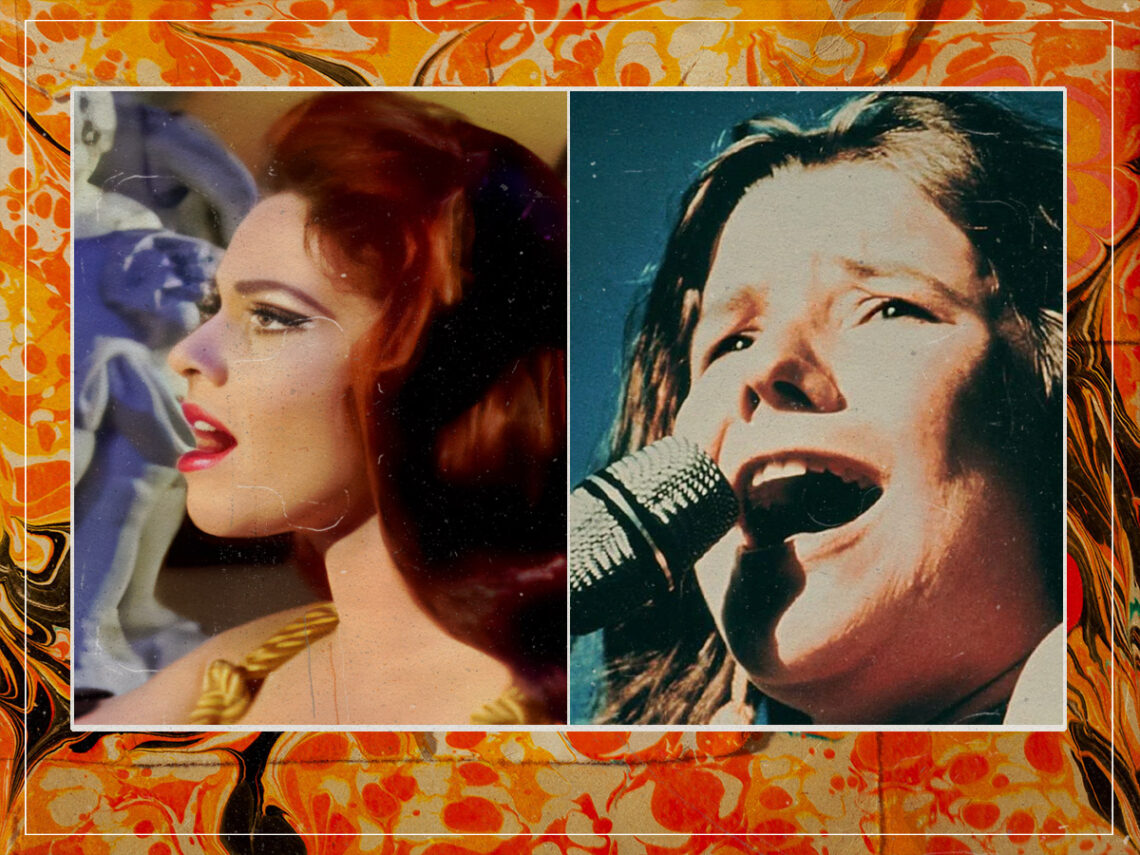
Tuning in: Kate Pierson of The B-52’s explains how Janis Joplin changed her life

The discussion about the tremendous cultural explosion of the 1960s often concentrates on the immediate effects it had. However, it was an era in which the wheels would be set in motion for a host of acts that would take years to find success. Whether it be Patti Smith or even Michael Gira of Swans, the decade incubated various sounds outside of psychedelia and classic rock. One band whose vivid work can be traced back to that heady time was The B-52’s.
The Athens, Georgia group didn’t form until 1976, ostensibly known as a new wave outfit belonging to the distinctly ’70s movement. However, scratching beneath the surface, it becomes clear that they are steeped in the essence of the previous decade. For instance, the band’s name is derived from a version of the beehive hairdo. It resembles the nose cone of the titular aircraft, something that singers Kate Pierson and Cindy Wilson wore in performances during their first ten years.
Furthermore, late guitarist Ricky Wilson’s sound was very much indebted to the surf music of the 1960s, with this brought into focus by him playing a Mosrite Ventures II model. This strange futuristic-looking instrument reflected the B-movie aesthetic the band conjured. This only bolstered the pull of their thrift-store chic, a popular look when hippiedom was at its peak.
Like many of their generation, it was in the 1960s that the members found themselves personally and artistically facilitated by experimentation with drugs. This can obviously be attributed to the creative innovations that were all around them as students.
According to Pierson, when the counterculture was at its peak in 1968, she first heard one of her favourite singers of all time, Janis Joplin, who would inspire her with her unique approach to vocals. It was the Big Brother and the Holding Company leader’s version of Big Mama Thornton’s ‘Ball and Chain’ that captivated her. It made her a lifelong fan of Joplin, who would tragically die of a heroin overdose only two years later in 1970.
In 1968, Pierson was like many of her generation, who wanted to look like the folk heroines Joni Mitchell and Mary Travers, with long, straight hair parted in the middle. This set her apart from her classmates, the majority of whom had beehive haircuts, which she deems ironic given that it would be the haircut she became synonymous with nearly a decade later.
That year, she moved to Boston University, which happened to be perfect timing as it was a period when many hippies were migrating east from the sunny San Francisco epicentre of the counterculture to Boston Common. As a naturally outward-looking individual, this close proximity to the hippies would see her start smoking weed and get into acid. Her tripping wasn’t done to tune in and drop out as Timothy Leary exhorted people to do, though. She stayed in college but saw LSD as a way of expanding the mind.
Speaking to Pitchfork in 2020, Pierson recalled how associating with the hippies opened her eyes to psychedelic music and other staples of their lifestyle, including Janis Joplin. The expressive soul of the Texan singer captivated her on ‘Ball and Chain’, a highlight of Big Brother and the Holding Company’s 1968 masterpiece, Cheap Thrills.
She said: “I listened to her sing ‘Ball and Chain’ by Big Mama Thornton, and it blew me away. I could never sing like her—I mean, I can’t even try. I don’t know how she did it.” According to legend, the song held significance for Joplin. After she first heard it during a performance by Thornton herself at a bar in San Franciso, she decided to cover it, and her band transformed it into an unhurried minor-key blues number. It became a crucial part of the Holding Company’s oeuvre, including starring at that year’s Monterey Pop Festival.
“She was so unique and seemed to be so free,” continued Pierson. “She epitomised hippiedom, and she seemed like such a strong woman, even though she was singing about a man taking a piece of her heart. She took a piece of my heart, too.”
While Pierson admits that she could never sing like Joplin, her musical prowess and strength as a woman in an era when misogyny was rampant, despite the cultural advancements at play, were invaluable. The song soundtracked many trips, and after the haze had settled, it drove her on her journey to do something equally unique with The B-52’s, who have always stood out on their own.
Listen to ‘Ball and Chain’ below.
