


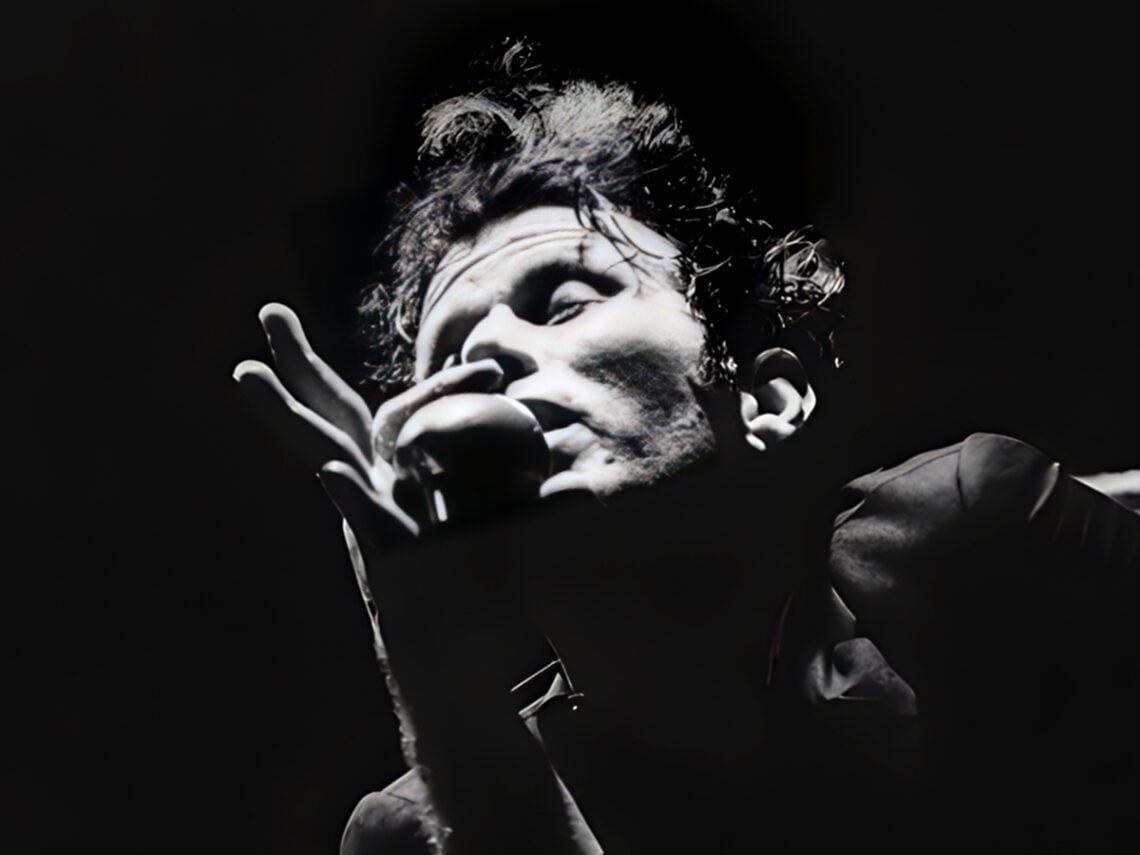
The artist Tom Waits called the “high watermark” for songwriting

Despite comfortably falling into the singer-songwriter camp when trying to pin down the style of music that he has made throughout his career, there’s always been a smattering of avant-garde tendencies to the works of Tom Waits.
Even on early albums like Closing Time, where the majority of the songs revolve around him and a piano, there are elements of jazz and blues that creep into his compositions, and this would only increase as he grew in stature and settled more into the idea of putting these less accessible features into his art. Albums like Swordfishtrombones and Rain Dogs are hardly straightforward albums, but both are beloved, and the fact that Bone Machine managed to scoop Waits a Grammy Award only goes to show the level of inventiveness that he was able to muster up.
That’s not to mention the gravelly vocal tones that he already had at the start of his career, which only got increasingly hoarse as he became more well-known. This becomes a sticking point for some people attempting to familiarise themselves with Waits’ work, and is often what turns them away from him as an artist, but for others, it’s arguably what makes him such a singular artist.
With the songs becoming increasingly bizarre, you’d think that there weren’t too many other artists whom he looked up to as a prime example of what good songwriting meant to him, but given his previously established taste for both jazz and blues, it was primarily in these areas where he was searching for inspiration, especially those who would similarly play by their own rules.
For Waits, there’s one person he has always looked up to as a source of inspiration, who he claims was virtually untouchable in terms of his songwriting ability, given how obtuse it could be, but how brilliantly it worked.
Don Van Vliet, otherwise known as Captain Beefheart, has always been seen as a true maverick whose style flirted with similar areas to Waits’ music, and whose approach is often called into question just as much as it is lauded. For every fan of Trout Mask Replica or Lick My Decals Off, Baby that you manage to find out in the open, there will comfortably be an equal number of dissenters who don’t understand the inventiveness of his work.
Waits, meanwhile, is full of nothing but praise for Beefheart, proclaiming that there has never been another songwriter quite like him, and in the wake of his passing in 2010, he told The Los Angeles Times just how important he has always been to his own artistry. “He was like the scout on a wagon train,” Waits eulogised, “He was the one who goes ahead and shows the way. He was a demanding bandleader, a transcendental composer, up there with Ornette [Coleman], Sun Ra and Miles [Davis]. He drew in the air with a burnt stick. He described the indescribable. He’s an underground stream and a big yellow blimp.”

These surrealist descriptions are nothing but befitting of an artist like Captain Beefheart, and would similarly do a great job of describing just how important Waits has proven himself to be. “I will miss talking to him on the phone,” he lamented of their relationship, adding, “He’s the alpha and the omega. The high watermark. He’s gone, and he won’t be back.”
There has genuinely never been anybody quite like Captain Beefheart, and while some may think that his madness only ever produced great results through luck, there’s a real genius to his work. Waits’ own ways come close to matching those of his idol, but if anything, he wouldn’t have ever been able to bring himself into the spotlight had it not been for the brilliance of Beefheart before him.
