


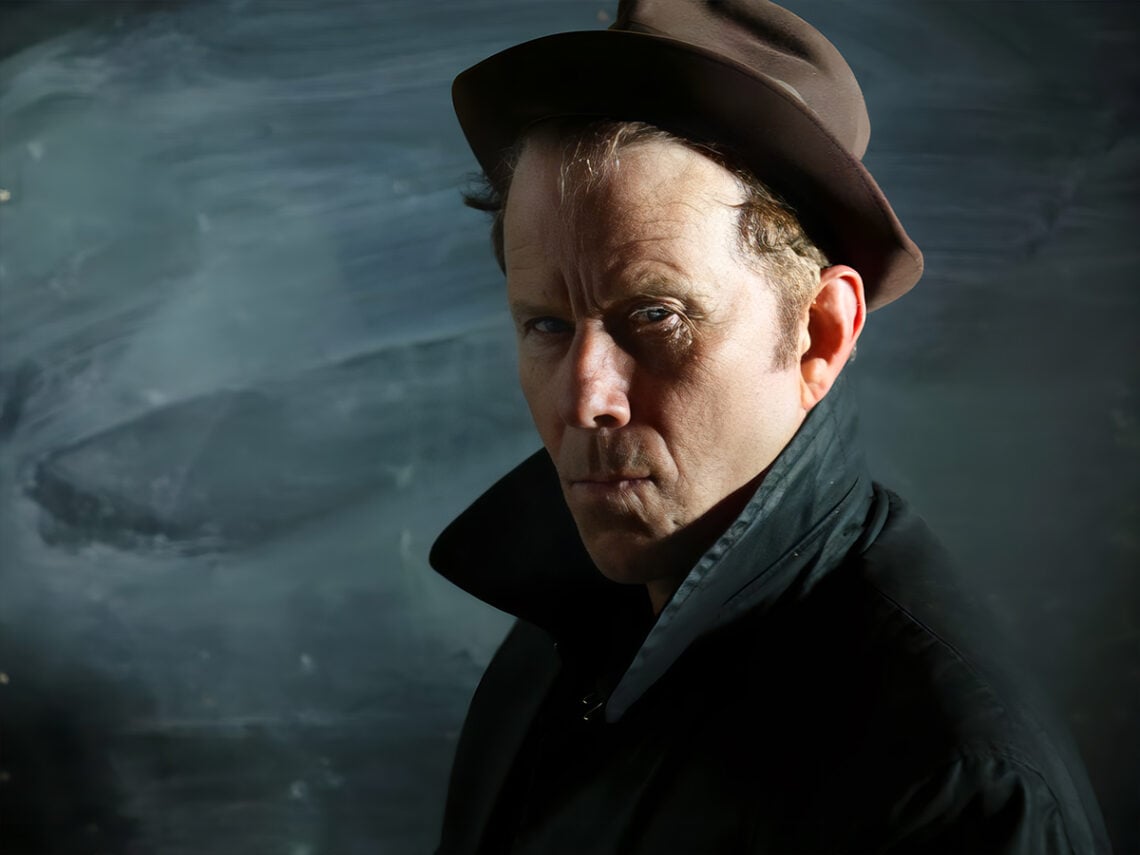
Tom Waits picks his favourite jazz albums of all time

Tom Waits primarily got his start as a jazz musician during the 1970s, established initially with his debut album Closing Time in 1973. By the time his second studio album, The Heart of Saturday Night, was released, Waits had finally achieved his long-time goal of creating a fully jazz-influenced, piano-lead album that would solidify his status as a pioneer of the genre.
Hence, it’s entirely unsurprising that Waits himself would hold a curated collection of esteemed jazz albums close to his heart. One such musician that makes his list is the unmatched Thelonious Monk, the revered jazz pianist and composer whose unique, improvisational style and endearing, contagious energy introduced a newfound freshness to the genre that it had never experienced before.
“Monk said, ‘There is no wrong note, it has to do with how you resolve it’,” Waits told The Guardian. “He almost sounded like a kid taking piano lessons. I could relate to that when I first started playing the piano because he was decomposing the music while he was playing it.”
He added: “Solo Monk lets you not only see these melodies without clothes, but without skin. This is astronaut music from Bedlam.”
Equally, the vocal jazz contributions from Frank Sinatra also resonate with Waits, who deems In The Wee Small Hours as one of his favourite records. Considered to be one of the best vocal jazz releases of all time, it is often regarded as highly as Songs For Swingin’ Lovers! and Frank Sinatra Sings for One the Lonely. Deemed the first concept album, In The Wee Small Hours, for Waits, is one you put “on after dinner and by the last song you are exactly where you want to be.”
By 1980, Monk had inspired an up-and-coming group founded by saxophonist John Lurie and his brother, pianist Evan Lurie, called Lounge Lizards. After releasing their self-titled debut, which included two Monk cover songs, Lounge Lizards realised their sound belonged on the opposite side of jazz, with the more sonic experimentalists. However, this wasn’t something that die-hard jazz fans initially warmed to. “They used to accuse John Lurie of doing fake jazz – a lot of posture, a lot of volume,” Waits said.
Adding: “When I first heard it, it was so loud, I wanted to go outside and listen through the door, and it was jazz. And that was an unusual thing, in New York, to go to a club and hear jazz that loud, at the same volume people were listening to punk rock.”
Later, Waits’ sound took on a more rock and blues feel, akin to styles explored in The Delivery Man by Elvis Costello and, of course, The Basement Tapes by Bob Dylan. When discussing the contributions of Dylan, Waits calls his music “as essential as a hammer and nails and a saw are to a carpenter“.
He added: “I like my music with the rinds and the seeds and pulp left in – so the bootlegs I obtained in the sixties and seventies, where the noise and grit of the tapes became inseparable from the music, are essential to me.”
Tom Waits’ favourite albums of all time:
- In the Wee Small Hours – Frank Sinatra
- Solo Monk – Thelonious Monk
- Trout Mask Replica – Captain Beefheart
- Exile On Main Street – The Rolling Stones
- The Sinking of the Titanic – Gavin Bryers
- The Basement Tapes – Bob Dylan
- Lounge Lizards – Lounge Lizards
- Rum Sodomy and the Lash – The Pogues
- I’m Your Man – Leonard Cohen
- The Specialty Sessions – Little Richard
- Startime – James Brown
- Bohemian-Moravian Bands – Texas-Czech
- The Yellow Shark – Frank Zappa
- Passion for Opera Aria
- Rant in E Minor – Bill Hicks
- Prison Songs: Murderous Home – Alan Lomax Collection
- Cubanos Postizos – Marc Ribot
- Houndog – Houndog
- Purple Onion – Les Claypool
- The Delivery Man – Elvis Costello
