


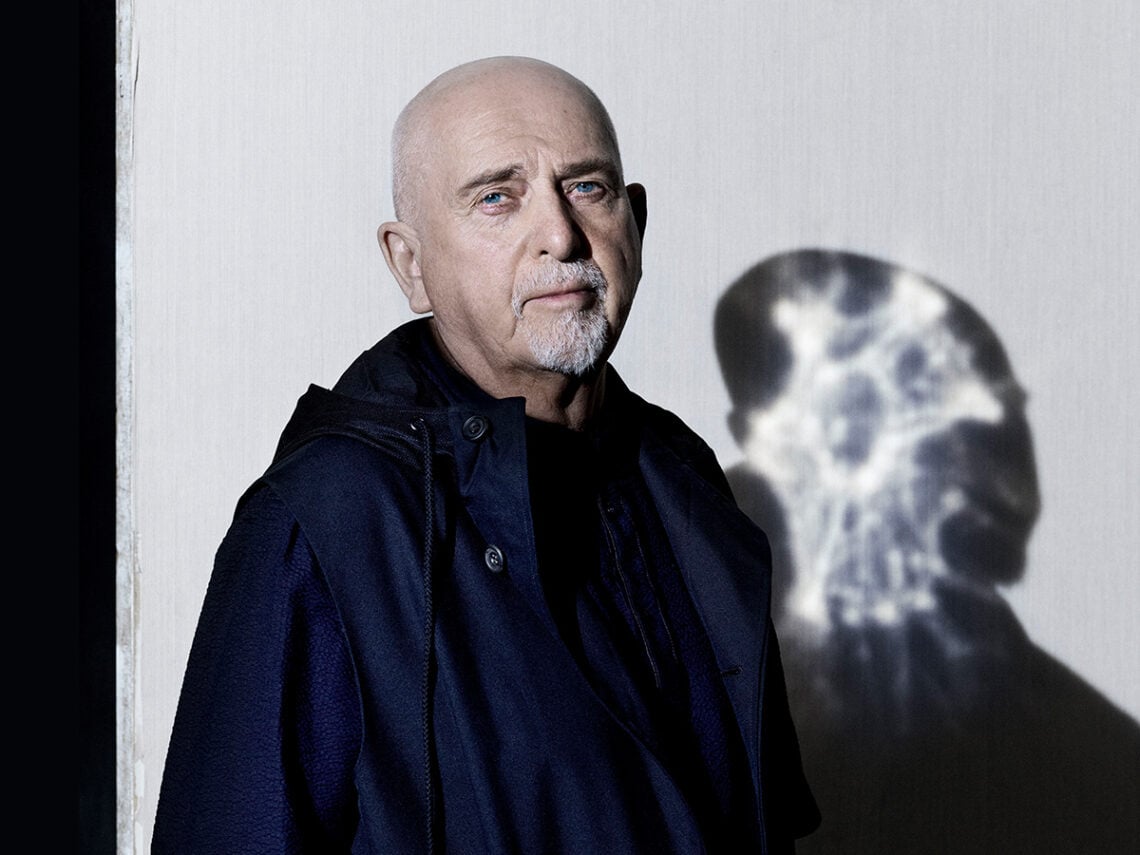
The artist Peter Gabriel called “one of the key British musicians”

Peter Gabriel is rarely a man in a rush. When he finally announced the release of his seventh solo studio album, Up, in 2002, it had been a full decade since its predecessor, 1992’s Us. In the interim years, Gabriel was hardly on holiday. Instead, he was slowly piecing together the concept for Up, bit by bit, waiting for the songs to reveal themselves and for the right collaborators to help capture them.
Up, in line with the ethos of Gabriel’s Real World record label, was recorded across a tapestry of global locations—from the Real World Studios in Wiltshire to extended sessions in Senegal and southern France, always with an eclectic roster of musicians at the ready.
“I think that [collaboration] brings air into music and takes it into places that you wouldn’t normally go,” Gabriel told interviewer Nigel Williamson following Up’s release in 2002. “We take quite a while to bring in other people to try different adventures on each song.”
Among the many first-rate musicians Gabriel enlisted for Up, one name arguably stood out for its personal resonance: Peter Green, the legendary blues guitarist, singer/songwriter, and founder of Fleetwood Mac, had inspired Gabriel going way back to the early days of Gabriel’s band Genesis in the late 1960s. Famously, Green had left Fleetwood Mac in the early ‘70s well before that band became a commercial juggernaut, and his own struggles with mental illness had largely derailed his career. By the late ‘90s, though, Green’s life had stabilised, and he was back recording with a new band called the Peter Green Splinter Group, which caught Gabriel’s attention.
“Peter Green is enormously talented,” Gabriel said in 2002, “and is someone who I think was one of the key British musicians when I was growing up. I was very keen to see if we could persuade him to come and play something on the album. In fact, he did a session down here [Wiltshire] and then a session in the studio where he normally works. I wanted a solo in the style of the solos that I grew up with, that would float above it, but he really didn’t want to grab the limelight and steam in there. He was sitting back in a sort of supportive role.”
Gabriel almost seemed to be hinting at the tiniest bit of disappointment that he couldn’t convince Green to re-inhabit the persona of the youthful musician who’d written songs like ‘Albatross’, ‘Black Magic Woman’, and ‘Man of the World.’ In those days in the late ‘60s, Green’s emotive guitar playing style and melodic restraint helped influence an entire generation of guitarists, from David Gilmour to Gary Moore. His humility, however, was also part of the package, and why he likely never would have fit into the chart-topping drama circus that Fleetwood Mac became.
Whatever Peter Gabriel might have wanted or hoped for from Peter Green, he wasn’t about to push the legend out of his comfort zone. “The key to collaborating,” Gabriel explained, “is to listen and to allow someone space to do what they can do well.”
Green’s eventual contribution to Up was minimal—some supporting guitar alongside David Rhodes and Daniel Lanois on the track ‘Sky Blue.’ But it’s in there, part of the slow simmering witch’s brew that makes up each new Peter Gabriel project. It would be another 20 years, incidentally, before Gabriel’s next album of all new material: 2023’s I/O. He is, as we established, in no rush.
Peter Green sadly passed away in 2020 at the age of 73.
