


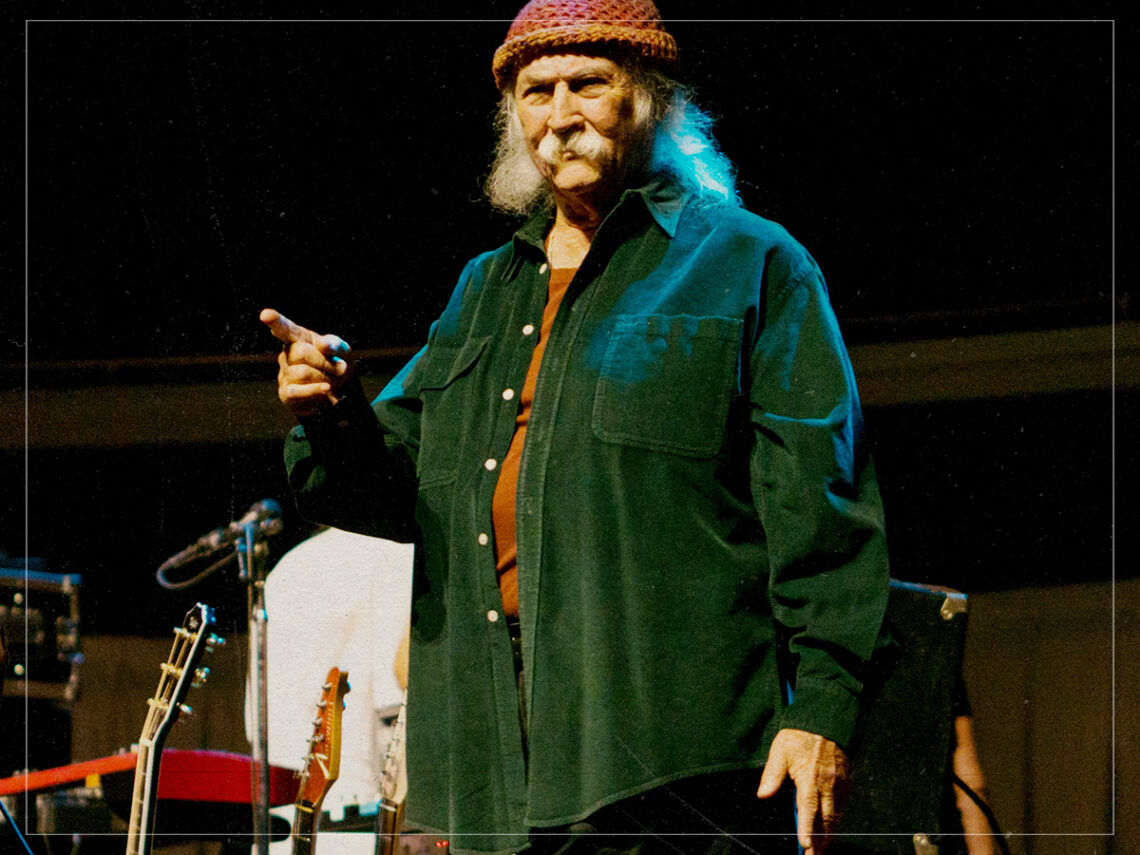
“An exemplary human being”: The American icon David Crosby is forever grateful for

Throughout his entire career, David Crosby never took a single one of his idols for granted.
He had always been a fan of all sorts of rock and roll music, but once he started working outside of The Byrds, there was a lot more left for him to explore that hadn’t been touched on yet on the pop charts. He felt that there needed to be a bit more nuance to the hit parade, but that didn’t mean that people still couldn’t get the job done with only an acoustic guitar in their hands and a song in their hearts.
But Crosby had a much grander scale than he measured a lot of his favourite acts on. Some of the greatest artists in his mind were the ones who could play like their life depended on it, and he could feel that kind of energy whenever he heard the greatest jazz players of his time. John Coltrane had blown him away when he saw him for the first time, so all he wanted was someone who could reach that level whenever he made a record.
Which probably explains why he ended up being a massive Steely Dan fan in later life. The fusion duo were among the finest arrangers that anyone had ever heard, and if they heard a sound in their head, they were willing to move the Earth if it meant getting the right voice, the right drum sound, and the right guitar sound on their masterpieces like Gaucho and Aja. That’s all well and good, but that’s not where Crosby started.
Even though he did end up taking a few cues from the likes of Joni Mitchell and his jazz favourites when making his solo records, a lot of his best songs have come from him playing songs with that same folksy angle. He wanted to make sure that he could hit someone right in the chest from the minute they heard his music, and that came from listening to the true missionaries of folk back when he was getting started.
The Byrds had managed to steal from the likes of Bob Dylan when making their first classics, but there was a lot more going on with the way that Joan Baez approached her songs. Not every one of her tunes was completely original, but she was the one willing to take a stand for people that couldn’t speak for themselves, and that hit home with Crosby whenever he started making more overtly political material.
And while the long tradition of protest music has shifted more than a few times, Crosby still considered Baez as bringing one of the godmothers of what music could sound like as an act of resistance, saying, “She held us all spellbound when she told stories of the ’60s. I think she’s an exemplary human being; I wish we had more like her. What she did for the civil rights movement and the antiwar movement we’ll never be able to repay her for.”
Baez was out to send a message to the world, and it didn’t take long for the rest of the music world to follow her lead, either. Dylan was already making brilliant pieces right alongside Baez, but when you look at what Crosby, Stills, Nash and Young were doing when they started work on tracks like ‘Ohio’, they seemed to have that same fiery passion to do what they knew was right as Baez did when she stood up for civil rights less than a decade before.
She wouldn’t have known that her music would etch itself into music history when she performed those shows, but history isn’t made by those who are looking to have their name in a book decades down the road. It’s made by those who want to make a difference and get the rest of the world to follow them.
