


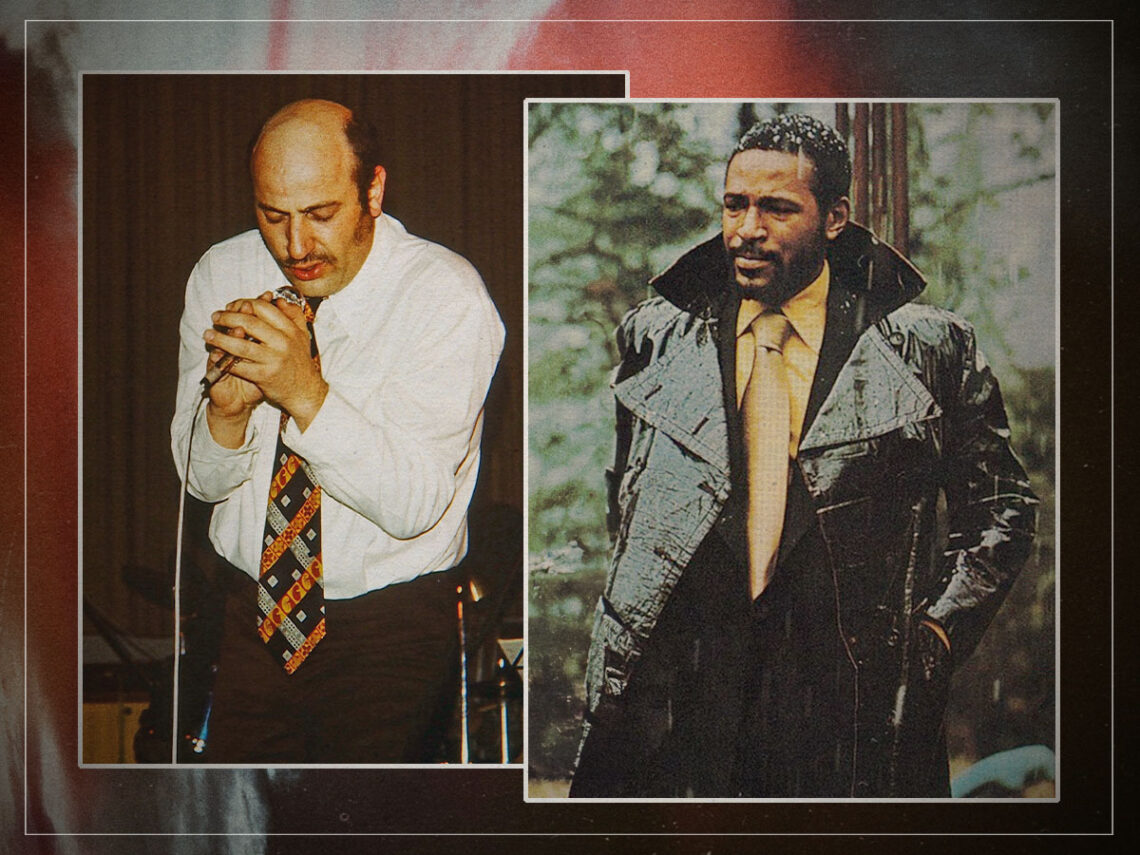
Manfred Krug and the shameless album that ripped off ‘What’s Going On’ just one year after its release

The year is 1971, Black Sabbath have just released Paranoia, Carole King has just released Tapestry, and Gil Scott-Heron has just released Pieces of a Man. You’re under absolutely no illusion that what you’re experiencing now is arguably the greatest year in music history. Then, Marvin Gaye releases What’s Going On and you realise all bets are off. This is the greatest year in music history.
It was a year that satisfied all the notes of musical appetite, with every genre boasting artists armed with interesting stories to tell. The Beatles had left the building and, in their wake, left an open playing field, filled not by one artist to dominate the charts again but shared by several. What followed was a decade built upon ideas of freedom, soaring into innovative new territories and blurring the lines between what genres actually meant.
Gaye was undoubtedly one of the greatest of that era, but not necessarily for the latter point. He wasn’t a great innovator but rather the master of a fine art, becoming the tender voice of soul. He had an acute ear for melodic composition, which floated through different instrumental parts before giving way to truly captivating vocal takes. Combine all of that sonic power with a resolute sense of social consciousness, Gaye and, in particular, What’s Going On, became the sound of a loving revolution. One that extended beyond the realms of a broken New York City.
In fact, it must have reached the streets of East Germany, for just one year after the release of the record, German actor and musician Manfred Krug recorded what was a strikingly similar album. Behind a cover that showcases Krug, similarly pensive in the rain, was an album that sulked through piano breakdowns and horn flourishes that could have easily crept their way into Gaye’s What’s Going On album.
But while the composition feels outrightly ripped from Gaye’s discography, Krug rightly chose to divert his lyrical content into romance, something Gaye had done well indeed perfected, but couldn’t claim the rights to.
But as for the composition, well, Krug clearly drew direct influence from Gaye, and it was most evident on the lead single ‘Komm und spiel’ mit mir’. It almost sounds like the third track in the ‘What’s Going On’ into the ‘What’s Happening Brother’ segue, with almost the exact chord sequences on piano. But credit to Krug, Gaye’s no easy act to replicate and while the rip-off is astonishingly obvious, the vocal performance he puts in, in his own right, is worth praise.
But imitation, as we all know, is the highest form of flattery. If you needed any more convincing that Marvin Gaye’s 1971 record is perhaps the greatest of all time, then a replica released just one year after may do the trick. Maybe the streets of East Germany are filled with people singing Krug’s version, but where Gaye’s is unarguably brilliant is the fact that his lyrics resolutely stand the test of time. Over half a century on, What’s Going On, is as pertinent, if not more, than it was upon release.
