


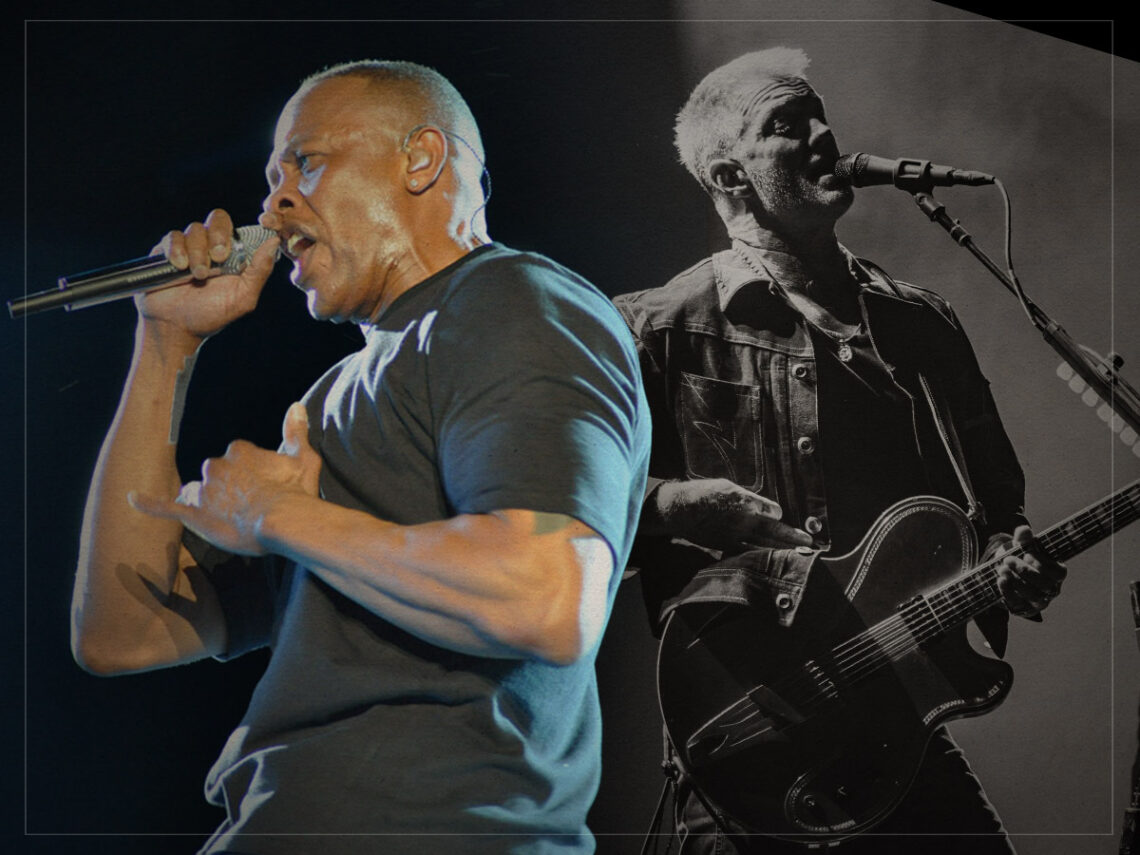
The album Dr Dre and Josh Homme agree is a rock masterpiece: “What the hell is this?”

As the millennium turned and music faced forward to its brave new future, the tectonic plates of power seemed to have shifted. The rousing rock that dominated the back end of the previous century was slipping out of favour, with R&B and hip-hop growing in strength and becoming a dominant new force in contemporary music.
Rightly so as well, after paying its dues for over two decades. Hip-hop was quietly infiltrating the social consciousness of music fans, spreading from the New York projects before reaching the glamour of America’s West Coast. When it arrived there, producers like Dr Dre were on hand to turn it into something more meaty and commercial, with the power to rightly rebel against the status quo of traditional rock music.
Of course, that didn’t mean the extinction of rock music. The new millennium brought with it fresh ideas, namely in the form of Arctic Monkeys, The Strokes and Queens Of The Stone Age. While the latter rubbed shoulders with the icons of the previous decade, it was on them to carry the torch into the new era and keep the burning light of rock music alive.
Because what came before was worth saving. On both sides of the pond, the 1990s were home to a fresh new era that respected the styles of music that came before but then took them into new realms. Rap rock, Britpop and grunge all thrived in this wild new era, inspiring the work of those three great bands I previously mentioned. For Josh Homme, it was one band and one record in particular that opened up his creative mind.
“I will never forget the first time I heard Nirvana,” he explained. “And when I heard some singles and then Bleach, I thought ‘what the hell is this and why has it destroyed everybody else that I am involved in?’”
But he wasn’t the only one admiring the work of the Seattle band in the ‘90s. Of course, tons of bands were all trying to emulate the work of Nirvana, but their fandom extended outside the realms of rock.
Prolific producer and mainstay of hip-hop in the decade, Dr Dre was similarly in awe of the outfit, labelling them his favourite band in the world. But like Homme, he focused his adoration for them on their 1989 record. He said, “That’s one of my favorite albums ever made,” Dre says. “I still listen to that shit to work out.”
Nirvana seemed to be woven into the fabric of hip-hop culture, as Jay-Z once used some of Nirvana’s lyrics in ‘Holy Grail’, while Tyler, The Creator has often heralded Cobain as an artistic influence, and even Method Man used his lyrics to rap about the grunge icon.
Ultimately, that’s all indicative of just how vibrant those times were in music. Learning from their 1970s predecessors who quite viciously chose tribalism over open-mindedness, musicians and fans of the ‘90s understood how multiple genres could co-exist and take influence from one another.
