


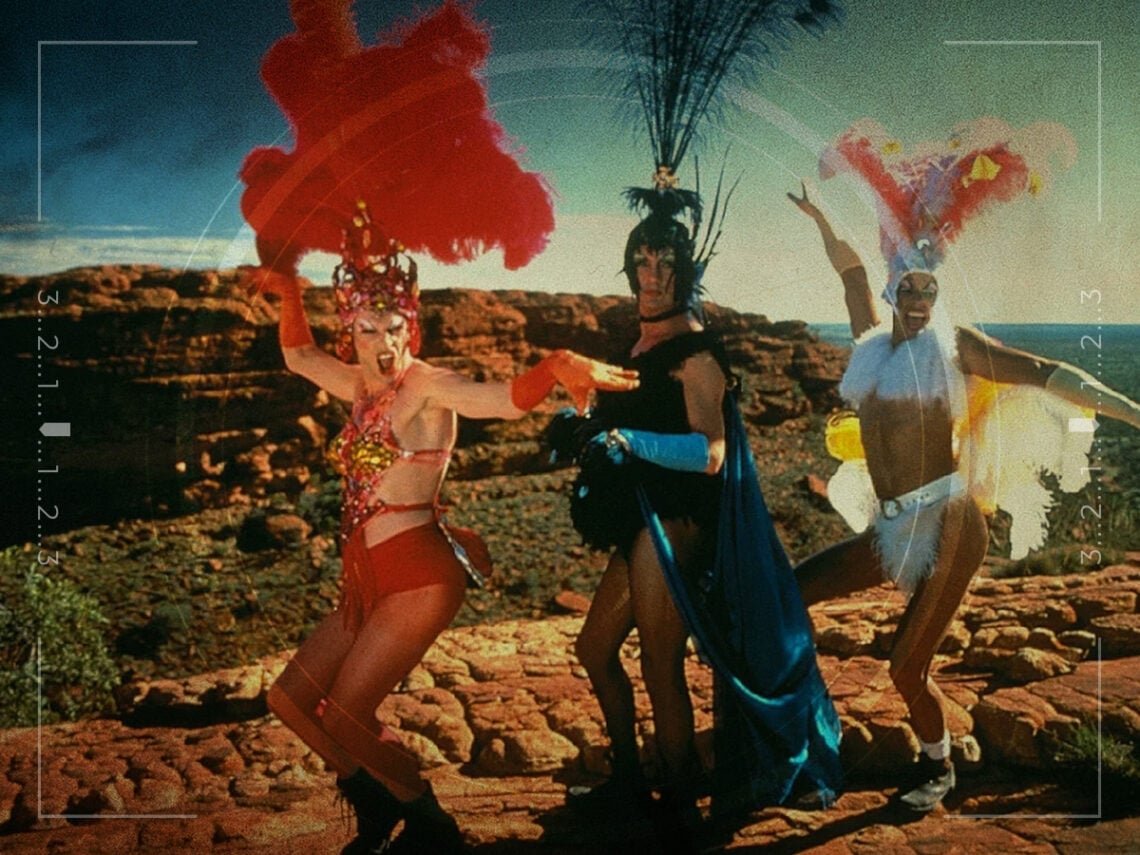
‘The Adventures of Priscilla, Queen of the Desert’: the ultimate feel-good and feel-bad movie

In dark times, sometimes the best thing we can hope for is a temporary distraction, and bright colours, costumes and flashy dance sequences have always come through during times of dire need.
In a crisis, the comforting campness of Mamma Mia, Moonstruck or The Rocky Horror Picture Show can be all that’s needed to lure you into a state of false serenity, drifting away into a sequinned world in which the sole concern is if the character’s will get through a musical number while half-drunk on a tropical island.
But sometimes, the best comfort can be found through stories with a tint of darkness, something that can be demonstrated through the sweeping success of shows like Twin Peaks, Succession and The Bear, with the combination of humour and pain being enough to remedy our own emotional ailments as we lose ourselves in the dynamic and complications of the relationships on screen. This is certainly the case when it comes to the cult classic film, The Adventures of Priscilla, Queen of the Desert, with the fusion of radical acceptance and bigotry making for a layered and surprisingly uplifting tale about community, acceptance and unconditional friendship.
From the very first shot, there’s this feeling of warmth and nostalgia as you see the titular drag queen performing a heartfelt solo, throwing us into the highs of this world and the euphoria of being on stage. It’s through this scene that we understand the pull of this world; with enough costume changes, unbridled joy and glamour to make you forget your troubles and lose yourself in the camp glory. It’s because of this that the ensuing drama feels so incredibly urgent (despite being fairly small in the grand scheme of things), with the three central drag queens journeying to a gig on the other side of Australia and being met with utter catastrophe when their bus breaks down in the middle of the desert.
Mitzi, Bernadette and Felicia are full of zest, wit and optimism in everything they do, despite the obstacles and glaring danger of the world around them. A trio comprised of two gay men and one trans woman does not guarantee safety, with the drag queens often passing through rural towns full of small-minded bigots who glare and hurl abuse at them for merely existing, throwing judgmental looks at their regal outfits and wigs.
However, despite the ominous danger that lurks behind each encounter, the drag queens never dull their true selves in anticipation of prejudice or violence, remaining fiercely authentic in every room they enter. The power of the film comes from this very clash, with the trio sometimes seeming immune to the reactions of the people around them, despite being obvious to the audience.
They find strength in numbers, emboldened by their friendship and combatting the misconceptions around their identities by oozing charisma and humanity from every ounce of their being, highlighting just how unfounded these stereotypes are. But the heart of the film doesn’t come from their general indifference to how they are treated, but their sheer passion for what they do, with breathtaking musical sequences and costumes as they sing their hearts out, with a flamboyant extravagance to each set piece that comes from the bright colours and elaborate head pieces, peacocking in the desert while rehearsing the steps to ABBA. The environment around them might be bleak and lifeless, but they bring life everywhere they go, from the sight of Felicia standing on top of the bus as the wind billows through dress or Mitzi’s vigorous performance of I Will Survive.
However, the film is not without its flaws, and while it is extremely progressive in some areas, it is distinctly regressive in others, mainly due to the depiction of Cynthia and the portrayal of a trans woman by a cisgendered man. The plot lines around Cynthia are particularly disturbing, with the film leaning into racist stereotypes and mocking her character every time she is on screen, something that feels needlessly cruel and out of place given how progressive the film is in its portrayal of other marginalised people. It’s a jarring example of how oppressed communities can also oppress others, casting an uncomfortable light on the film that crops up each time she does, reminding you of how it might be breaking boundaries in some areas, but still manages to fall short in others.
While it remains a conflicting watch due to the tonal clash between both moving forwards and backwards, and inarguably knocks it down a peg or two, it somehow remains deeply comforting in a way that is almost exclusive to films of this era, a quality we could do well to infuse into the films being made today. With its warm and rich visual style that is peppered with outrageous quips and petty arguments between the central trio, as well as the larger-than-life dance numbers to tunes that will lift any downtrodden spirit, The Adventures of Priscilla is a feel-good but occasionally feel-bad film that still manages to stick the landing, even if it might wobble along the way.
