


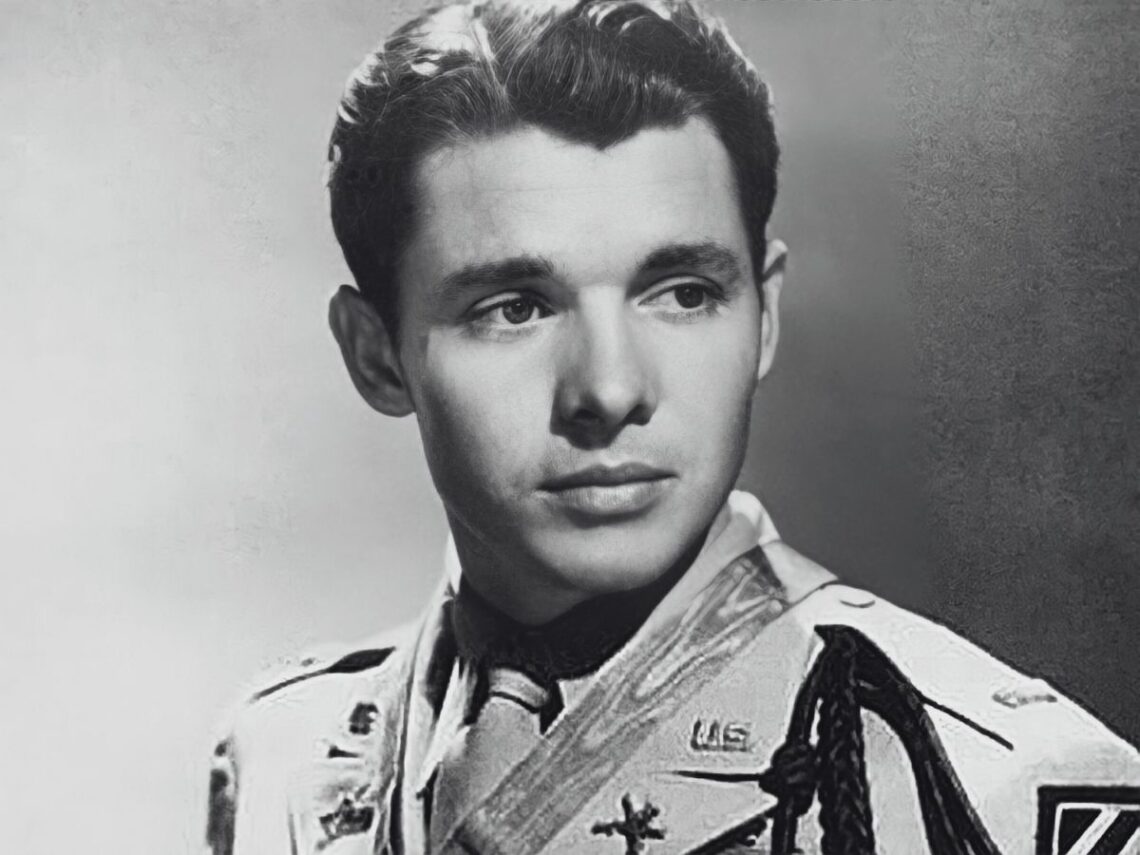
Audie Leon Murphy: the iconic American actor who won a Medal of Honour in WWII

When one thinks of actors with military backgrounds, names like James Stewart, who flew combat missions in World War Two, or Clint Eastwood, who served in the Army during the Korean War, might come to mind. These men successfully transitioned from serving their country on the battlefield to captivating audiences on the silver screen.
However, there is one man whose remarkable achievements in both domains set him apart, thanks to the highest military decoration awarded by the United States government: the Medal of Honour. Born in a small Texas town in 1925, Audie Leon Murphy’s impoverished upbringing and lack of formal education made his subsequent achievements all the more remarkable. Physically small and underage, there was no chance of being enlisted – but after witnessing the Pearl Harbour attacks, Murphy faked his birth certificate and got himself into the Army.
He then became one of World War Two’s most decorated American combat soldiers, earning not just the Medal of Honour but also a Distinguished Service Cross, two Silver Stars, and a Bronze Star, among others. His most famous feat, holding off an entire company of German soldiers and then leading a counterattack while greatly outnumbered, entered the annals of military legend – then quickly became a legend in cinema, too. After the war, aged only 21, he turned his sights to acting.
In 1955, his autobiography, To Hell and Back, was adapted into a movie, with Murphy playing himself. The film was a box-office hit and became Universal’s highest-grossing film at the time. Murphy portrayed himself, reenacting his wartime heroics with a gripping authenticity that captivated audiences and solidified his legacy in Hollywood. The movie remains a seminal work in the war film genre, admired for its realistic depiction of combat and its unflinching look at heroism under the most dire circumstances.
The film’s success catapulted him into Hollywood stardom. Murphy was not a product of any drama school; he was a natural talent whose rugged charm and authenticity resonated with audiences. He acted in over 40 films, mostly westerns and action movies, like Ride Clear of Diablo and Gunsmoke. His performances had a unique blend of vulnerability and toughness that his own lived experience would have undoubtedly informed.
Yet, despite his on-screen machismo, Murphy was open about his struggles with what we now identify as Post-Traumatic Stress Disorder (PTSD). At a time when the mental health of veterans was a taboo subject, Murphy brought attention to the psychological wounds many soldiers carry with them long after the battle is over. He became an early advocate for the mental well-being of those who served before the term PTSD even entered the public lexicon and long before contemporary figures in the entertainment industry started trying to combat it.
Although Murphy died tragically in a plane crash at the untimely age of 45, his legacy is far-reaching. No other soldier-turned-actors achieved such monumental victory in both their military and civilian lives. In a world where we often distinguish the concept of a “hero” into different realms of fiction and reality, Murphy remains a towering and enduring figure of both.

Never Miss A Tale
The Far Out Clint Eastwood Newsletter
All the latest stories about Clint Eastwood from the independent voice of culture.
Straight to your inbox.