


The 2010 movie that convinced Keanu Reeves that cinema was dead: “This is going to be the demise”

It seems somehow wrong that Keanu Reeves is now in his 60s, but he’s really been around Hollywood long enough, and he has seen the industry change completely, witnessing the death of film as it was known.
Now, if you were feeling particularly unkind you might think that a couple of Reeves’ movies have been so bad that they contributed to it (without naming any names, Johnny Mnemonic), but in fact, we are simply talking about the transition from celluloid to digital, which happened over a two-decade process, beginning around the time that Reeves was running away from men in suits and sunglasses in The Matrix.
That was 1999, and it was the same year George Lucas’ controversial, Jar-Jar Binks-starring prequel Star Wars: The Phantom Menace made history as the first movie to be screened digitally in cinemas rather than on physical film. Even though it was a resounding success, the completion of switching from 35mm mechanical projectors to digital ones took a long time, due to the cost and the scale involved.
Film production made the jump much quicker, and by the early to mid-2000s, most movies were being filmed and edited digitally, and it was then that Reeves realised the industry had changed forever, something he would later try to document on his own in-depth film dedicated to the adjustment.
He told Digital Spy, “I would probably say [Richard Linklater’s 2006 thriller] A Scanner Darkly was the first film I worked on digitally. At that time, I wasn’t thinking of it as clipping on the heels of film. I wasn’t thinking, ‘This is going to be the demise of film’. That didn’t really happen until I was working on a picture called Henry’s Crime.”
That was a film that Reeves made in 2010, a comedy thriller with The Godfather’s James Caan, perhaps symbolic of a changing of the guard, because it inspired the former to make a very well-received documentary drama called Side by Side two years later, which featured directors like Martin Scorsese, Lucas, The Wachowskis and many more speaking about the history and workflow of making films both digitally and on photochemical film.
Reeves acted as co-producer on the film, which asked whether traditional film could survive at all, given the move to digital, and it has only been through the passion of directors like Quentin Tarantino and Christopher Nolan that there has been a recent shift to using traditional film to both make and display their movies.
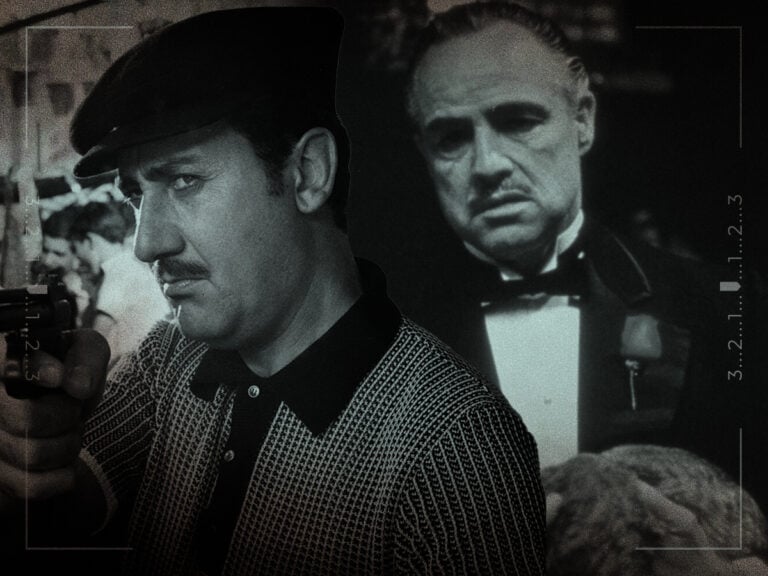
Tarantino, for instance, exclusively shoots on physical film, comparing digital cinematography to eating a veggie burger. Like Nolan, he is a fierce advocate of 70mm film prints and the experience that lends moviegoers, harking back to the widescreen glory of films like David Lean’s Lawrence of Arabia. He wants a cinema audience to experience exactly what he intended to capture while shooting, preferring the lighting and aesthetic on set that day to be relayed rather than through digital post-effects.
One of Reeves’ films in particular, the 1991 action thriller Point Break, directed by Kathryn Bigelow, has in recent years had special showings in the 70mm format at venues that have the necessary equipment, like at London’s BFI Southbank.

Never Miss A Take
The Far Out Quentin Tarantino Newsletter
All the latest Quentin Tarantino content from the independent voice of culture.
Straight to your inbox.