


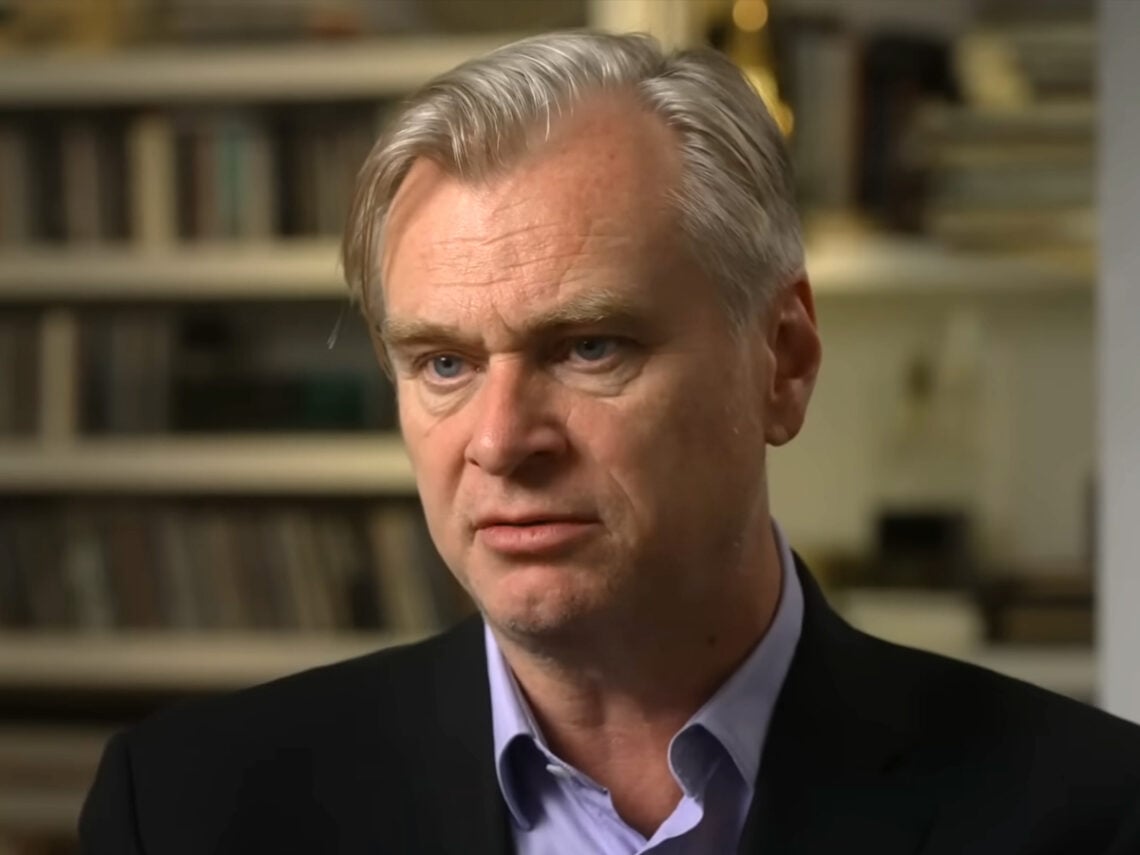
The 2008 dream Christopher Nolan waited 17 years to realise: “You could use it in a feature”

For any cinemagoer, there is a time in your life when the right movie comes to you, at the right age, and completely changes your life.
In my instance, I’d love for that movie to be one of alternative obscurity, one that no one knows, to seemingly heighten the curiosity around my life, but it isn’t. It’s perhaps one of the most famous movies of all time: Christopher Nolan’s The Dark Knight.
In 2008, I was the tender age of 12, the minimum allowed to enter the cinema for what was a highly anticipated film. My first viewing of that opening heist sequence is something I will never forget. But at that age, I put it down to the pacing, the dialogue and most obviously, the introduction of Heath Ledger’s iconic Joker character. Then, the older and the more into cinema I got, the more I learned about IMAX cameras and how crucial they are to the cinematography of Nolan’s signature style.
It was The Dark Knight and that very opening sequence that introduced the world to this now-trusted marriage and saw Nolan use Imax cameras for action moviemaking for the very first time. In 2026, with Nolan and many other directors adopting the IMAX approach, marvelling at the sheer use of the camera feels a little antiquated. But in 2008, no one had thought to do it because it seemed entirely impractical. Before Nolan, these cameras were used primarily for nature documentaries, where the effort of loading up expensive 70mm film and dealing with the notoriously heavy and loud felt worth it for the lifelike outcome.
But for movies, people were happy to compromise. That was until Nolan flipped the perspective and said, “I figured if you could take an IMAX camera to Mount Everest or outer space, you could use it in a feature movie”. The result was ambitious for production, but groundbreaking for the viewer who got to see films in not only a clearer picture, but a more expansive frame.
“There’s simply nothing like seeing a movie that way,” Nolan told USA Today after the release of the ‘08 film. While the outcomes weren’t yet as clear as they are now, with IMAX cinemas not in full action, Nolan assured viewers that the experience would be “more immersive”, which that opening sequence proved in emphatic fashion.
My adolescent brain at the first time of viewing certainly thought so, but so did the rest of the world, who spoke about this opening scene endlessly. More than anything, it dramatically pulled back the curtain on Ledger’s Joker, who introduced himself to the movie with chaos, swagger and clinical precision, all of which felt more visceral through the lens of the IMAX camera.
Nolan continued to explain how the approach was a deliberate choice in giving his character the attention it deserved, adding, “Batman has some of the most extraordinary characters in pop culture. We wanted the Joker to have the grandest entrance possible”.
The entire tone of the film was set by the introduction of Ledger’s rugged, paint-clad face on that opening close-up. The IMAX revealed every broken pore and stitched-up scar in a way that a traditional digitally filmed wide shot could simply never have achieved, and with that one scene, Nolan changed cinema forever.
