


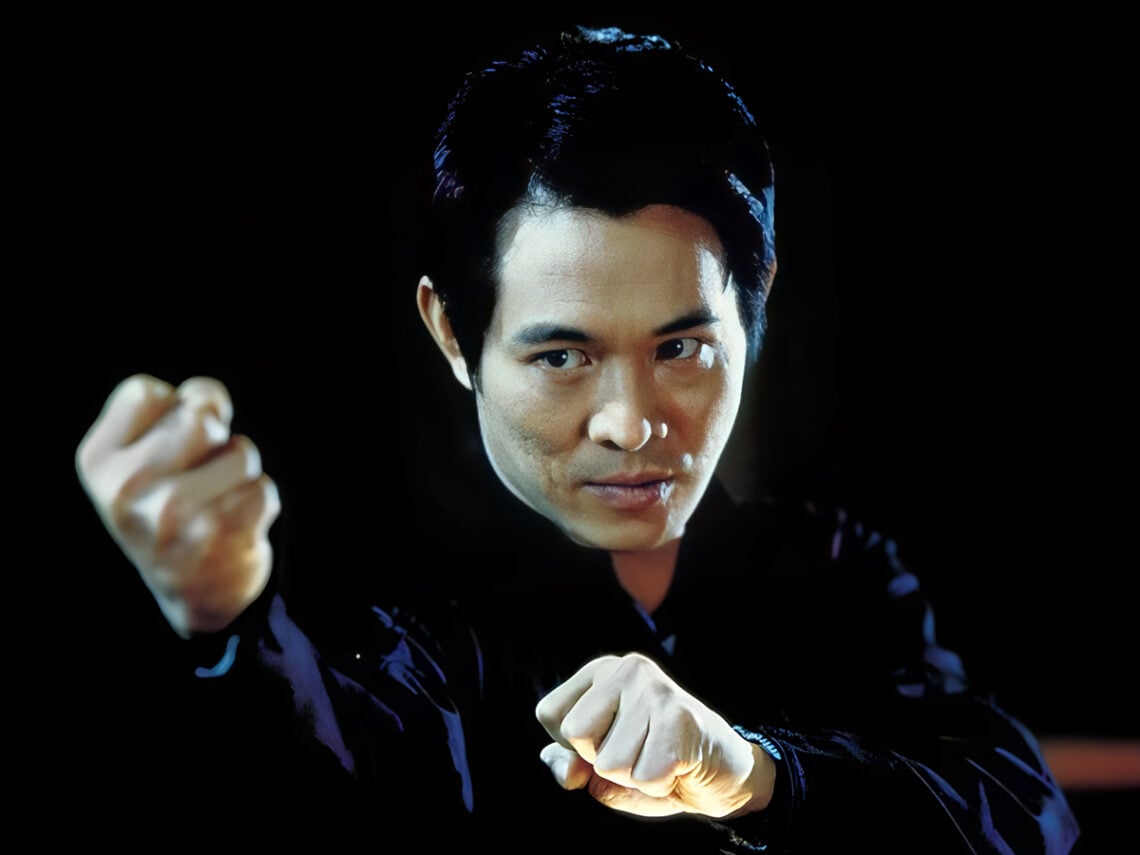
“I couldn’t do that”: Jet Li rejected a 2003 role that predicted the future

If you weren’t around in the early 2000s and want to know what it was like, then aside from dealing with the irritating sound of dial-up internet, you can just Google the front cover of a Jet Li DVD and the font and the photograph employed will give you an excellent idea.
Doesn’t matter which one you choose, could be 2001’s The One, or 2005’s Unleashed, or 2006’s Fearless, the artwork always looked the same and for some reason, even though hardly anyone in the UK seemed to actually go to see his films at the cinema, almost everyone owned one of them, nestling nicely on a bookshelf next to a Little Britain DVD and an old Nokia 3310.
It was around that time that Li made the transition from being a martial arts star in the Far East to a proper Hollywood name, having made his US debut as the bad guy in Mel Gibson’s ‘nowhere near as good as the first two’ action comedy Lethal Weapon 4. He did well enough in that to be handed a leading role in Romeo Must Die two years later, opposite the late R&B star Aaliyah, and that action flick proved to be a real underground success, bringing in almost $100million against a budget of just $25m.
That made him sought-after property not just in his native China but in the US as well, and for a period of time, he flew between the two, making movies like the Luc Besson-produced Kiss of the Dragon and The One, earning millions per film. One opportunity that came his way that he had to turn down, however, was a movie sequel that would definitely have made him a household name: The Matrix Reloaded.
The Wachowskis were casting for the role of Seraph, a martial arts expert and had originally taken it to Michelle Yeoh, who turned it down. They decided to switch the gender of the character and asked Li instead, but rather than take part in what was then one of the most-awaited movies in history, he followed suit with Yeoh.
Some time later, he explained his decision, saying, “It was a commercial struggle for me. I realised the Americans wanted me to film for three months but be with the crew for nine. And for six months, they wanted to record and copy all my moves into a digital library. By the end of the recording, the right to these moves would go to them.”
With his martial arts moves so key to his movie presence and character, Li felt that others could copy his style or that he could be digitally reproduced in much the same way AI can do now, negatively affecting his future earnings. He added, “I was thinking, ‘I’ve been training my entire life. And we martial artists could only grow older, yet they could own [my moves] as an intellectual property forever’. So I said, ‘I couldn’t do that’.”

Instead of appearing in the blockbuster, which brought in over $740m at the box office, Li went back to his roots and made Hero, a Chinese action epic that was a massive success, becoming the first Chinese-language movie to top the movie charts in the US and earning an Academy Award and Golden Globe nomination for ‘Best Foreign Language Film’.
Some years later, after first pairing up with Jason Statham in 2007’s War, Li’s status as a global action superstar was confirmed when he teamed up with actors including Arnold Schwarzenegger, Bruce Willis, and Sylvester Stallone for the Expendables trilogy.
