


The 20 greatest character introduction scenes of all time

As the old saying goes, first impressions matter. That extends to all walks of life, with cinema just one of many arenas where some of the greatest characters ever created have been introduced with a bang.
Of course, a cinematic icon doesn’t have to arrive in a blaze of glory to go down in the history books as one of the medium’s most indelible figures, but it certainly helps in plenty of cases. There’s a reason why some of the most noteworthy heroes, villains, and scene-stealing supporters in Hollywood folklore have gained such status, and a lot of the time, it’s down to an unforgettable debut.
With that in mind, it takes something truly special and captivating to secure an on-screen debut that can genuinely be named among the finest ever committed to celluloid, but the following 20 characters have all pulled it off in their own unique way.
Whether it’s kicking ass, taking names, capturing imaginations, or simply waking up in the morning, each of them have taken the concept of getting off on the right foot and run with it straight into the annals of popular culture and the cinematic consciousness.
The 20 greatest character introductions:
20. Marge Gunderson (Fargo, Joel Coen, 1996)
Described by Frances McDormand as “this large, solid piece of brown in amongst the white landscape”, Marge Gunderson isn’t what anyone would call a force of nature, but no time is wasted in Fargo, noting that she’s very good at what she does.
She might be seven months pregnant, but it’s hardly a defining characteristic that limits or impacts her ability to do her day job. Investigating the kidnapping of Kristin Rudrüd’s Jean Lundegaard, Marge’s first port of call is to wearily answer her bedside telephone and return to the line of duty, regardless of how exhausted she may be.
Intensely committed and unyieldingly dedicated to her job despite being so heavily pregnant, Marge’s quaint home life – complete with asking her husband for a jump so she can start the car and begin her investigation – juxtaposes the superficial banalities of her everyday home life with the labyrinthine case she begins to unravel.
19. Willy Wonka (Willy Wonka & the Chocolate Factory, Mel Stuart, 1971)
A staple of afternoon and weekend television schedules for over half a century, the role of Willy Wonka has since been played on the silver screen by Johnny Depp and Timothée Chalamet, but neither of them came anywhere close to making an entrance anywhere near as legendary as Gene Wilder.
Mel Stuart’s beloved musical is well towards the halfway point by the time Wonka even appears, but the repeated mentions of his eccentric and reclusive nature directly inform the viewer’s opinion when they see what looks to be a frail, shuffling man slowly inching along the red carpet outside of his factory with the aid of a cane.
Naturally, it’s the first of many acts of misdirection from the offbeat chocolatier, who falls forward before rolling over and leaping to his feet with a mischievous look of glee on his face. Highlighting his fondness for deception, Wonka’s introduction plays directly into all of the events that befall those welcomed into his inner sanctum, regardless of whether or not he’s actually a serial killer in disguise.
18. Yuki Kashima (Lady Snowblood, Toshiya Fujita, 1973)
Although Yuki Kashima is technically first introduced as a baby in the opening scene of Lady Snowblood, it’s her first scene as a 20-year-old assassin hellbent on exacting revenge against the three remaining criminals who murdered her mother’s husband and son that stands as her real introduction.
Set against a snow-capped backdrop, the sword-wielding title character has a blade stealthily concealed within an umbrella, which she uses to make short work of four assailants who made the fatal mistake of trying to take her on in combat.
One of the most influential Jidaigeki movies ever made that left its fingerprints all over the climactic showdown of Quentin Tarantino’s Kill Bill Vol. 1, star Meiko Kaji’s innocent features betray the heart of a warrior that lies within, something her enemies were about to discover in bloody fashion.
17. Elvira (Scarface, Brian De Palma, 1983)
Descending in an elevator like an angel coming down from the heavens, Michelle Pfeiffer’s ethereal entrance as Elvira in Scarface leaves no doubt in anybody’s mind that she’s immediately become the latest obsession for Al Pacino’s Tony Montana.
Obviously, being the wife of Robert Loggia’s Frank Lopez presents its own set of obstacles, considering he’s the aspiring drug kingpin’s mentor. In his defence, later on in the story, Tony does live up to his promise of not killing him, although handing a gun for Manny to do it instead is hardly a fair trade.
Elvira and Tony’s love affair and subsequent marriage is a whirlwind and torrid affair, to say the least, but through the way she’s shot, framed, and brought into the narrative, director Brian De Palma economically and artfully points towards just how pivotal she’ll be to her future spouse’s plans for citywide dominion.
16. John Doe (Seven, David Fincher, 1995)
Up until the identity of the killer is revealed, John Doe looms in the shadows of David Fincher’s Seven as the bogeyman, an unknown figure spoken of only in hushed and ominous tones, with his identity remaining a complete mystery.
Turning the formula of the procedural thriller on its head, instead of Morgan Freeman and Brad Pitt’s detectives slowly unravelling the serial killer’s true nature through good old-fashioned police work, a bloodstained John Doe decides to show up at their place of work and bellow for attention. With a midpoint twist and a stunning introduction, it creates more questions than answers when the suspect willingly gives themselves up.
What made it even more shocking is that Kevin Spacey’s involvement had been omitted from all the marketing and promotional appearances, making the unassuming everyman actor’s presence as the fearsome serial killer a genuine revelation in a time when movies were allowed to make it to cinemas without having all of their secrets laid bare.
15. Tony Manero (Saturday Night Fever, John Badham, 1977)
Backed by one of the best-selling soundtracks of all time, John Travolta was oozing star power from the second Tony Manero strutted onto the screen backed by the Bee Gees’ ‘Staying Alive’ in Saturday Night Fever, with the end result being a full-blown cultural phenomenon.
When viewed through a modern lens, the film might be so cheesy it could prove fatal to the lactose intolerant, but at the time, it marked a genuine shift in the cultural landscape. Disco was big, but after Saturday Night Fever, it was massive, with Travolta’s Academy Award-nominated breakthrough performance having a huge hand in it.
Sweeping shots of New York City give way to Tony entering the picture feet-first, a sign of things to come. His outfit, self-confidence, and swagger instantly inform the viewer that this is one cool cat, but stopping off to buy a tin of paint and a slice of pizza deftly illustrates that he’s also a regular working-class guy harbouring the ambition to become something bigger, better, and altogether greater than he is.
14. Anton Chigurh (No Country for Old Men, Joel and Ethan Coen, 2007)
The opening scene of No Country for Old Men is a showcase for not just Javier Bardem‘s ultimately Academy Award-winning performance as Anton Chigurh but also a disturbing indicator of how fearsome and ferocious the hired killer has become through years of dedicating himself to his chosen profession.
Brought into custody, Chigurh deals with his incarceration by strangling a police officer to death with his own handcuffs, the lack of a musical score making the attack feel all the more visceral, with the total lack of a musical score serving to enhance the uncomfortable sound design of a life being extinguished.
Casually escaping in a police car and securing his next ride, Chigurh then coldly and remorselessly uses his pressurised bolt gun to murder an innocent driver without a care in the world, with the only thing on his mind being the fulfilment of his next objective.
13. Trinity (The Matrix, the Wachowskis, 1999)
An introduction that’s been homaged, parodied, and blatantly ripped off so often for such a long period of time that it’s easy to forget just how monumental it really was, the first time audiences witnessed Carrie-Anne Moss’ Trinity in The Matrix underlined that the Wachowskis were in the mood for reinventing the face of cinema.
In less than five minutes, Trinity had told the world what The Matrix was and what it was planning to do, all within the space of an intricately choreographed and expertly executed action sequence. Disarming the police officer sent to arrest her and leaping into the air as the camera rotates around her, bullet time left jaws on the floor before the leather-clad hero even had a chance to easily dispatch the rest of the assembled cops.
By the time the scene was over, the game-changing sci-fi blockbuster had laid its cards on the table as a boundary-pushing cyberpunk spectacular that would innovate and inspire the next generation of action-heavy epics through its leather-clad aesthetic, martial arts influences, and gravity-defying set pieces, all of which came before the story had even kicked into high gear.
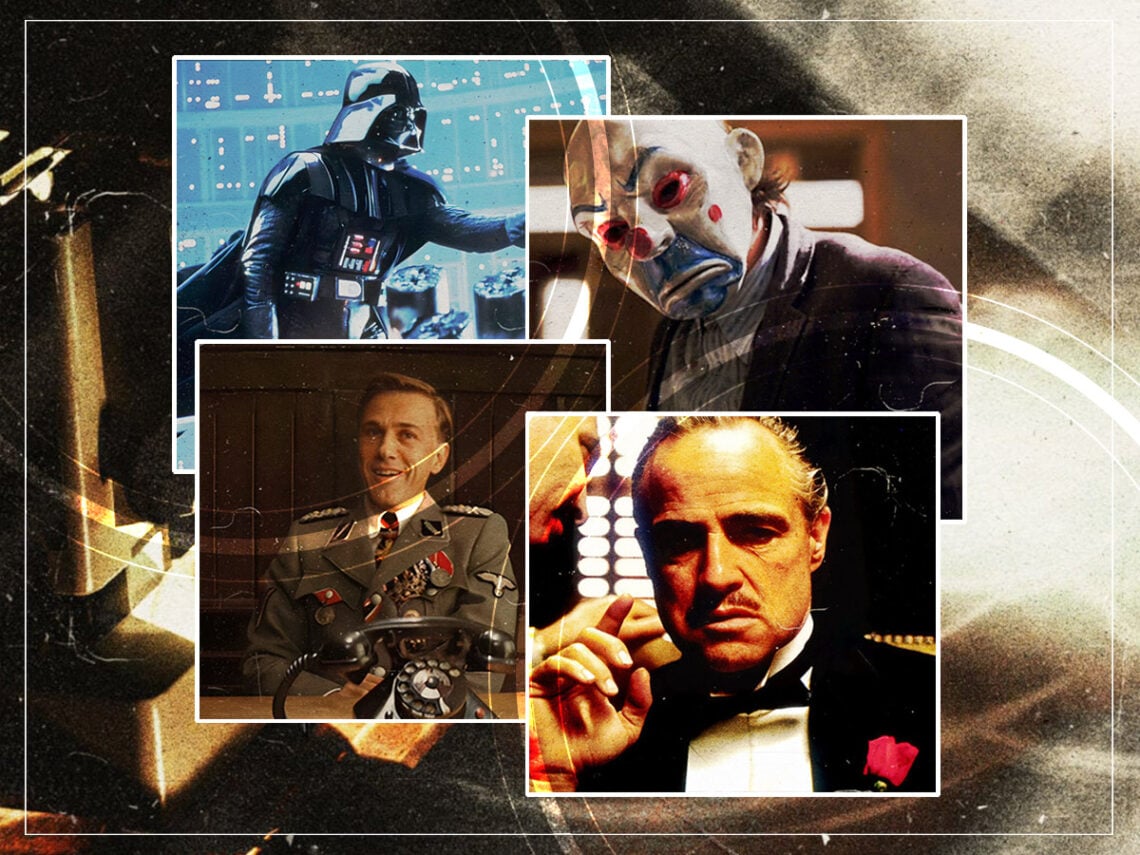
12. The Joker (The Dark Knight, Christopher Nolan, 2008)
Reinventing the most iconic villain in comic book history almost two decades after Jack Nicholson devoured the scenery in Tim Burton’s Batman was a tall order, but Heath Ledger instantly let everyone know his take on the Joker was unlike anything audiences had seen before from the very second he first showed his face.
The opening scene of The Dark Knight plays as more of a self-contained heist thriller than the beginning of a blockbuster superhero sequel, but plenty of information about the Clown Prince of Crime is revealed before he even shows his face. His robberies are meticulously planned, taking down a mob-controlled bank displays fearlessness, eradicating his cohorts one by one showcases ruthlessness, and crashing a bus through the wall and placing a grenade into a hostage’s mouth highlights a penchant for the theatrical.
When he finally removes the mask after uttering his opening line of “what doesn’t make kill you, only makes you… stranger,” it’s already firmly and clearly established that the anarchic criminal mastermind is a force to be reckoned with, and that’s before the aforementioned grenade reveals itself to be filled with smoke, capping things off with a display of dark humour to put an exclamation point on it.
11. Quint (Jaws, Steven Spielberg, 1975)
The haunting monologue about his experience on the USS Indianapolis stands out as the character’s most unforgettable moment in isolation, but Robert Shaw’s Quint introducing himself to the world by dragging his nails across a chalkboard to silence a room full of panic-stricken Amity residents is every bit as impactful.
Without having to utter a single word, Quint creates a silence that’s as eerie as it is captivating. The grizzled gravitas that makes the rugged fisherman feel so lived-in and world-weary is all the more remarkable, considering Shaw was only cast in the part weeks before shooting started.
Weaponizing both their fear and his reputation to his advantage and for what he hopes to be financial gain, Quint demands $10,000 and promises to deliver “the head, the tail, the whole damn thing.” Of course, it doesn’t quite work out that way in the end, but when he leaves the town meeting with a sly smirk etched across his face, you certainly wouldn’t have bet against him.
10. Jesus Quintana (The Big Lebowski, Joel and Ethan Coen, 1998)
These days, everyone is fully aware that nobody fucks with Jesus, but that wasn’t quite the case back in 1998 when John Turturro’s lascivious bowling enthusiast first slithered his way into hearts and minds.
Painted as both a brazen weirdo and somebody who completely and utterly buys into their own hype, the Coens do a masterful job of making both warring elements of Jesus’ personality patently clear within the borderline fetishistic imagery that heralds his arrival.
Clad in a purple jumpsuit and boasting what could only be described as an interesting method of warming up before hitting the lanes, music and character are melded seamlessly as the human peacock struts his stuff, all while John Goodman’s Walter offers expository hints that Jesus is a very strange dude. Not that the point needed to be illustrated any further.
9. Sherif Ali (Lawrence of Arabia, David Lean, 1962)
David Lean’s direction deservedly takes plenty of plaudits for the way in which he assembled the masterfully shot epic, but just as much credit for the visual splendour of Lawrence of Arabia should go to cinematographer Freddie Young, who makes the most of the breath-taking vistas.
Even something as seemingly straightforward as a character entering the frame becomes a thing of beauty, with an almost 50/50 split between the blazing blue sky and harsh desert landscape as a figure enters from a distance as little more than a speck on the horizon.
Peter O’Toole’s T.E. Lawrence watches on transfixed as the mysterious figure emerges from a cloud of dust, the anticipation gradually rising as he begins coming into focus. Dismounting his camel and dispatching his companions without explanation, the motivations of Omar Sharif’s Sherif Ali ibn el Kharish are instantly shrouded in mystery and layered with doubt and unease, all of which comes in the very first interaction between the two.
8. Vito Corleone (The Godfather, Francis Ford Coppola, 1972)
There’s absolutely no grandstanding to be found when Marlon Brando’s Vito Corleone first appears in The Godfather, but the authority he exudes and the commanding presence he exerts over Salvatore Corsitto’s Bonasera makes it abundantly clear that this is a man with a massive amount of power and influence.
As the latter pleads his case, the camera slowly begins to pull back to reveal a silhouette that was among the most famous in cinema history long before the credits rolled on the multi-time Oscar-winning classic. At the same time Corleone begins to dominate the frame, Bonasera shrinks away to a minor presence, symbolically showcasing the power the head of the family wields over those who come to him for help.
For Vito, it’s just another day in charge of the family business, but for the viewer, it underscores the key concepts of honour, loyalty, and respect that underpin the entire Godfather saga. Brando’s gravitas, the immaculate shot composition, and the foreboding intonation that “we’re not murderers, despite of what this undertaker serves” only serve to lend it even more power and immediacy.
7. Indiana Jones (Raiders of the Lost Ark, Steven Spielberg, 1981)
Steven Spielberg and George Lucas were inspired by and indebted to the pulp serials they loved growing up when they put their heads together to create Raiders of the Lost Ark, but by the end of his very first scene Harrison Ford’s Indiana Jones had attained a legendary status the stars of yore could only dream of.
Cloaked in shadow, the whip and fedora that would soon become unmistakable in their own right serve as the first glimpse of the daredevil adventurer, who first finds himself bathed in light when he uses that very same whip to disarm a would-be assailant with a deafening crack. Stepping out of the shadows and into the light, a new icon was born.
That was hammered home several times over by the rest of the opening sequence, itself one of the best introductory set pieces of all time. Taking that particular cue from James Bond and opening with a bang, Indy was ready to give 007 a run for his money before the gaps in his backstory and history had even started to be filled in.
6. Harry Lime (The Third Man, Carol Reed, 1949)
The entire narrative of The Third Man revolves around Orson Welles’ Harry Lime and the duality that surrounds him, with Joseph Cotten’s author Holly Martins landing in Vienna to reconnect with the old friend who’d offered him a job, only to be told that they won’t be reacquainting after he was killed days beforehand.
After attending the funeral, Martins begins digging into the mysterious circumstances of Harry’s death, and catches a glimpse of somebody watching him from the shadows when he seeks out his not-so-dearly departed buddy’s old flame.
Calling out for the potential attacker to reveal himself, he’s greeted with nothing but silence until a flicker of light illuminates a very familiar face. The expression on Welles’ face is pitch-perfect, with the reveal marrying perfectly with Anton Karas’ score to inform Martins that not only his Harry alive and well, but the overarching mystery is a lot more complex and wide-ranging than he could have possibly imagined.
5. Frank (Once Upon a Time in the West, Sergio Leone, 1968)
Nobody had ever seen Henry Fonda playing a villain before Once Upon a Time in the West, but that was just one of many reasons why the legendary actor’s menacing turn as Frank came as such a shock to the system.
Combining those steely blue eyes with a thousand-yard stare, pulling the rug from out under an entire career of playing heroes and outing him as a hired killer that murders an innocent family for the express purpose of pinning the blame on Jason Robards’ Cheyenne blew apart Fonda’s carefully-curated mystique and guaranteed that all bets were off on where his arc was heading in one fell swoop.
The youngest son of the unfortunate McBain family is left to view the resultant devastation, with the gunmen hovering into view as Ennio Morricone’s seminal score soars in the background, with Sergio Leone’s camera remaining intensely focused on Fonda’s piercing gaze. Displaying virtually no emotion but nonetheless displaying simmering rage and malevolence, it’s an introduction worthy of both his reputation and standing, not to mention Once Upon a Time in the West‘s monolithic status in the western genre.
4. Darth Vader (Star Wars, George Lucas, 1977)
No matter how hard anyone has tried in the decades since, there isn’t a single person to have done something as simple as entering a corridor with even a fraction of the aura carried by Darth Vader in the original Star Wars.
His hulking metallic frame strides into view with smoke still lingering in the air from a blaster battle, backed by the thumping tones of John Williams’ ‘The Imperial March’. The pristine white of his Stormtroopers clashes with Vader’s metallic black and flowing cape, the direct opposition distinctly marking him out as the formidable force in charge.
With the heavy breathing giving way to James Earl Jones’ sonorous baritone, a quick interrogation yields death by choking, delivering the ultimate personification of intergalactic evil within the space of seconds. In an instant, a true titan of villainy had set out their stall, and cinema would never be the same again.
3. Hans Landa (Inglourious Basterds, Quentin Tarantino, 2009)
Not only did Quentin Tarantino say that Hans Landa might be the single greatest character he’s ever written, he also voiced concern that the part would prove “unplayable”. Fortunately, Christoph Waltz had other ideas, and ended up walking away with an Academy Award for ‘Best Supporting Actor’ in his Hollywood debut.
A masterclass in measured terror and intelligent malevolence, Landa puts himself across as nothing but polite when he descends upon a French farmhouse looking for Jewish stowaways. Seamlessly switching between French, German, and English, it’s clear that the Nazi officer isn’t somebody to end up on the wrong side of, which he accomplishes without even displaying so much as a flicker of noticeable fury.
Landa is charming, complimentary, and charismatic, but also has no issues outlining that he’ll kill anyone he deems expendable. The way he carries himself and the smirk almost permanently etched across his face is significantly more terrifying than any enraged outburst could ever hope to be, igniting Inglourious Basterds with a bang that remains one of Tarantino’s best-ever scenes.
2. Gunnery Sergeant Hartman (Full Metal Jacket, Stanley Kubrick, 1987)
R. Lee Ermey wasn’t even supposed to be an actor in Full Metal Jacket, having initially been brought on by Stanley Kubrick as a technical advisor given his own extensive military experience. Based on what he brought to the table in his first scene, though, it’s easy to see why the filmmaker couldn’t refuse.
Even his audition has gone down in folklore, with Ermey recording himself spewing entirely improvised insults for 15 minutes while having tennis balls and assorted pieces of fruit being thrown in his general direction. Of course, he was typecast for the remainder of his acting career after that, but it was totally worth it.
The hardest of hard-asses, Ermey’s loquacious insults aren’t a million miles away from being akin to a Shakespearean soliloquy laced with profanity, such is the way he luxuriates in tearing down his various charges. This was a man not to be trifled with, and the fact he had a habit of simply making his barbs up as he went along makes it even more incredible that he had no issue verbally eviscerating the assembled recruits with such ease.
1. James Bond (Dr. No, Terence Young, 1962)
That James Bond’s introductory dialogue is as much a part of the pop culture fabric today as it was the first time he said it over 60 years ago speaks volumes about not just the enduring popularity of not just the franchise at large, but the magnetic delivery from Sean Connery in 007’s debut feature.
Monty Norman and John Barry’s music is just as important to the character as the actor under the tux, but rarely have they worked in better synchronicity than Bond’s arrival on the scene as a suave, seductive cinematic powerhouse that really did live up to the old (if long outdated) adage of “men want to be him, women want to be with him.”
Eunice Grayson’s Sylvia Trench asks for his name, with Connery’s nonchalant lighting of a cigarette dripping in charm and charisma before he lets everybody know that the name is in fact Bond, James Bond. The signature theme grows louder in the background, and one of the most captivating heroes ever captured on film had wasted no time outlining how and why they were the epitome of cool.
