


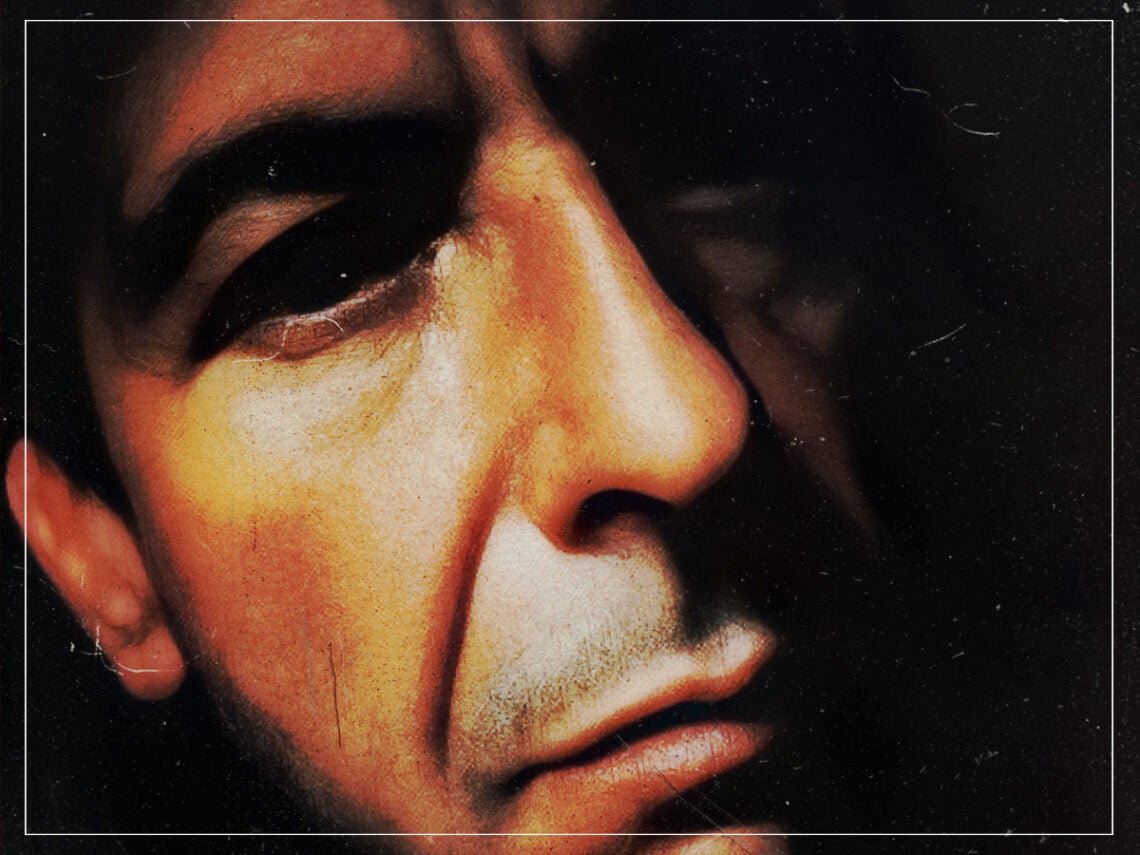
The 1980s album that changed Leonard Cohen’s voice forever: “One of the decisive moments”

If there was ever an advisor to Leonard Cohen’s career, it was God.
From the start to the end, Cohen moved in mysterious ways, as if he were following a calling alone. In his youth, he zig-zagged place to place, following wherever his whim thought inspiration might be hiding, whether it was home in Canada, in school in New York, disguised as a country singer in Nashville or observing birds on a wire on an island in Greece.
It was more than just location, though. Along with his various physical moves, Cohen was making spiritual changes. Though raised in a Jewish family, his life seemed like an endless quest for answers on high as he went through periods of Buddhism and even Scientology. It wasn’t a casual thing done by halves either, the artist once even disappeared up a mountain in Los Angeles to a retreat and didn’t come down for years.
There existed in Cohen an unending quest, and it often felt like music was merely another vehicle for that as his songs attempted to unpick the knotted matters of love, loss, life and beyond. But then in the 1980s, a rupture seemed to happen. If you want to understand what occurred in his career, you really only have to look at how his label treated the song ‘Hallelujah’. Despite now being considered one of the best songs ever written, held up as a timeless classic and an example of songwriting perfection, Columbia didn’t want to put it out.
“At that time, my career was pretty much eclipsed. Columbia didn’t even put out that record in America. And, they neglected to tell me,” Cohen admitted to Rolling Stone of this moment in time, when he felt like a penny left out in the rain.
But when he was recording Various Positions, already feeling down about the way things were going, he’d invited along a guest. “One of the decisive moments in my writing and singing came during a recording session which Roshi happened to attend in New York,” he said as he invited his Zen teacher, and really his guru, along to the studio.
Watching Cohen work on these songs, Roshi had a unique perspective. The two were getting to know each other quickly as the artist was getting more and more into Zen Buddhism, and soon after, the musician would move into the retreat and become Roshi’s assistant for a few years. But before that, it was clear immediately that Cohen held Roshi’s thoughts and opinions in high regard.

“I asked him what he thought. He said, ‘Leonard, you should sing more sad’,” Cohen recalled as the advice. Having been putting effort into simply keeping things going, returning to his old folk style, trying to still be his old self, this wisdom struck him: “He meant for me to surrender to the emotions. To accept it”.
Allowing himself to accept that things had changed, the impact was evidenced in his voice. Prompting the move to a deeper, darker register, it’s as if Cohen dropped the act that everything was as it was before, and allowed things to be different, accepting that time had moved on and letting his voice reflect it too.
