


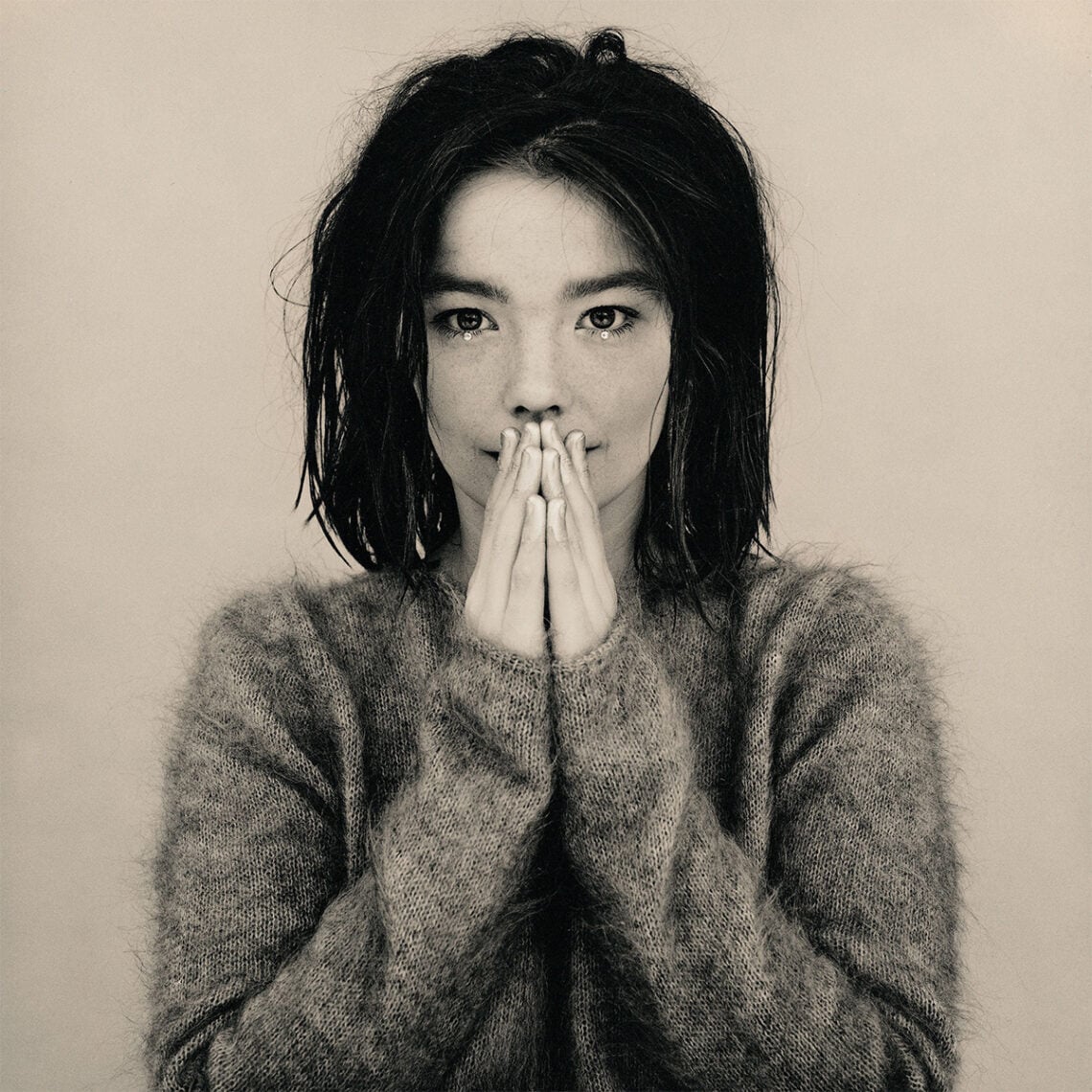
The 1977 album Björk recorded when she was 11

There are few people in history more inimitable and artful than Björk.
With that in mind, it makes sense that the Icelandic pop iconic has a career that spans way back to the 1970s, plying her trade from an obscenely young age.
Perhaps she was also liberated to pursue art on her own terms after this juvenile foray, because, it has to be said, she suffered a very early disappointment with the release.
Born and raised in Reykjavík, the pure dominance of Björk’s musical talent led to her beginning her music career at age 11, first gaining international recognition as the lead singer of the alternative rock band The Sugarcubes.
However, prior to her joining the band and significantly raising her profile, Björk had set about recording her music alone as a child singer, releasing her debut album way back on December 18th, 1977. While the record is unofficially credited as Björk’s first solo album, she decided not to include it in her official solo discography, hence why the 1993 release of Debut is accepted as her first legitimate offering.
The process of the 11-year-old Björk recording the album – which has since been given the working name of Björk (album) – began after she appeared on Icelandic radio singing the song ‘I Love to Love’ thanks to an opportunity which arose at the music school in which she was studying. From that moment, Björk picked up a record deal with the help of her stepfather Sævar. As an eager child, things moved swiftly.
The record composed of ten songs which blended some original tracks and a selection of cover songs, most of which were translated into Icelandic. Most prominently, The Beatles track ‘The Fool on the Hill’ was translated into ‘Álfur Út Úr Hól’ and Stevie Wonder’s song ‘Your Kiss Is Sweet’ became Björk’s anthemic ‘Búkolla’.
While the album received somewhat negative reviews from somewhat curmudgeoningly local reviewers, Björk was offered a second album through the label but she decided turned down the opportunity and instead spent the money on a piano in order to create her own material. Auspiciously, while it seems harsh to pan an 11 year old, maybe that early critical lambast made Björk the artist she is today?
The record was released in limited edition vinyl and cassette with just 7000 copies being made. While her stepfather Sævar helped write some of the original songs on the album, her mother Hildur Hauksdóttir joined in and designed the cover and the photo was taken at a local Reykjavík studio.
Almost half a century later, the album stands out as the homespun beginnings of a star who, no matter how otherworldly her sound has become, has actually always retained a touch of that DIY sincerity in her expansive back catalogue. Fiercely confident and determined to be herself, the record might not be a classic, but it was a clear sign that stardom lay ahead.
In fact, it’s just about absurd enough that you maybe also see quips like referring to French people as nature’s fauna alongside Geeraffs (Giraffes) ahead of her, too.
Bjork first album track listing:
- ‘Arabadrengurinn (The Arab Boy)’
- ‘Búkolla (Your Kiss Is Sweet)’
- ‘Alta Mira’
- ‘Jóhannes Kjarval’
- ‘Fúsi Hreindýr’
- ‘Himnaför’
- ‘Óliver’
- ‘Álfur Út Úr Hól (The Fool on the Hill)’
- ‘Músastiginn’
- ‘Bænin (Christopher Robin)’

