


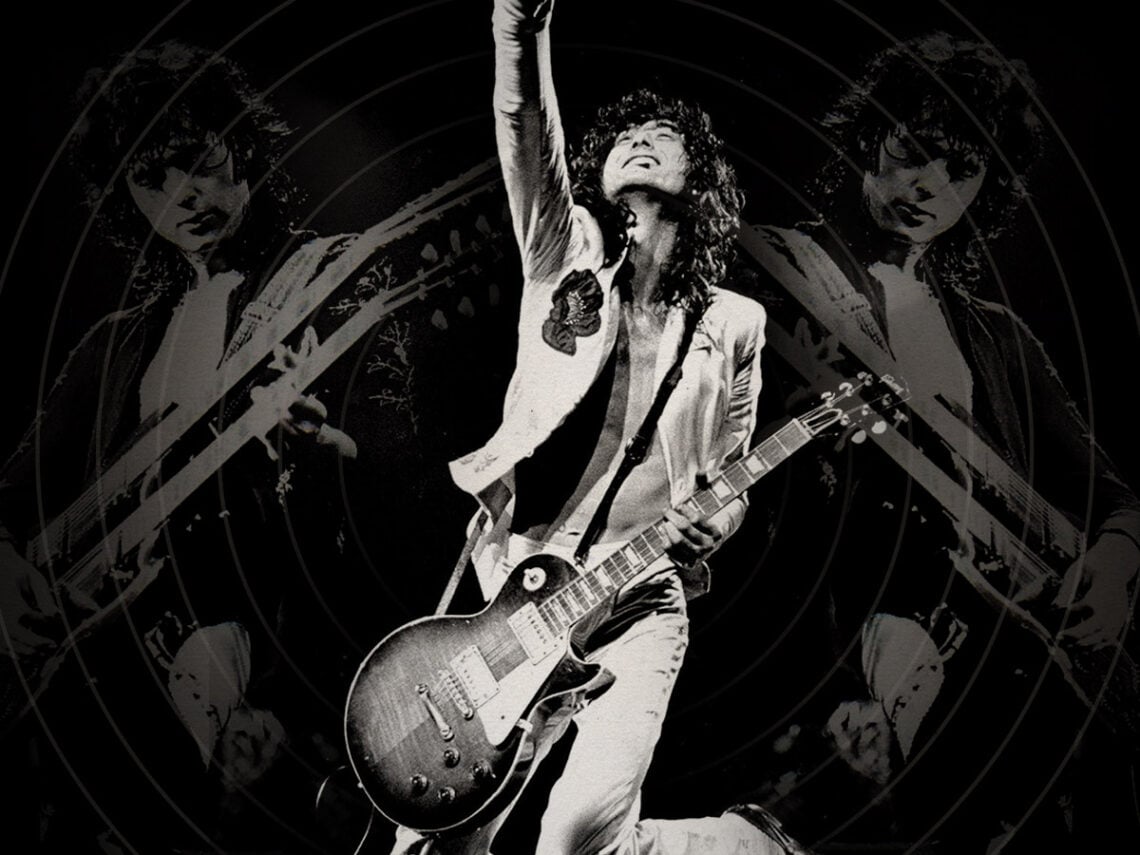
The 1975 guitar riff Jimmy Page wanted to play forever: “I didn’t want to stop”

When Led Zeppelin first began, Jimmy Page didn’t want the band to be just another blues band.
The fact that they had formed out of the ashes of The Yardbirds meant they needed to be something bigger and better, and when listening to that debut album, the band already sounded like a freight train going 1000 miles an hour down a track. But even if Page’s riffs were the beating heart of the band in lots of ways, it took a while before he made the kind of songs that could almost hypnotise you.
But Page was already on the cusp of something great when turning ‘Dazed and Confused’ inside out. You can call them copycats all you want by pulling from the Jake Holmes song from back in the day, but even if they had the same lyrics and riff, Holmes could have never done what they did with the track, especially with Page breaking out the bow on the guitar and using a theremin to create the most off-the-wall sounds that anyone had ever heard on a rock and roll record.
They were looking to transcend what hard rock could sound like, and while they didn’t exactly fit into heavy metal by any stretch, every one of their tunes usually had some weight behind them. Even when they broke out the acoustics on Led Zeppelin III, no one can claim that ‘Friends’ isn’t completely ominous whenever it comes on after ‘Immigrant Song’. But after they ditched the self-titled records, the band were ready to make an even greater statement.
Houses of the Holy is a much more underrated record because of the masterpieces that it stands next to, but if it weren’t for ‘The Rain Song’ and ‘No Quarter’, we wouldn’t have had the massive heights of Physical Graffiti. That record was the building block for the rest of Zeppelin’s career, and Page knew that he had hit on something even crazier than ‘Stairway to Heaven’ when he kicked off the riff to ‘Kashmir’.
It’s not the hardest idea in the world to have one that keeps moving up by one note, but in DADGAD tuning, the riff sounds so gargantuan, especially when you have John Bonham’s steady groove behind everything. It’s hard to even tell where the one beat is half the time throughout the song, but even in its primal state when they were jamming, Page could have kept going on that one riff for hours on end and been happy.
This was the sound of rock and roll grandeur, and Page was going to milk it for all it was worth whenever he played it, saying, “Once we started playing ‘Kashmir’, I don’t know how long we went for, but he didn’t want to stop and I didn’t want to stop. There’s a bootleg where we’re just playing the riff repeatedly – it just locks in. So we start putting the arrangement together. We know we’re onto something. Nobody’s gone anywhere near this. It’s new music. No one’s heard anything like it.”


But even if the riff is an absolute monster, the best part of the song is the fanfare section that happens right after it. That kind of riff would have been physically impossible to play on a standard tuned guitar, but when you match it up with the sweeping strings in the background, it’s like the musical equivalent of falling down a massive avalanche of noise whenever the verses break.
The song is already one of the band’s most grandiose pieces, but even if ‘Stairway to Heaven’ gets a lot more love, there’s no denying why ‘Kashmir’ is the one that Page and Robert Plant singled out as their personal favourite. This was the sound of a band at the peak of their powers, and even if they weren’t making the most complex music in the world, they were showing everyone what could be done if you went just outside the conventional rules.

Never Miss A Beat
The Far Out Led Zeppelin Newsletter
All the latest stories about Led Zeppelin from the independent voice of culture.
Straight to your inbox.