


The unlikely 1963 song that connects The Rolling Stones, House of Pain, and northern soul

Ever heard of the Monkey Shine or the Hitch hike? I certainly hadn’t until, at 18, I stumbled across the 1963 Bob & Earl hit ‘Harlem Shuffle’.
It’s a quintessential R&B track that acts as a rhythmic instructional manual for the early ’60s, describing a dance of the same name, as well as name-checking several other contemporary moves, including the Limbo, the Slide, the Pony, and (you guessed it) the Hitch hike and the Monkey Shine. But the song’s legacy travels far beyond the dance crazes of the Kennedy era; it is the connective tissue between Mod culture, stadium rock, and 1990s hip-hop.
The story begins in the late 1950s with Bobby Day and Earl Nelson of the Hollywood Flames, who by 1960 had started recording as Bob & Earl, but success was fleeting, and in 1962, Day decided to bail in pursuit of a solo career. Nelson, faced with a branding crisis, did the only logical thing and scoured the land for another man named Bobby to replace the original, fortunately finding Bobby Relf (who had already led several Los Angeles-based acts.) He executed the ‘Bob switcheroo’, and together they recorded the duo’s biggest hit. Bosh, problem solved!
Funnily enough, the ‘Harlem Shuffle’ dance didn’t actually exist before the song, which was a reimagining of an instrumental called ‘Slauson Shuffletime’ by the singer Round Robin, named after a boulevard in Los Angeles. An early soul classic, ‘Harlem Shuffle’ peaked at number 44 on the Billboard Hot 100, but the record was a commercial failure when first released in the UK in 1963. Record buyers were seemingly not yet ready for its intense, driving sound, though it was eventually reissued in 1969 to much greater success, flying to number seven in the UK charts.
However, the 1963 original release did have an influential champion long before the charts caught up in the form of George Harrison. A resurfaced Record Mirror interview from 1965 features a playlist of The Beatles guitarist’s favourite songs from the era, and on it is the ‘Harlem Shuffle’, a treasure of his years before the popular reissue. Some articles and people have gone as far as to cite the track as his favourite of all time, though it proves difficult to find the original source of this information.
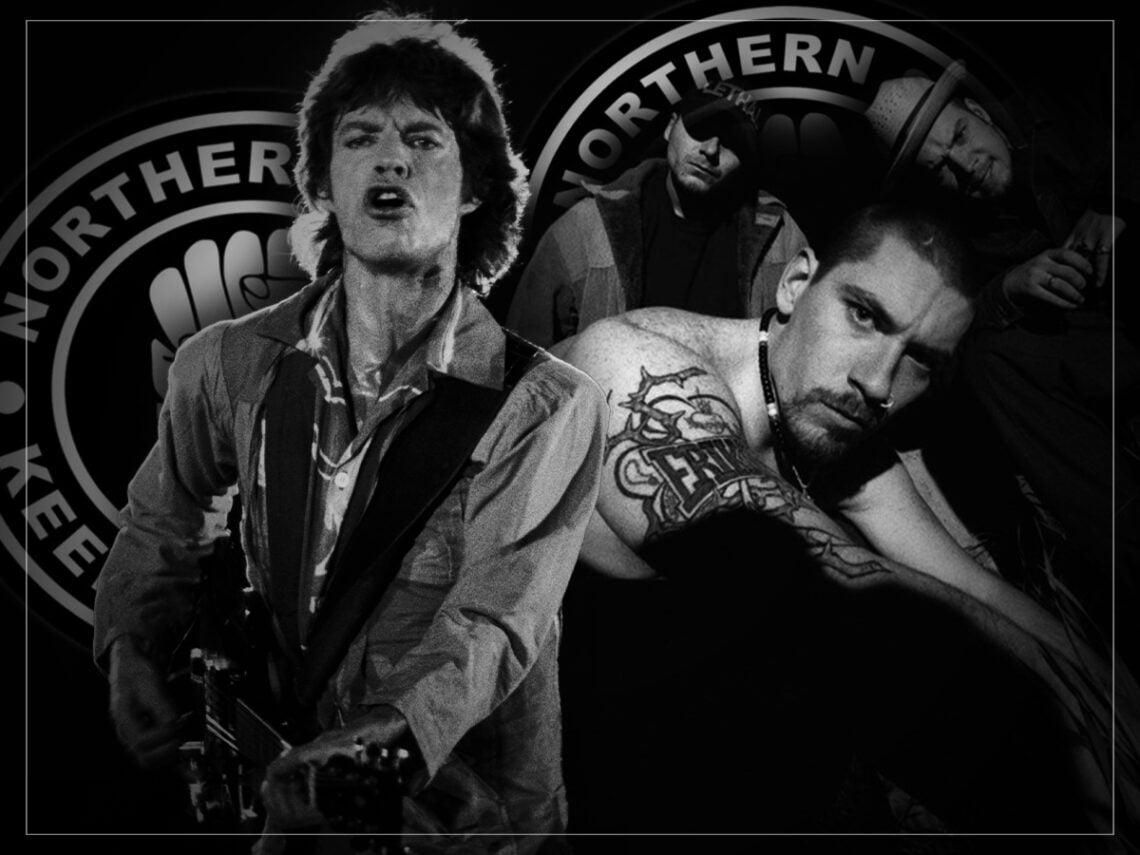
By the 1980s, another British rock titan had caught the ‘Harlem Shuffle’ bug; in a 1986 interview, Keith Richards shared that he spent years trying to sneak a cover of the track onto a Rolling Stones record, saying, “I’ve been trying to get ‘Harlem Shuffle’ on an album, without actually telling Mick [Jagger], for five or six years. I thought that was a natural number for him to sing; it was made for him”.

Richards even resorted to subliminal methods to try and win round Jagger: “I’ve been giving him cassettes with ‘Harlem Shuffle’ stuffed in the middle somewhere for a long time, but I never got any real response. One night, we were in the studio, and Woody and I started plunking away at it. We were amazed at how simple the song was, about two chords. The band was just warming up on it, jamming, when Mick walked in and started singing… And we did it in two takes. So it paid off eventually, though it cost me a fortune in cassettes.”

This version by The Rolling Stones appeared on their 1986 album Dirty Work, hitting number five in the US, number 13 in the UK, and number one in New Zealand, but while they were taking it to the charts, the song was already a deity in the smoky basements of Northern England. Long before the legendary all-nighters at the Wigan Casino, ‘Harlem Shuffle’ was a floor-filler at lesser-known, early spaces like The Room at the Top in Wigan and The Oaks in Manchester. It was an early blueprint for the northern soul movement, an underdog record rediscovered by British DJs hungry for danceable American soul imports.
But the song’s most recognisable incarnation arrived in 1992, courtesy of a rejected track and a crate-digging producer, when House of Pain, the California hip-hop trio named after a snippet of HG Wells’ The Island of Dr Moreau, were looking for a hit. They crossed paths with producer DJ Muggs, who had originally written the beat for ‘Jump Around’ for his own group, Cypress Hill, only to have them reject it and was shopping the song around, when House of Pain realised its potential immediately.
By the early ’90s, crate-digging was hip-hop’s engine, fuelled by producers flipping forgotten records into something new, and ‘Harlem Shuffle’ was prime material. That piercing horn blast, now etched into dancefloor history, was lifted straight from the original cut, which critically came from a catalogue with existing free-use agreements, protecting the group and Muggs from the legal ‘sampling wars’ that were beginning to emerge.
From Harrison’s jukebox to the deafening roar of ‘Jump Around’, the ‘Harlem Shuffle’ has proven itself to be one of the most versatile skeletons in music history. In recent years, it has graced the soundtrack of Edgar Wright’s Baby Driver and reared its head again in 2013 when Busta Rhymes and Eminem sampled it for their lyrical battle on ‘Calm Down’. It is a properly timeless piece of wax; let’s see who shuffles with it next.
