


The 10 best movies that explore the chaos of being in your 20s

Your 20s often feel like a constant search for reassurance that you’re on the right path—even though there’s no singular “right” way to live them. The weight of uncertainty can be overwhelming, as the future seems both distant and elusive, leaving you to question whether the effort is even worth it. Every step feels like an uphill climb, yet the journey teaches you that resisting the unknown is futile—it’s about learning to navigate and embrace it.
There is always chaos in at least one part of your life; nothing is ever settled or permanent. You’re in a state of flux, and as much as everyone keeps reminding you that you’re in the best decade of your life, it also makes you feel quite sick.
But alas, there is no way of dealing with our 20s besides muddling through the mess, attempting to find meaning and fulfilment amidst the chaos. However, we find ourselves seeking comfort through those experiencing something similar, turning to the movies and the other 20-something-year-olds battling the web of the unknown.
And so, for all those who are journeying through the mess themselves, here are the ten best films that explore the chaos of being in your 20s.
Movies that explore the chaos of being in your 20s:
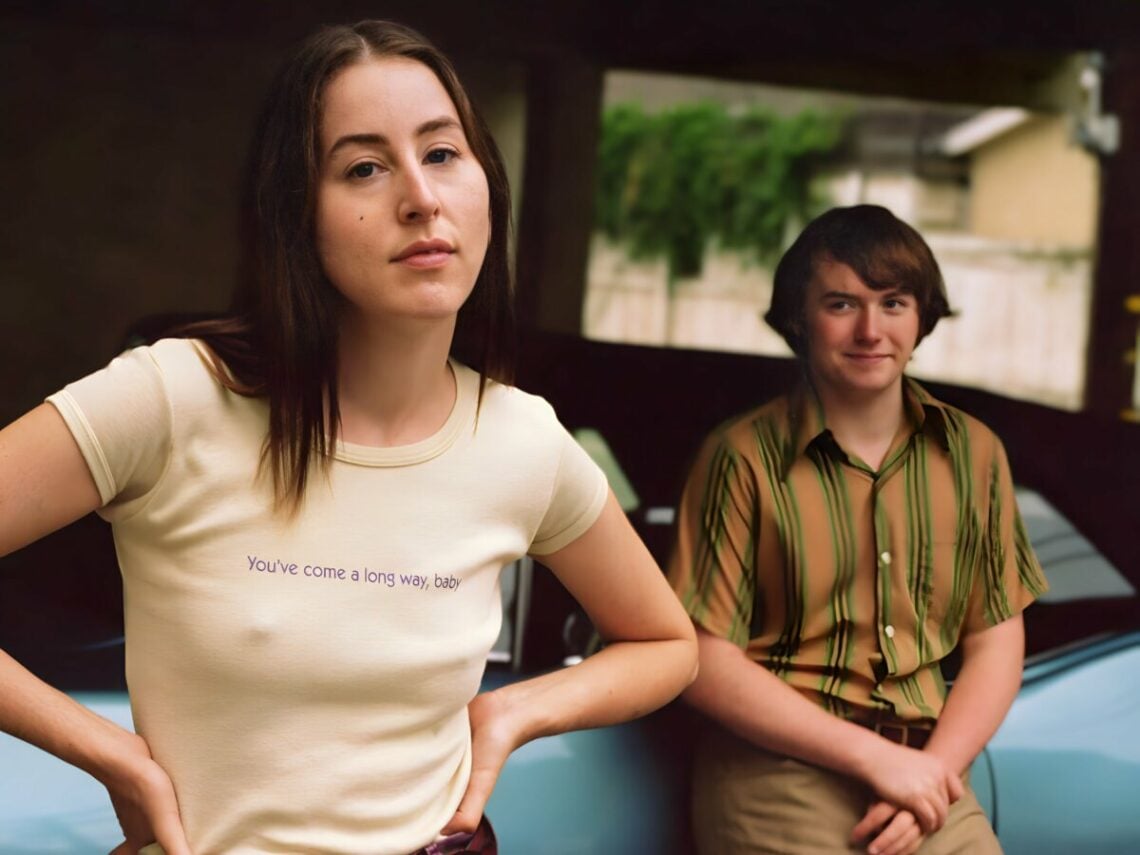
Licorice Pizza (Paul Thomas Anderson, 2021)
After first watching Licorice Pizza, I felt slightly underwhelmed, but I have since found that it benefits from retrospection and the grace of lowered expectations. While it is, at points, convoluted and disjointed, I came to appreciate this quality after realising that it reflected the meandering and slightly pointless nature of my own life—such is being in your 20s.
Alana is profoundly flawed and often unlikeable, making questionable and reckless decisions that don’t make any sense, and it is because of this that I now find her story so compelling and relatable, mirroring the chaos and impermanence of being in your 20s. Sometimes you feel so insecure and purposeless that you cling to anything or anyone that will add some definition to your life, whether it be a 17-year-old boys waterbed business or the boy himself, it all helps you feel afloat.
While PTA is known for his meticulously crafted stories, Licorice Pizza naturally doesn’t follow the same careful structure as his other films, existing as an experimentation in letting go and an ode to the mess of growing up.
Problemista (Julio Torres, 2023)
If you’re not a fan of anything whimsical, then Problemista is not the film for you. It’s strange and incredibly individualistic in its style, with Torres blending different textures together to create a colourful and cartoonish world. It tells the story of an aspiring toy designer living in New York who suddenly loses his job and needs to find another one to avoid being deported. He finds himself working for an unhinged art collector who needs help curating her final show, faced with countless bizarre hurdles that threaten his pursuit of the American dream.
The surrealism of the film perfectly exaggerates the erratic and discombobulating nature of being in your 20s, faced with constant battles and obstacles that you reluctantly resign yourself to, disheartened in the knowledge that it will be a long time before you experience any kind of real comfort and stability. You find a way of pushing forward, clinging onto one dream or goal that makes it all bearable, even if that dream may never come true. But this is the biggest hoodwink of being in your 20s – that you don’t know if the work you’re doing will lead you anywhere, but you keep trying regardless. It’s hilarious and completely odd, but it was made even funnier as the main character barely reacts to what’s happening to him, with a deadpan reaction to complete and utter chaos.
The Souvenir: Part 2 (Joanna Hogg, 2021)
The second part of Joanna Hogg’s 2019 film is a dazzling and brave deconstruction of Julie’s pain and how she infuses this with her artistic identity. While the film is intrinsically about trauma and how she evolves during her grief, it is also about the transformative power of finding our voice and using darkness to find who we truly are.
Like many people, Julie has to delve to the depths of her pains in order to find the light on the other side, and it is only by diving head first into the emotional grey area and uncertainty of her future that she can discover her voice. It is incredibly moving and vulnerable, with Hogg exploring the experiences of her own 20s through Julie, creating an illuminating and rich portrait of artistic discovery and reinvention, which is only possible after sitting with the darkness.
Before Sunrise (Richard Linklater, 1995)
So far on this list, I’ve managed to avoid one of the most definitive experiences of your being 20s –having a crush. The fleeting and unpredictable nature of falling in love is all explored with aching tenderness and romanticism in Richard Linklater‘s beyond perfect film, Before Sunrise.
After meeting on a train, Jessie and Celine decide to get off in Vienna and spend one night together, having a magical and other-worldly encounter that changes the course of their lives forever. Through Linklater’s existentialist dialogue style and long shots, we slowly watch this couple fall in love and dwell in the dream world so detached from their real lives, absorbed by the fantasy of the other person and the rose-tinted illusion of early love. It’s heartbreaking and hypnotic as we watch this relationship unfold, highlighting the rarity of instantaneous connection and how, sometimes, people we barely know can have a bigger impact on our lives than we can possibly understand. I feel that this encapsulates the bittersweetness of being in your 20s – you feel as though you’ll meet plenty of people that you will connect with in such a profound way, only to lose touch and later realise that you never felt that way about anyone else again.
A Good Marriage (Éric Rohmer, 1982)
Speaking on the subject of love, perhaps a more pertinent aspect of our romantic experiences during this time is the act of active delusion, and no one does delusion better than the great Eric Rohmer.
A Good Marriage follows a woman named Sabine who suddenly decides to get married. The only catch is that she has no one to marry, but not to worry—she happens across a mutual friend who she decides will do the trick and embarks on a truly unhinged quest to lure this man into becoming her husband.
While it sounds completely mad (and don’t get me wrong, it is), more than anything, it is an allegory about our inability to deal with uncertainty and the lengths we go to find comfort within the unknown. Sabine is unconcerned by the specifics of who she marries because she’s more concerned with skipping to the final step, not wanting to let life run its natural course and instead force the resolution to her own story. She hates the idea of drifting and not having a purpose and so latches onto the most pervasive and traditional goal for women at the time – getting married and having children.
It’s Rohmer at his funniest, while also being incredibly astute in his observations about the pressures young people face in finding their path, all shown through one truly unhinged woman and her very bizarre quest.
Columbus (Kogonada, 2017)
Given that Columbus was Kogonada’s directorial debut, I feel simultaneously stunned by its beauty and disgusted by my lack of talent. Nevertheless, it is a truly beautiful film that shows two lost souls who feel seen in each other’s company, challenging them to move forward and make a change. Jin and Casey are both floundering, trapped by circumstances that are seemingly outside of their control, only to realise that they’ve been using this as an excuse to stay within their comfort zone.
Casey’s story, in particular, captures the 20s mess of it all as someone with big dreams that feel almost suffocating due to how distant they feel, resigning herself to the fact that they won’t come true before even trying to achieve them. However, after meeting Jin, he keeps her alive to see the possibilities of her future and encourages her to realise her dream of becoming an architect. It’s visually stunning and has a distinctly soothing quality that reassures us of our anxieties about not being where we want to be.
News From Home (Chantal Akerman, 1976)
An aspect of growing up that we don’t often see in the movies is our changing relationship with our parents and the growing realisation that our time with them is limited. In Chantal Akerman’s 1976 film News From Home, she voices the growing distance and eventual reconnection with our family as we find ourselves and sometimes lose some along the way.
News From Home shows footage of New York with a voiceover as Akerman reads the letters sent by her mother. Each one emphasises the growing emotional distance between them as Akerman discovers a new version of herself away from her family, becoming detached from the goings on at home and ignoring their attempts at connection. As it goes on, the city becomes more alive, and the words of her Mother fade away entirely, and it dawns on us that we often lose sight of what’s important in our quest to realise our full selves, not realising that these selves cannot exist without our family.
It’s both brutal and delicate at the same time, as we get the feeling that Akerman is skimming over the details in the letters while her mother is savouring and re-reading every word, trying to flesh out a portrait of the daughter she desperately misses. It’s a stark reminder to be kinder to our parents, and that our time with them is far more precious than we can realise while we’re young.
The Worst Person in the World (Joachim Trier, 2021)
There is nothing more reassuring than watching someone else in their 20s make the same mistakes you do, and because of this, The Worst Person in the World is perhaps the most comforting film to watch when dealing with the highs and lows of self-discovery and emotional turbulence.
Julie is unsure of what she wants to do and who she wants to be. She finds herself at a crossroads when she realises that she hasn’t been truly living for herself. She then embarks on the messy journey of figuring out what the hell she wants, whether it be a romance with a baker or a career as a photographer.
It’s painfully relatable and endearing as Julie embraces the chaos of uncertainty and uses this to rediscover her purpose, finding clarity through the unknown. You only truly know what a material is made of once it’s been burnt, and this is what The Worst Person in the World is about.
Party Girl (Daisy Von Scherler Mayer, 1995)
When describing the plot of Party Girl, it’s hard to believe that it’s a real story. A privileged New York socialite has an existential crisis after reading The Myth of Sisyphus, which prompts her to find a job as a librarian and fall in love with a falafel salesman. And it’s completely wonderful.
Parker Posey stars in the lead role as the effervescent and aloof party girl. She is both endearing and frustrating as she flounces around in her outrageous outfits and reluctantly does her job. However, she eventually discovers the true meaning of life and finds her purpose after becoming besotted by the Dewey decimal system. She realises that she, too, can bring order and control to her life and that there are fun aspects to being an adult.
It’s whimsical and absurd, with the director poking fun at the aimlessness and indecision of our youth, all encapsulated by Mary’s charming, if slightly crazy, lifestyle.
Frances Ha (Noah Baumbach, 2012)
And lastly, there is truly no film that I love more than Frances Ha – a joyful, glorious and sometimes painfully relatable story about not having anything figured out and not really knowing what your next step should be. Frances is a dancer, except she’s also not really a dancer, and she has an apartment, but it’s also not really hers. Her best friend Sophie means everything to her, except they’re not speaking, and she finds out through someone else that she’s moving to Japan. When you’re in your 20s, you go through periods where it feels like absolutely everything is happening all at once, and Frances Ha is about trying to find your feet during one of those periods. It’s terrifying, all-encompassing, but ultimately, quite fun, even if it feels hellish when you’re in it.
Each time you watch Frances Ha, you will relate to a new struggle in her life, feeling seen through her clumsiness, inability to find an apartment, or complete lack of luck in her romantic life—it’s all there. It makes me feel less alone in the ambivalence of my own journey and reassures us of the universality of this experience. No one really knows where they’re going, but we can still find joy within the unknown.
