


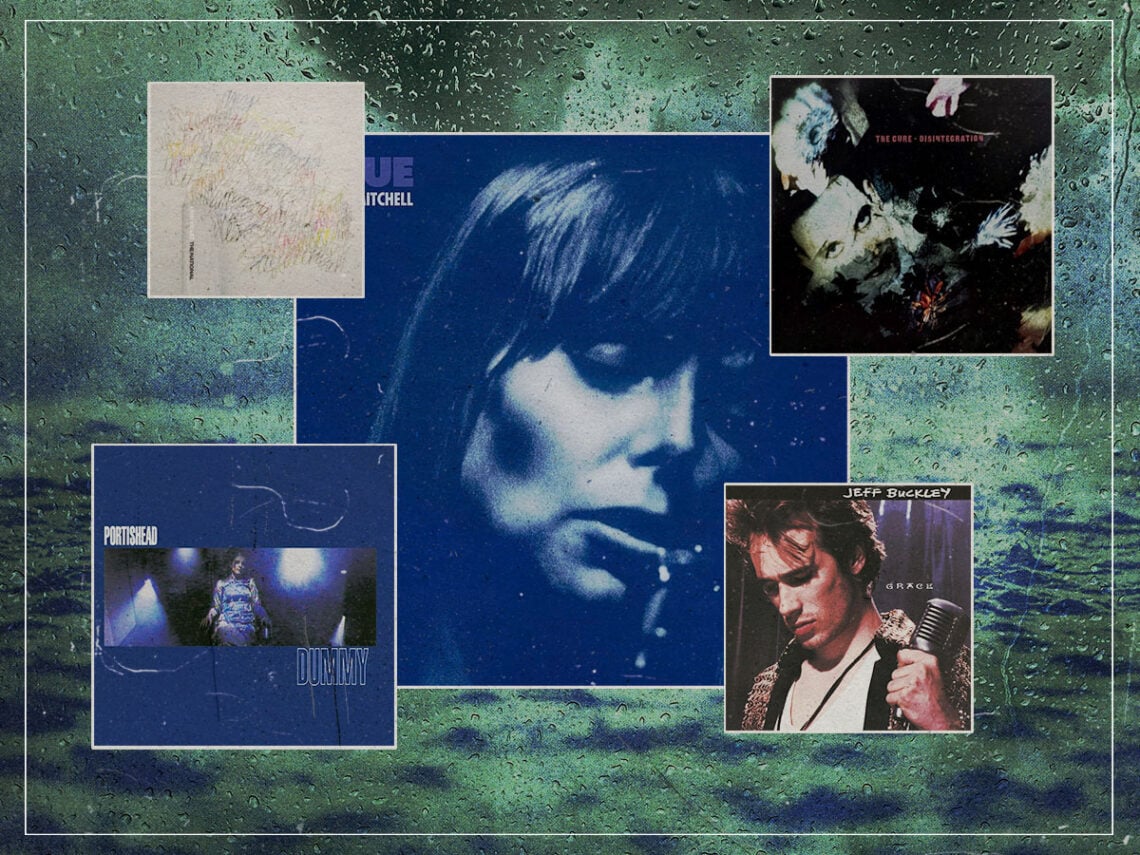
The 10 best albums for rainy days

The best albums in the world usually find a way of capturing a spirit between the grooves. While they might be a collection of songs thrown together, the most prominent artists on the planet know how to put the listener in a specific mood whenever they get behind the glass and bring their music to the world. Sometimes, artists make tracks perfect for hot fun in the summertime, and then, artists like Black Sabbath make songs destined for the dreary days inside.
Since music is never going to run short of party songs, a handful of artists have honed their craft by making moodier records that are perfect for days when the rain washes everything away. Outside of the mellow groove, you can practically hear the rain falling as some of these LPs start, either because of their haunting mood or the strange layers of harmony.
It doesn’t have to be limited to just one genre, either. Everyone experiences rainy days at some point in their lives, and artists from the world of pop rock, indie rock, and even the greatest classic rockers have had songs that feel like they were destined for the days when you’re trying to do anything but venture outside.
As much as these songs may seem a lot darker than their sunny counterparts, each of them does their job at making something far more entertaining when the clouds gather overhead and the lightning begins shooting across the sky. It may be storming outside, but just because it looks a mess doesn’t mean that the music has to be all bad.
10 best albums for rainy days:
10. Dummy – Portishead
If there was a genre that summed up what a rainy day would sound like, it would be trip-hop. From the different processed beats to the aching emotion coming out of every instrument, the precipitation is palpable. If you want to hear what the harrowing sounds of trip-hop really feel like, it’s hidden in Beth Gibbons’ voice.
Throughout Dummy, Portishead found a mathematical way to mess with one’s emotions throughout the span of a few minutes. Whether it’s the glitchy beats that switch up at just the right moment or when Gibbons goes for one of her trademark high notes, the entire song feels like it’s shaking with melancholy energy throughout its entire runtime as you listen. The rain might be beating down, but at least you have an emotional comrade to help you through it all.
9. Grace – Jeff Buckley
Jeff Buckley always seemed to be like a musical spirit during his time in the spotlight. While he was taken far too soon, his legacy and influence on 1990s rock can’t be overstated, from his booming voice to his intricate use of different jazzy chords amid his greatest ballads. Grace may have only been the start of great things to come, but Buckley had the rain pouring out of his soul on his first try.
Whether it’s the rockers or the ballads, the entire album feels like it exists in its own strange space, creating a weird combination of subtle yearning and a deep melancholy when you think about how long Buckley had left on this Earth. Most artists have to wait years to make something this hard-hitting, but Buckley showed himself as a seasoned pro before he hit album number two. It might be powerful when it needs to be, but listening to something like ‘So Real’ or ‘Lilac Wine’ when in a dour mood should come with a prescription warning.
8. Either/Or – Elliott Smith
The indie scene has never run short of great songwriters looking to make music for anyone who would hear them. For every artist looking to make a million with their songs, just as many try to use each track as its own unique experiment. Elliott Smith may have been the latter, but he found some way to take his personality and put it into song form across every track he ever made.
While any of Smith’s albums could have qualified for this list, Either/Or has the kind of jaded beauty that comes from any classic singer-songwriter. As much as he may be taking cues from artists like The Flaming Lips on some tracks, there are traces of early Beatles and even James Taylor in how Smith approaches melodies. Either/Or is far from the kind of sweeping masterpiece that came from most singer-songwriters, but what it lacks in extravagance, it makes up for in crippling sincerity. The likes of Bon Iver still live in its shadow.
7. High Violet – The National
Not every rock album is meant to be a pick-me-up. While many people like to make their living out of optimistic songs, it sometimes takes a track that comes from deep within someone’s soul to get them out of the darkness. Optimism tends to be slightly overrated, anyhow, and The National have made a living out of building off the sounds of albums like High Violet.
While records like Boxer and even Sleep Well Beast do a better job at lulling fans into a specific sense of dread, High Violet feels like the bridge between the band making Nick Cave-esque ballads and the kind of alternative rock that offers just a smidge of hope. It might be hard to find the upside in a song like ‘Afraid of Everyone’, but the point of the LP feels more like someone trying to fight their way through the darkness than simply wallowing in it. The skies are cloudy now, but that doesn’t mean the world will end.
6. Blue – Joni Mitchell
As the ‘Summer of Love’ ended abruptly, the world was finally ready for the golden age of singer-songwriters. After The Beatles had shown what could be done in the studio, James Taylor and Carole King showed what could be done by being exceptionally good at writing songs, always pushing themselves further to make something different. Joni Mitchell didn’t have to prove anything by the time of Blue, but her lyrics were the kind that could cut through jaded hearts like a knife.
After falling out with an old flame, half of the tracks on the record are ripped out of Mitchell’s broken soul as she tries desperately to hold on to her sanity in the process. You wouldn’t know that for the music at hand, though, going between some of the sweetest folk music ever conceived and a handful of folk-rock stompers that transport you to the sight of a nice cottage in the middle of winter. The river might be cold, and rain might fall, but Mitchell is the kind of person with whom anyone could weather the storm.
5. Bleach – Nirvana
It’s impossible to talk about rainy days and not bring up Seattle at least a little bit. Since it rains for more than half the year in the Northwest, it’s only logical that the music follows suit, with half of the early grunge bands sounding damp from the minute they started playing. While Nirvana would grow into something much different as the years went on, Bleach is the kind of album built on the flooded foundations of the Seattle scene.
From one song to the next, Kurt Cobain treats every song as if it’s his little art project, turning in tracks that border on metal like ‘Negative Creep’ or going into art-rock hell on ‘Paper Cuts’. Even though songs like ‘School’ indicate Nirvana’s early days, ‘About A Girl’ was the real way forward for the band, eventually turning their pop appeal into one of the biggest genres of music ever made. For now, Cobain was still just a scrappy songwriter, and Bleach was the closest the band came to capturing what Seattle felt like on a normal day.
4. Disintegration – The Cure
For all the tags thrown towards goth rock, The Cure have always been a strange entity. In a genre that thrives on making dark music that is meant to be played on the fringes of society, Robert Smith managed to toe the line of credibility and commercial success. Disintegration represents the perfect combination of the band’s melodic and gothic sensibilities.
From the opening notes of ‘Plainsong’, Smith creates songs that sound like the stars are falling from the sky, either working in different dark detours or the most passionate love songs ever conceived by man. When he’s not making you on edge with songs like ‘Lullaby’, songs like ‘Fascination Street’ feel like being thrust onto a rain-swept English street as you walk down the back alleys to find where the real parties are after midnight. Outside of Smith’s penchant for lyrics, his way of building an environment with sound is half the reason why The Cure works as well as they do.
3. Nebraska – Bruce Springsteen
By the end of the 1970s, Bruce Springsteen didn’t really know who he was anymore. After achieving the greatest heights someone could ask for, he realised that he still had a slight hole in his soul that was never going to be filled. He needed to find that salvation on his own, and his first album without the E Street Band was reserved for the dark days we all go through at some point.
Painting pictures of everyone from serial killers to broken families, every character in Nebraska has had those dark rain clouds following them all their lives and hoping for some way for the rain to let up. Although Springsteen paints every song with a certain romanticism, he knows that the fate of most of these people isn’t good. These men and women have done miles on their souls, and no amount of redemption can help the rain in their hearts.
2. Jar of Flies – Alice in Chains
If there’s such a thing as melancholy happiness, it’s somewhere in Alice in Chains’ music. They may be behind some of the darkest riffs to come out of the grunge scene, but the subtle beauty behind everything they sang kept everyone intrigued for at least a little bit. When the band finally found themselves at the end of their rope, though, Jerry Cantrell and Layne Staley created a dark masterpiece in just seven tracks.
Across Jar of Flies, Staley is clearly hurting from his battle with heroin, and every other instrument feels like it’s trying to comfort him through the pain. Whereas most rainy-day albums keep listeners in that negative headspace, there’s a welcome atmosphere behind every song on here, especially when the chimes of the acoustic guitars mesh with the bright bass tones of Mike Inez. Staley may not have been around for much longer after this album, but Jar of Flies feels like receiving a warm hug from a ghost.
1. Black Sabbath – Black Sabbath
By the end of the 1960s, rock and roll was still bright colours and happiness. The Vietnam War may have still been going strong, but the order of the day was Flower Power, which reminded everyone that everything was great. In an era that looked at everything through rose-coloured glasses, Black Sabbath brought everything back to dark grey sludge the minute they hit the airwaves.
Starting with the haunting sounds of rain and thunder, the band’s namesake track feels like it can only be listened to on a rainy day, as Osbourne sings about a demonic seance over Tony Iommi’s thunderous riffs. As much as the band may have just been copying and pasting the blues of their youth, the attitude behind their songs was too haunting to ignore, sending it up the charts next to artists like Simon and Garfunkel. The 1960s dream had been replaced with a dark storm ahead, and Sabbath were the forebearers of a new breed of heavy music.
